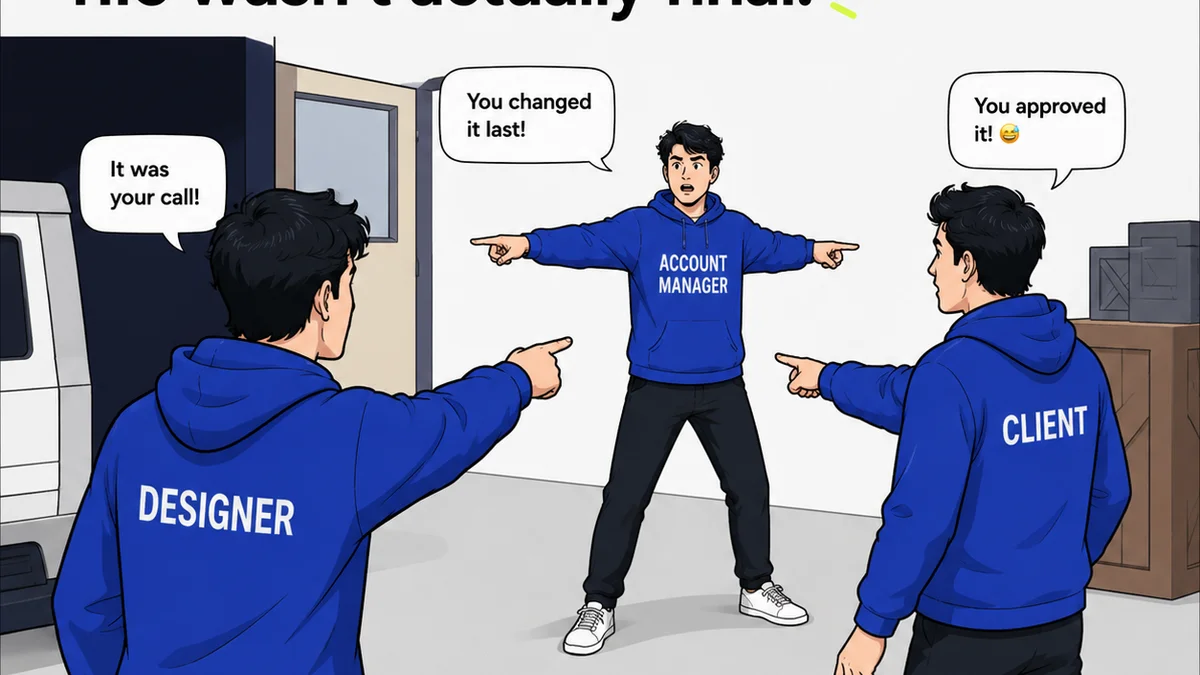
Everyone knows that managing client revisions is a pain. You get a design back, it’s nothing like what you showed them. They say, “Just make this small change,” and suddenly you’re rebuilding the whole thing. It’s the classic agency nightmare.
None of that is wrong. But it’s incomplete.
The hard truth is, the client isn't usually the root cause of revision hell. The real culprit? Your own internal revision management process. Or, more often, the lack thereof.
1. The “Just Send It” Approach to Feedback
You nail the first draft. It’s good. You’re proud. Now, how do you get it to the client? Email, right? Maybe a shared drive link?
This is where it starts to unravel.
Scattered feedback across emails, Slack messages, and even text messages is a recipe for disaster. Key stakeholders miss critical comments. Versions get confused. The single source of truth becomes a tangled mess.
Symptoms of the “Just Send It” Disease:
- Endless back-and-forth emails trying to clarify who said what.
- Lost feedback buried in long email threads.
- Accidental implementation of outdated revision requests.
- Difficulty tracking the history of changes and approvals.
- Clients feeling like their feedback isn't being heard or acted upon.
This isn't just inefficient; it breeds resentment and erodes trust. It makes everyone involved feel like they’re working in the dark.
2. Ambiguous Scope Creep: The Silent Killer
Scope creep isn't always about the client asking for more. Often, it’s a result of unclear initial briefs and a lack of defined revision rounds.
You agreed to two rounds of revisions. But what does a “round” actually mean? One minor tweak? A complete overhaul?
Without clear boundaries, two rounds can easily become ten. And without a system to track this, it’s hard to push back effectively.
Defining Your Revision Rounds:
- Establish clear deliverables for each phase. What specifically will be reviewed?
- Quantify revision rounds. Define what constitutes a
Frequently asked questions
What is the biggest mistake agencies make in revision management?
The biggest mistake is relying on scattered communication channels like email and Slack for feedback. This leads to lost comments, version confusion, and inefficient workflows. Centralizing feedback in one platform is crucial.
How can I prevent scope creep during revisions?
Clearly define the scope of work and the number of revision rounds in your initial contract. Document all feedback and approvals in a single system. Use this system to track requests and push back on changes that fall outside the agreed scope.
What are the benefits of using a dedicated revision management tool?
Dedicated tools centralize feedback, provide version control, streamline approvals, and offer an audit trail of all communications. This reduces errors, saves time, improves client communication, and protects your agency from scope creep.
How do I get clients to adopt a new revision process?
Clearly communicate the benefits to them: faster turnaround, clearer communication, and a better final product. Provide simple, step-by-step guidance on how to use the tool. Emphasize that it makes their life easier too.