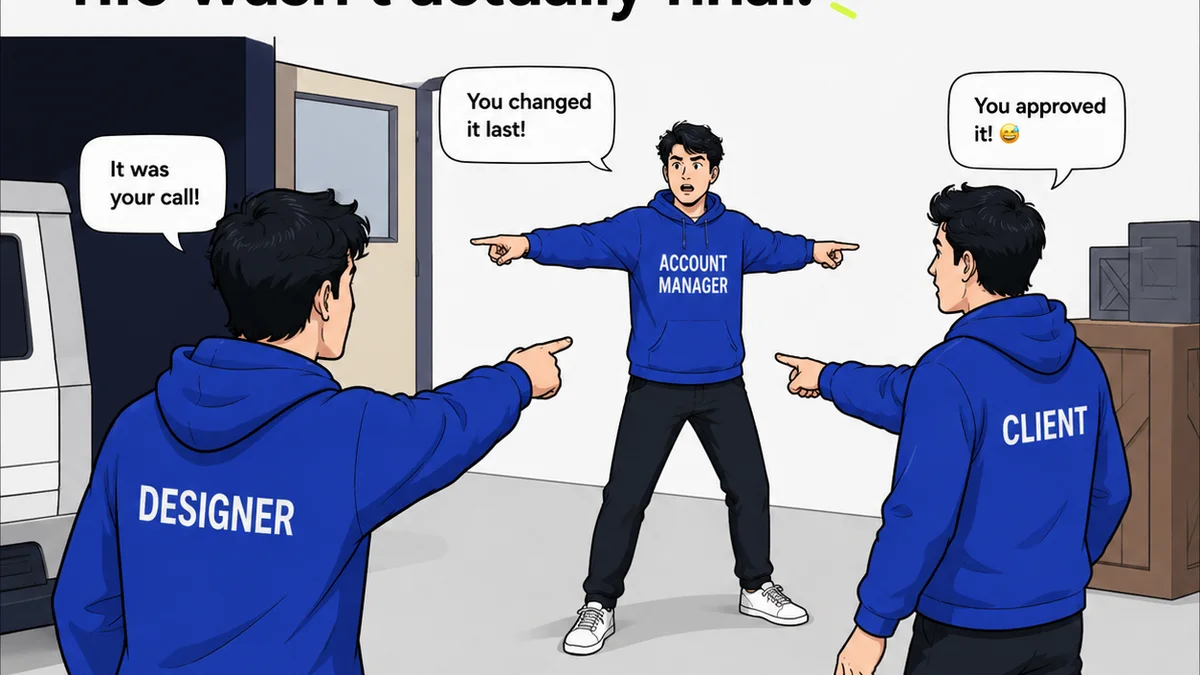
Everyone talks about streamlining creative workflows. They point to project management software, better briefs, and clearer communication. None of that is wrong. But it’s incomplete.
The real bottleneck isn't a lack of tools. It's a fundamental misunderstanding of what revision management truly entails. We treat it like a necessary evil, a ticking clock. We don't see it for what it is: a critical phase that dictates project success, client satisfaction, and agency profitability.
In 2026, the agencies that thrive won't be the ones with the slickest websites or the most awards. They'll be the ones who've mastered the art of controlled, efficient, and transparent revision cycles. The ones who've stopped making these costly mistakes.
1. Treating Revisions as an Afterthought
The most common mistake? Thinking the
Frequently asked questions
What is the biggest mistake agencies make in revision management?
The biggest mistake is treating revisions as an afterthought or a mere administrative task, rather than a critical, strategic phase of the creative process. This leads to reactive problem-solving, scope creep, and client frustration.
How can agencies improve their revision feedback process?
Improve by establishing clear feedback channels, setting defined revision rounds, using centralized feedback tools, and training clients on how to provide constructive, actionable feedback. Empowering your team to ask clarifying questions is also key.
What are the signs of poor revision management?
Signs include endless revision loops, scope creep, team burnout, missed deadlines, client dissatisfaction, and projects running significantly over budget. Difficulty in tracking changes and approvals is also a red flag.
How does centralized feedback help with revision management?
Centralized feedback consolidates all comments, annotations, and approvals in one place, eliminating scattered emails and documents. This provides a single source of truth, reduces miscommunication, and speeds up the revision process significantly.