You're looking for a tool to manage client feedback, revisions, and approvals. You've probably heard of Filestage. Maybe you've even considered it. It's a popular choice for creative agencies. And for good reason. It tackles some painful problems head-on.
None of that is wrong. But it’s incomplete.
The real truth about choosing a platform like Filestage, or Revue, or any other, isn't just about features. It's about how deeply it integrates with your actual, messy, human workflow. It’s about whether it solves the root cause of feedback chaos, or just applies a band-aid.
1. The Illusion of Centralization
Filestage promises to centralize feedback. And it does, to a degree. You upload assets, clients leave comments, you track versions. It feels like order is being imposed on the chaos of email threads and Slack messages.
But does it truly centralize everything? Or does it just move the communication bottleneck from your inbox to a new interface?
Consider this:
- Client comments are in Filestage.
- Internal team discussions about those comments are in Slack.
- Final approval might be a handshake email because the system felt too formal for that one stakeholder.
- The actual asset revisions are happening in Figma or Adobe Creative Cloud.
Filestage is a hub, yes. But it often becomes another silo, not the single source of truth for the entire creative process.
The Risk of Tool Proliferation
Every new tool adds overhead. Every tool requires training. Every tool means context switching. Agencies that adopt too many specialized tools end up with fragmented communication and information scattered across platforms. This doesn't streamline; it complicates.
2. The Feedback Loop: More Than Just Comments
Managing feedback isn't just about collecting comments. It's about understanding context, intent, and priority. It’s about ensuring the right people are giving feedback at the right time.
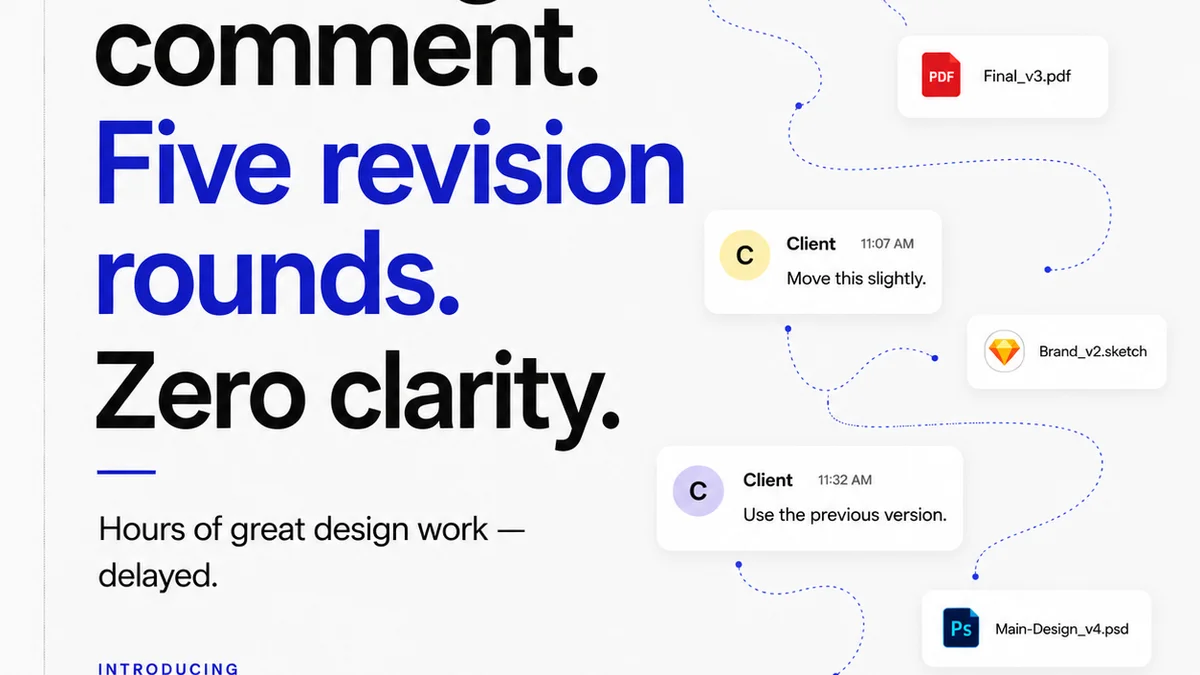
Filestage offers annotation. It allows for version control. These are essential functions. But they don't inherently solve the problem of unclear or conflicting feedback.
What happens when:
- A client says, “Make it pop more,” without specifying what “pop” means?
- Two stakeholders give contradictory revision requests?
- The designer needs to understand the strategic goal behind a subjective change?
These are human problems. They require more than a digital markup tool. They require a system that encourages clarity and facilitates discussion *around* the feedback, not just *on* the asset.
The Cost of Misinterpretation
Every misinterpretation leads to wasted hours. Redundant revisions. Frustrated clients. Stressed teams. This is where the real cost of inadequate feedback management lies. It's not in the software subscription; it's in the lost productivity and compromised creative output.
3. Approval vs. Alignment
Filestage, like many tools, focuses heavily on the final approval step. Get the sign-off, move to the next stage. This is crucial for project management.
But true creative success comes from alignment, not just approval. Alignment means the client and the agency are on the same page about the *why* behind the creative, not just the *what*.
Approvals can be rubber-stamped. Alignment requires understanding. Does the tool facilitate that deeper understanding?
The Danger of the
Frequently asked questions
What is the primary difference between Revue and Filestage?
Filestage is primarily a dedicated online proofing tool focused on collecting feedback and approvals on creative assets. Revue is a broader creative workflow platform designed to centralize communication, manage revisions, and streamline approvals, integrating more deeply into the entire project lifecycle beyond just asset review.
Can Filestage handle internal team collaboration?
Filestage focuses on client-facing proofing. While internal teams can use it, much of the crucial back-and-forth discussion and strategic alignment often happens in other tools like Slack or email, leading to potential fragmentation.
How does Revue differ in managing client feedback?
Revue aims to centralize all project communication, including client feedback, directly within the project context. This reduces the need to switch between multiple platforms and ensures feedback is tied directly to the asset and its revision history.
Which tool is better for quality assurance checks?
Filestage offers features for reviewing and approving final assets. Revue also supports quality checks by providing a clear, documented history of feedback and revisions, making it easier to verify that all requirements have been met before final sign-off.