You've probably heard the debate: Revue vs. Frame.io. Which platform is better for creative review and client feedback? Which offers more features? Which is faster?
None of that is wrong. But it’s incomplete.
The deeper truth? Focusing solely on features misses the point of effective creative operations. Tools are only as good as the systems they support. Frame.io is a powerful tool for *one part* of the creative process. Revue is a system designed to manage the *entire* creative workflow.
For a Creative Director, this distinction isn't academic. It's the difference between chaotic feedback loops and controlled, efficient delivery. It’s the difference between drowning in revisions and shipping great work, on time.
1. The Feedback Tool Trap
Frame.io excels at what it does: enabling clear, contextual feedback on creative assets. Its annotation tools, version control, and commenting system are best-in-class for that specific task.
It's fantastic for:
- Visual markups on video, images, and PDFs.
- Gathering specific, time-stamped comments.
- Sharing work-in-progress with clients and stakeholders.
- Reducing endless email chains for *that specific asset*.
But here's the trap: Creative review isn't just about leaving a comment. It’s about what happens *before* and *after* that comment is made.
The assumption is that a better feedback tool equals better creative output. That’s a dangerous oversimplification.
The Bottleneck Isn't the Comment Box
Where does feedback live *after* it's given? How do you track which comments have been actioned? How do you ensure revisions align with the original brief, not just the last comment? How do you manage approvals across multiple stakeholders when the feedback is scattered?
Frame.io, by design, focuses on the asset and the feedback *on* the asset. It doesn't inherently manage the project context, the client communication surrounding the feedback, or the approval status beyond a simple 'approved' flag on a version.
This is where the operational reality diverges from the feature list.
2. Beyond the Asset: The Workflow Imperative
Creative Directors don't manage assets; they manage workflows. They orchestrate a complex dance of briefs, concepts, feedback, revisions, approvals, and final delivery. This entire process, not just the review stage, needs a system.
Consider the typical lifecycle:
- Briefing: Understanding the core objective.
- Concepting: Developing creative solutions.
- Internal Review: Getting team buy-in and quality control.
- Client Presentation: Showing the work.
- Client Feedback: Gathering input (this is where Frame.io shines).
- Revision: Implementing feedback.
- Re-Review: Presenting updated work.
- Approval: Formal sign-off.
- Delivery: Handoff to production or client.
Frame.io is a powerful player in step 5. But what about the rest? What ties step 5 back to step 1? What ensures step 8 is a clear gate, not another round of debate?
This holistic view is the domain of workflow management, not just feedback annotation.
The Cost of Disconnected Tools
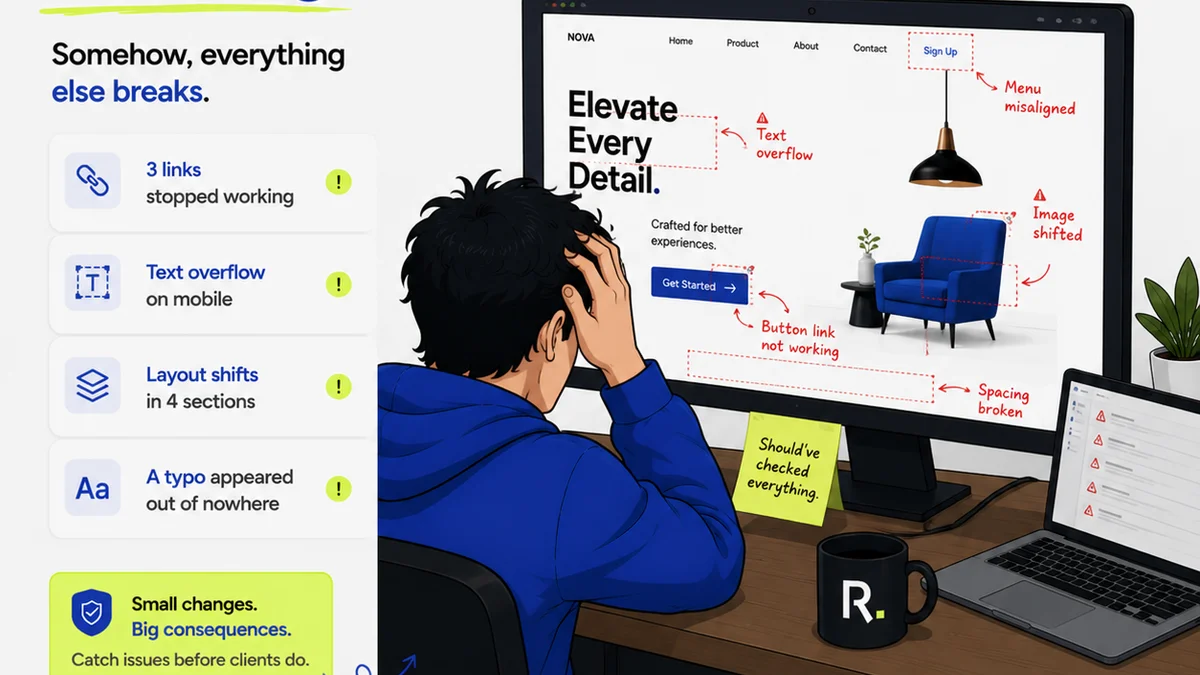
When feedback tools are separate from project management, communication, and approval tracking, you create silos. Information gets lost. Context is stripped away. Time is wasted switching between platforms and manually reconciling information.
This leads to:
- Missed feedback buried in emails or Slack.
- Endless clarification loops because the
Frequently asked questions
Is Frame.io bad for creative reviews?
No, Frame.io is excellent for its intended purpose: providing contextual feedback directly on creative assets like video and images. Its strength lies in the annotation and versioning features for a specific asset.
What's the main difference between Revue and Frame.io?
Frame.io is primarily a feedback and review tool focused on assets. Revue is a comprehensive workflow management system that centralizes client feedback, revision tracking, approvals, and quality checks across the entire creative process.
Can Frame.io handle client approvals?
Frame.io has basic approval features, but it doesn't offer the robust tracking, historical context, or workflow integration needed for complex approval processes that Revue provides.
Why is workflow management important for a Creative Director?
Effective workflow management ensures projects move smoothly from brief to delivery, minimizing bottlenecks, miscommunication, and wasted time. It allows Creative Directors to focus on creative quality rather than administrative overhead.