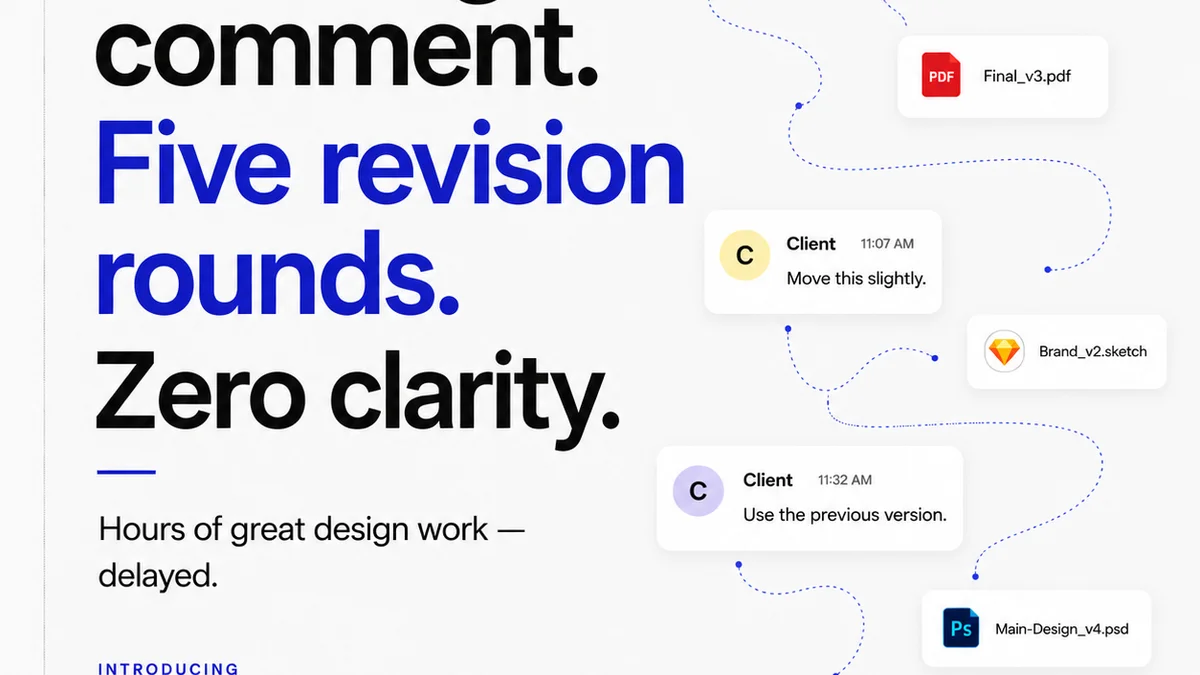
You've likely heard the hype. monday.com is the ultimate work operating system, a do-it-all platform for marketing teams. Revue, on the other hand, is often seen as a niche tool for creative feedback. None of that is wrong. But it’s incomplete.
The real difference isn't just about features. It's about how each tool fundamentally shapes your team's workflow, client interactions, and the very quality of your creative output. It’s about operational efficiency versus a broad, often diluted, project management approach.
1. The Core Promise: What Are You Actually Buying?
monday.com: The Swiss Army Knife
monday.com sells itself as a universal solution. Need to manage a campaign? Track social media posts? Onboard a new client? Build an internal knowledge base? monday.com claims it can do it all. Its strength lies in its extreme flexibility and visual appeal. You can build almost any workflow imaginable.
This flexibility is also its trap.
For marketing teams, especially those focused on creative execution, this means configuring and maintaining complex dashboards, automations, and custom fields just to get basic project tracking done. It's powerful, yes. But it requires significant setup and ongoing management to avoid becoming a digital graveyard of unfinished tasks and duplicated efforts.
Revue: The Precision Instrument
Revue is built for a specific purpose: streamlining creative collaboration and client feedback. It doesn't try to be your CRM, your social scheduler, and your project manager all at once. Instead, it focuses intensely on the points where creative work gets stuck: gathering feedback, managing revisions, and getting approvals.
This laser focus means less time configuring and more time doing. It’s about making the feedback loop efficient, transparent, and actionable, directly within the context of the creative assets themselves.
2. Workflow Impact: Flexibility vs. Focus
monday.com: Customization Chaos
The promise of monday.com is that you can build *your* perfect workflow. The reality for many marketing teams is that building and maintaining these custom workflows becomes a project in itself. You end up spending valuable creative or strategic time wrestling with software configuration.
- Setting up custom boards for every project.
- Defining intricate dependencies.
- Building automations that often break.
- Training the team on a complex, ever-evolving system.
This can lead to a system that is powerful in theory but cumbersome in practice. The sheer number of options can be overwhelming, leading to inconsistent usage across the team and ultimately, more work to manage the tool itself.
Revue: Streamlined Collaboration
Revue cuts through the noise. Its interface is designed around the natural flow of creative work. You upload assets, share them with clients or stakeholders, and gather feedback directly on the visuals or documents. Revisions are tracked, and approvals are clear.
This focused approach means:
- Faster onboarding for new team members.
- Reduced friction in the client feedback process.
- Clearer communication, directly tied to the work.
- Less time spent chasing down scattered feedback from emails, Slack, or other channels.
It’s about making the core creative process smoother, not adding layers of administrative overhead.
3. Client Feedback & Approvals: The Bottleneck Factor
monday.com: A Generalist's Approach
monday.com can technically handle client feedback. You can set up a client portal, share links, and even use forms. However, it's not purpose-built for visual or document feedback. This often means feedback gets lost in general comment threads or requires manual transcription from various sources into the monday.com board.
The client experience can be clunky. They might be asked to navigate a complex project board, or their feedback might be disconnected from the actual asset, leading to misunderstandings. It turns a critical part of the workflow into another task to manage.
Revue: Centralized, Contextual Feedback
This is where Revue shines. It treats client feedback as a primary input, not an afterthought. You can share specific versions of designs, videos, or copy with clients. They can comment directly on the elements they want changed.
Revue provides:
- Visual Annotation: Pinpoint feedback directly on images or PDFs.
- Version Control: Track each iteration clearly.
- Approval Workflows: Formal sign-offs that are auditable.
- Centralized Communication: All feedback lives in one place, linked to the asset.
This clarity drastically reduces back-and-forth, prevents misinterpretations, and speeds up the approval process. It transforms client collaboration from a pain point into a streamlined, efficient step.
4. Project Management: Broad vs. Deep
monday.com: The Everything Hub
As a project management tool, monday.com is incredibly versatile. It can track timelines, assign tasks, manage resources, and integrate with numerous other tools. For highly complex, multi-faceted projects with numerous dependencies across different departments, its breadth can be an advantage.
However, for creative marketing teams, the primary bottleneck isn't usually task scheduling; it's the creative review and approval cycle. monday.com treats this as just another task type. This can lead to feedback being deprioritized or misunderstood because it's buried within a broader project management framework.
Revue: Focused on Creative Project Flow
Revue doesn't aim to replace your core project management system. Instead, it integrates with it by solving the most challenging part of the creative project lifecycle: feedback and approvals. By handling this critical stage exceptionally well, it frees up your broader PM tools to do what they do best.
Think of it this way: monday.com tries to manage the entire orchestra. Revue ensures the soloists are perfectly tuned and ready to play their part flawlessly. It streamlines the critical handoffs that make or break a creative project.
5. Where Revue Fits In
Revue isn't a replacement for monday.com if you need a comprehensive, company-wide work OS. But for marketing teams drowning in scattered feedback, struggling with revision tracking, and facing endless approval cycles, Revue offers a powerful, targeted solution.
It integrates into your existing workflow by centralizing feedback, providing clear revision visibility, and simplifying the approval process. This allows your team to focus on creative execution, knowing that the communication and approval loops are handled efficiently and transparently.
It complements, rather than competes with, broader project management tools by solving the specific challenges of creative collaboration.
6. Final Thought
Is your team spending more time managing its project management tool than doing the creative work? When choosing between a flexible, all-encompassing platform and a specialized tool, consider where your biggest operational bottlenecks truly lie. Sometimes, the most efficient path forward isn't the broadest one.
Frequently asked questions
Can monday.com handle creative feedback effectively?
monday.com can be configured to manage feedback, but it's not purpose-built for visual or document annotation. Feedback can become disconnected from the asset and buried in general comments, making it less efficient than specialized tools like Revue.
Is Revue a project management tool?
Revue is not a comprehensive project management tool like monday.com. Instead, it's a specialized platform focused on streamlining creative feedback, revision tracking, and client approvals, complementing existing PM systems.
Which tool is better for agencies?
For agencies prioritizing efficient client collaboration and clear creative approvals, Revue offers a more focused and effective solution. monday.com might be suitable if you need a single, highly customizable platform for all project management needs, but it requires significant setup for creative workflows.
How does Revue improve client communication?
Revue centralizes all client feedback directly on the creative assets, provides clear version control, and offers formal approval workflows. This reduces miscommunication and speeds up the review process compared to scattered email or chat feedback.