Most comparisons between creative workflow tools, like Revue and Ziflow, focus on feature lists. You’ll see tables comparing annotation types, version control, and user permissions. None of that is wrong. But it’s incomplete.
For enterprise creative teams, the real differentiator isn't just *what* a tool does, but *how* it integrates into your entire operation. It’s about reducing friction, not just managing tasks.
1. The Enterprise Feedback Paradox: Volume vs. Value
Enterprise creative teams are drowning in feedback. Clients, legal, marketing, sales – everyone has an opinion. The assumption is that more tools mean better management. The hard truth is that scattered feedback leads to chaos.
Different stakeholders use different channels: email chains, Slack messages, random documents, even verbal notes. Each is a potential point of failure.
The Cost of Disconnected Feedback
- Missed revisions leading to costly rework.
- Delayed approvals because crucial feedback got lost.
- Inconsistent brand messaging across projects.
- Increased risk of errors and compliance issues.
- Frustrated creative teams and stressed project managers.
The goal isn't just to collect feedback; it's to process it efficiently and make informed decisions. This requires a single source of truth.
2. Revision Management: Beyond Version Numbers
Version control is table stakes. But true revision management for enterprise teams means understanding the *context* of each change.
When did this change happen? Who requested it? Was it approved? Was it a core requirement or a last-minute tweak?
Without this context, even a streamlined version history becomes just a long list of files. This is where platforms like Ziflow excel in providing granular control over the proofing process.
Key Elements of Robust Revision Tracking
- Clear audit trails for every change.
- Ability to compare versions side-by-side with annotations.
- Automated notifications for new revisions and approvals.
- Granular permissions to control who can approve.
This level of detail is critical for accountability, especially in regulated industries or when dealing with high-stakes client projects.
3. Quality Assurance: The Unsung Hero of Creative Operations
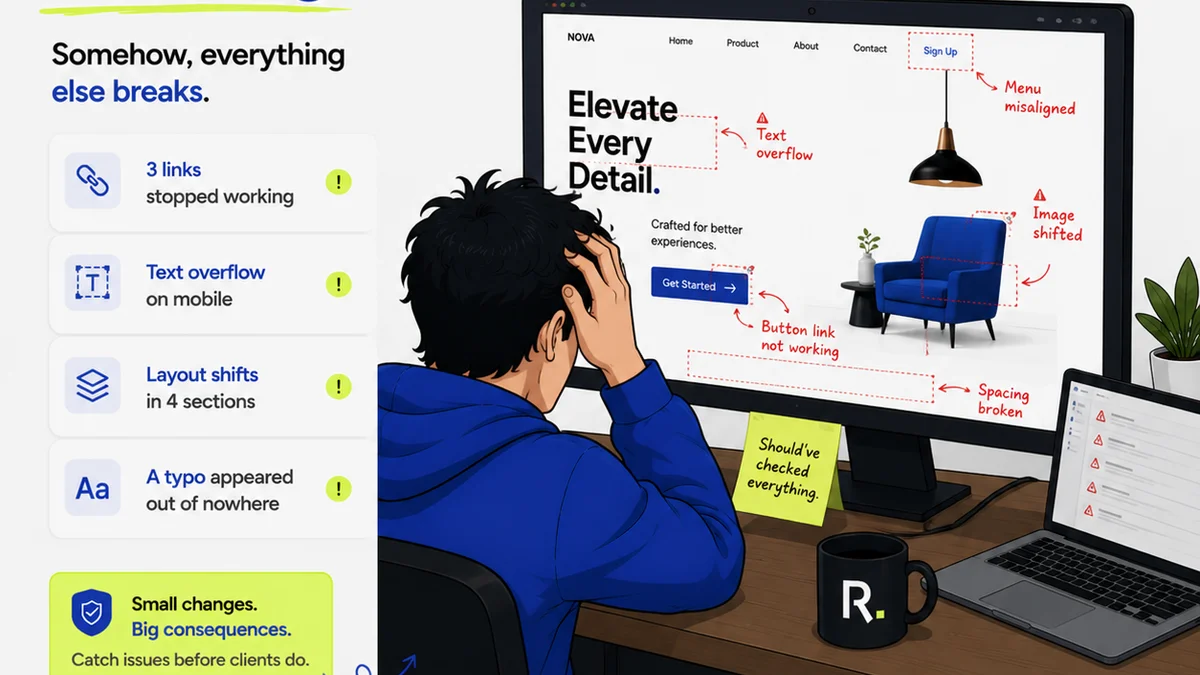
Many teams treat QA as an afterthought. It’s often a manual checklist done by one person right before launch. This is a recipe for disaster.
True quality assurance needs to be built into the workflow, not bolted on at the end. It’s about systematically checking for adherence to brand guidelines, technical specs, and client requirements at every stage.
Integrating QA into the Creative Process
- Automated checks for common errors (e.g., spelling, broken links).
- Checklists tied to specific project types or client needs.
- A clear process for flagging and resolving QA issues *before* final approval.
- Ensuring accessibility standards are met from the outset.
This proactive approach minimizes last-minute fixes and ensures a higher quality final product, protecting both the agency and the client.
4. Scalability and Integration: The Enterprise Mandate
Enterprise environments are complex. Tools must integrate with existing systems and scale to meet growing demands.
This means looking beyond standalone features and considering how a platform fits into the broader tech stack. Can it connect to your DAM? Your project management software? Your CRM?
Ziflow, for instance, offers integrations and a robust API that can be crucial for large organizations needing to connect proofing to other business-critical systems.
Scalability Considerations
- User management and role-based access control.
- Performance under heavy load with numerous projects and users.
- API availability for custom integrations.
- Security protocols that meet enterprise standards.
A tool that can't scale or integrate smoothly becomes a bottleneck, not a solution.
Where Revue Fits In
Revue is built for the specific needs of creative agencies and in-house teams who live and breathe client feedback and revisions. While Ziflow offers deep functionality for complex proofing cycles, Revue focuses on centralizing the entire feedback and approval loop for greater clarity and efficiency.
Think of it this way: Ziflow might be your specialized proofing engine. Revue is your central command center for client collaboration.
Revue brings together disparate feedback streams into one actionable place. It provides clear visibility into revision history and approval status, cutting through the noise of endless email threads and chat messages.
Its strength lies in simplifying the process, ensuring that every piece of feedback is captured, tracked, and acted upon, directly linking creative output to client objectives. This is essential for maintaining quality control and ensuring project momentum, especially when managing multiple client accounts or large internal projects.
5. The True Cost of Ownership: Beyond the Price Tag
The cheapest tool is rarely the most cost-effective. Enterprise teams need to consider the total cost of ownership, which includes:
- Implementation time and resources.
- Training and adoption rates.
- Ongoing support and maintenance.
- The cost of errors and delays caused by inefficient workflows.
A tool that promises many features but is difficult to implement or use will ultimately cost more in lost productivity and missed opportunities.
This is where understanding the core workflow is paramount. Does the tool simplify or complicate the daily reality of your creative team?
Final Thought
When evaluating tools like Revue and Ziflow, ask yourself: what problem are we *really* trying to solve?
Is it just about marking up PDFs, or is it about creating a more predictable, efficient, and quality-driven creative process for your entire enterprise team?
The answer will guide you to the platform that truly elevates your operations, not just your proofs.
Frequently asked questions
What is the main difference between Revue and Ziflow for enterprise teams?
Ziflow offers deep, granular control over the proofing and revision cycle, often favored for complex, regulated workflows. Revue focuses on centralizing all client feedback and revision history into a single, easy-to-manage platform, streamlining collaboration for creative agencies and in-house teams.
How do these tools handle client feedback?
Both tools manage feedback, but Revue emphasizes bringing all feedback into one place to reduce scattered communication. Ziflow provides detailed annotation and version comparison tools within its proofing environment.
Which tool is better for quality assurance in enterprise creative operations?
While both support QA through clear revision tracking, Revue's focus on centralizing feedback and approvals can help build QA into the workflow more holistically. Ziflow's detailed versioning can aid in specific QA checks during the proofing stage.
What does 'total cost of ownership' mean when choosing creative workflow software?
It includes not just the software price, but also implementation time, training, user adoption, ongoing support, and the indirect costs of errors or delays caused by inefficient tools. A seemingly cheaper tool can be more expensive if it hinders productivity.