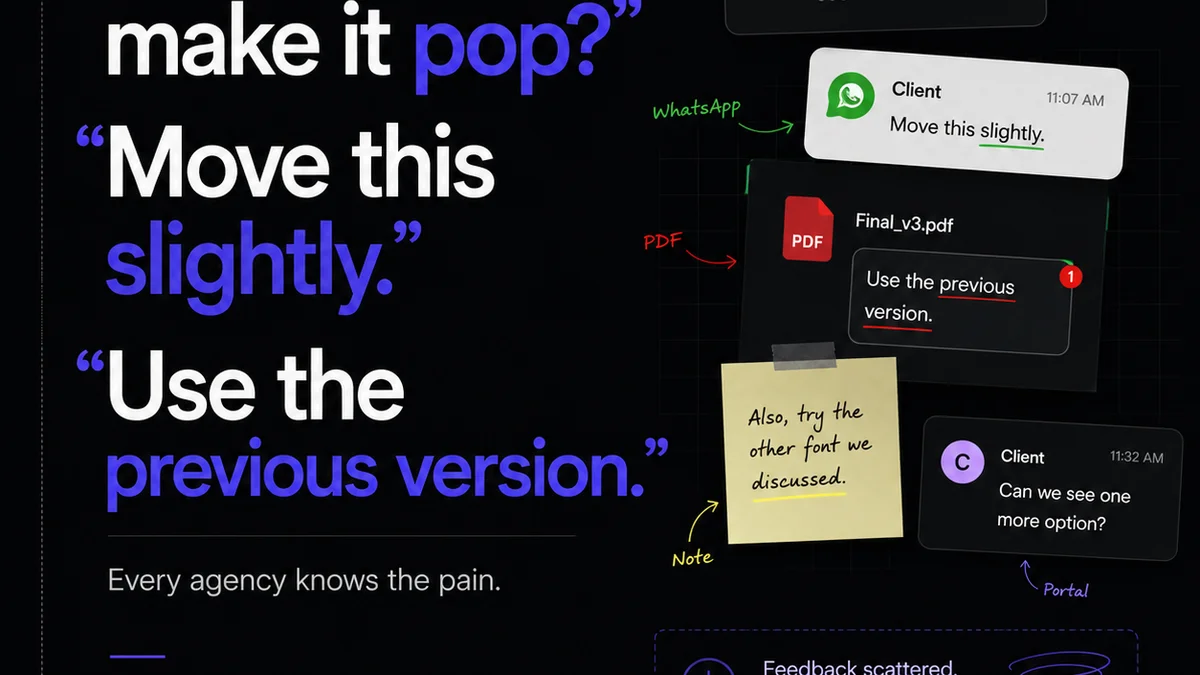
Most agencies and in-house teams think scaling brand governance is about more rules. More guidelines. More sign-offs.
They believe the path to consistency as you grow is simply tightening the screws.
None of that is wrong. But it’s incomplete.
The real challenge isn’t enforcement; it’s enablement. It’s building a system that makes the right thing the easiest thing, for everyone, all the time.
The Hard Truth: Governance Isn't About Control, It's About Clarity
You can’t police your way to brand consistency. Not when you have multiple teams, multiple projects, and an ever-expanding roster of deliverables. Trying to manually check every piece of creative against a sprawling brand guide is a recipe for burnout and missed deadlines.
The deeper truth is that scalable brand governance isn’t about restricting creativity; it’s about empowering your teams with the clarity and tools they need to execute flawlessly.
It’s about building a framework where brand compliance is baked in, not bolted on.
1. Define What “On-Brand” Actually Means (Beyond the Visuals)
Your brand guide is probably thick. It covers logos, colors, typography. Maybe even tone of voice.
But what about the *experience* of the brand? The way clients are onboarded? The cadence of communication? The way feedback is given and received?
These operational aspects are just as critical to brand perception as a perfectly placed logo.
Beyond the Style Guide
Think about your brand as a holistic entity. What are the core values that drive your business?
- How do you communicate them internally?
- How do they manifest in client interactions?
- What are the non-negotiables for client satisfaction?
When governance extends beyond aesthetics, you create a more robust and resilient brand.
2. Systemize Your Approval Workflows
This is where most agencies trip up. They have a vague idea of who approves what, but it’s often ad-hoc.
A junior designer finishes a social post. Who sees it next? The art director? The account manager? The client?
Without a clear, documented, and repeatable workflow, you’re relying on tribal knowledge and last-minute scramble.
The Bottleneck of Black Boxes
When approval processes are opaque, things get lost. Feedback gets misinterpreted. Revisions pile up.
This isn’t just inefficient; it’s damaging to your brand reputation. Clients notice delays and confusion.
You need a system that:
- Clearly defines each stage of the approval process.
- Assigns clear ownership at each step.
- Sets realistic timelines for feedback and revisions.
- Provides a single source of truth for approvals and changes.
3. Centralize Your Brand Assets and Guidelines
Scattered files on shared drives. Outdated versions of logos. Guidelines buried in obscure folders.
This is the enemy of scalable governance.
If your team can’t easily find the correct, latest version of a brand asset or guideline, they’ll either guess, use the wrong thing, or waste precious time searching.
The Single Source of Truth
Your brand assets and guidelines need to be accessible and version-controlled.
This means:
- A centralized digital asset management (DAM) system.
- Clearly organized and labeled files.
- Easy access to the latest brand guidelines, including operational protocols.
- Permissions management to ensure the right people can access and update assets.
4. Empower Your Teams with Self-Serve Resources
The goal of governance is not to make every decision by a central authority. It’s to equip everyone else to make the right decisions themselves.
This requires providing them with the necessary tools and information.
Proactive Enablement, Not Reactive Policing
Think about training and onboarding.
- Are new hires given clear, accessible brand guidelines and workflow protocols?
- Are there templates and examples readily available for common deliverables?
- Are there quick reference guides for specific brand elements or processes?
When your teams feel confident and equipped, they’re far more likely to stay on-brand.
5. Implement Feedback Loops for Continuous Improvement
Brand governance isn’t static. The market shifts, client needs evolve, and your own processes can always be refined.
You need mechanisms to gather feedback on the governance system itself.
Listen and Adapt
How do you know if your brand guidelines are practical? If your approval workflows are efficient?
- Regular check-ins with project teams.
- Surveys or feedback forms on the effectiveness of brand resources.
- Post-project reviews specifically addressing governance adherence and pain points.
Treat your brand governance system like any other product: it needs iteration.
Where Revue Fits In
Scaling brand governance across multiple teams requires a robust system for managing feedback, revisions, and approvals. This is precisely where Revue excels.
Revue provides a centralized platform where all creative assets can be uploaded, reviewed, and approved. Instead of relying on scattered emails, endless comment threads, or clunky file-sharing services, your teams can collaborate in one place.
Centralized Feedback: Streamline client and internal feedback. All comments are attached directly to the specific version of the asset, eliminating confusion and lost revisions. This ensures everyone is working from the same, up-to-date context.
Revision and Approval Visibility: Track the entire revision history. See who approved what, when, and why. This transparency builds accountability and provides a clear audit trail, crucial for maintaining brand consistency and managing client expectations.
Quality Assurance Checks: Use Revue to implement your defined quality checks. Before final delivery, ensure all brand guidelines, client approvals, and internal sign-offs are complete. This proactive step minimizes errors and upholds your agency’s standard of excellence.
By centralizing these critical functions, Revue helps agencies and in-house teams build a more efficient, transparent, and scalable brand governance framework. It moves the process from a reactive bottleneck to a proactive enabler of quality.
Final Thought
Is your brand governance system a safeguard, or a straitjacket? The difference lies in whether you’re enabling your teams or just trying to control them. True scalability comes from clarity, not just compliance.
Frequently asked questions
What is brand governance?
Brand governance is the framework of rules, processes, and standards that ensure a brand is consistently represented across all touchpoints, both internally and externally. It goes beyond visual guidelines to include operational aspects like communication, client interaction, and feedback loops.
Why is scaling brand governance difficult?
Scaling is difficult because growth often leads to more complex workflows, more people involved, and decentralized decision-making. Traditional methods of manual review and strict enforcement become bottlenecks, leading to inconsistencies and inefficiencies.
How can technology help with brand governance?
Technology, like centralized feedback and approval platforms (e.g., Revue), can automate and streamline the governance process. It provides a single source of truth for assets and guidelines, enhances transparency, and creates clear audit trails, making it easier to maintain consistency across teams.
What are the key components of a scalable brand governance system?
A scalable system includes clearly defined brand standards (visual and operational), systematized approval workflows, centralized asset management, self-serve resources for teams, and feedback loops for continuous improvement.