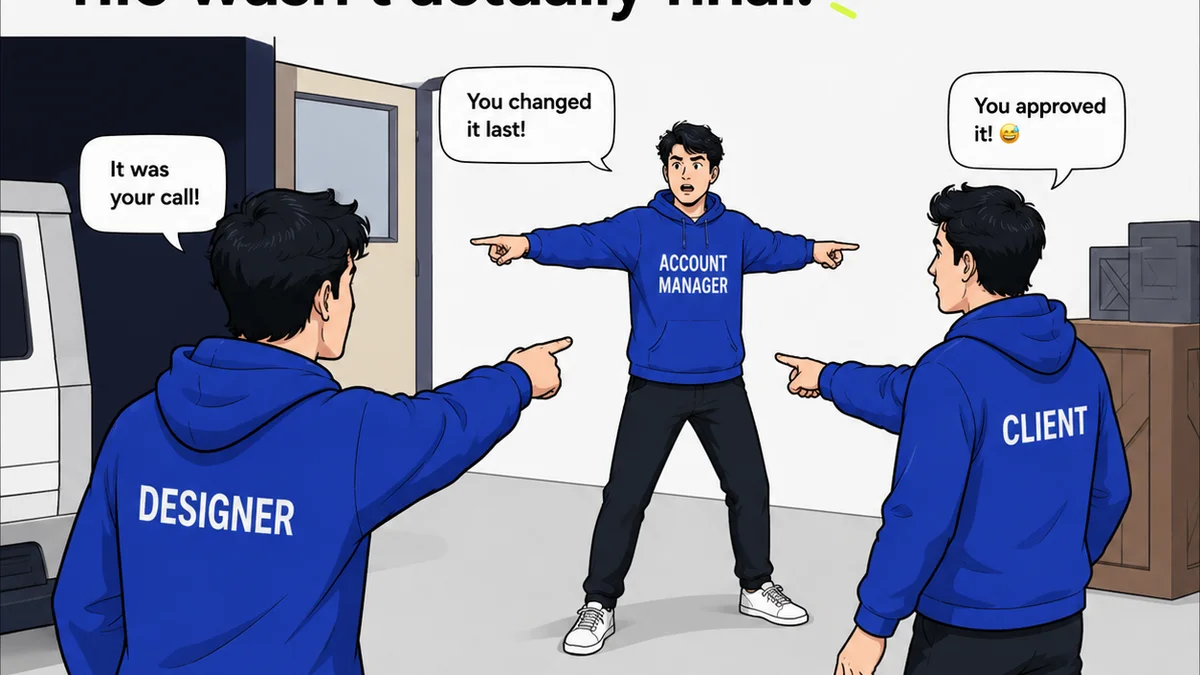
Everyone says scaling a creative agency means hiring more talent. More designers, more account managers, more strategists. That’s the obvious path.
It’s not wrong. But it’s incomplete. And for agencies chasing enterprise clients, it’s often the wrong path entirely.
The Hard Truth: Scale is About Systems, Not Just Staff
Enterprise clients aren’t just bigger versions of your SMB clients. They have different needs, different processes, and different expectations. They demand rigor, predictability, and demonstrable ROI. Simply adding headcount to your existing structure won’t cut it. It just adds overhead and complexity.
True scale for enterprise work comes from building robust, repeatable systems that can handle complexity and volume without breaking. It's about operational excellence, not just creative output.
This means a fundamental shift in how you manage projects, client relationships, and internal workflows.
1. Mastering the Enterprise Brief: Beyond the Quick Chat
SMB clients might be happy with a phone call and a handshake. Enterprise clients need detailed, documented requirements. Their briefs are often the result of internal cross-functional discussions, stakeholder alignment, and budget approvals. Yours needs to match that level of formality and detail.
Deconstruct the Request
Your intake process must evolve. It’s not just about understanding the creative ask; it’s about understanding the business objective behind it. Ask:
- What business problem does this creative solve?
- Who are the key stakeholders and decision-makers?
- What are the defined KPIs for success?
- What are the brand guidelines, legal constraints, or compliance requirements?
- What is the approval process and timeline?
A generic brief template won’t suffice. You need a structured, comprehensive brief that mirrors the enterprise client’s internal documentation. This document becomes your contract, your roadmap, and your defense against scope creep.
Translate Business Goals into Creative Action
Enterprise projects are rarely just about aesthetics. They’re about driving measurable business outcomes. Your brief response needs to clearly articulate how your creative strategy aligns with their KPIs. This requires a deeper level of strategic thinking than many agencies are accustomed to.
This means your account and strategy teams need to be as comfortable discussing market share and conversion rates as they are discussing brand voice and visual design.
2. Building Predictable Workflows for Complex Projects
Enterprise projects often involve multiple workstreams, numerous stakeholders, and extensive review cycles. A fluid, agile approach that works for smaller projects can quickly devolve into chaos.
Standardize Your Processes
You need clearly defined, documented workflows for common enterprise project types. This includes:
- Project kickoff
- Discovery and research
- Creative concepting and presentation
- Internal reviews
- Client reviews and feedback consolidation
- Revision rounds
- Final delivery and asset management
- Post-launch analysis
Each stage should have defined deliverables, timelines, and responsibilities. This predictability is what enterprise clients pay for. They need to know what to expect, when to expect it, and who is accountable.
The Power of Templates and Checklists
Leverage templates for everything: SOWs, project plans, status reports, creative briefs, and even client feedback summaries. Checklists are invaluable for ensuring critical steps aren’t missed, especially during complex delivery phases.
Think about the legal and compliance review processes. These are often non-negotiable for enterprise clients. Your workflow must bake these reviews in from the start, not as an afterthought.
3. Managing Stakeholder Expectations and Communication
Enterprise organizations are rarely monolithic. You’ll likely be dealing with multiple departments, each with its own priorities and perspectives. This can lead to conflicting feedback and delayed decisions.
Centralize Communication Channels
Avoid a thousand email threads. Establish clear, centralized communication protocols. This might involve dedicated Slack channels, regular (and structured) video calls, or a dedicated project management platform.
The goal is a single source of truth for all project-related communication. This prevents misinterpretations and ensures everyone is working from the same information.
Define Roles and Responsibilities Clearly
Who is the ultimate decision-maker? Who provides feedback on design? Who approves legal compliance? You need this mapped out and agreed upon by the client upfront.
Use RACI matrices (Responsible, Accountable, Consulted, Informed) if necessary. This clarity prevents bottlenecks and ensures feedback loops are efficient.
Proactive Reporting is Key
Don’t wait for clients to ask for updates. Implement a regular, structured reporting cadence. Your reports should be concise, highlight progress against milestones, flag any risks or blockers, and clearly state next steps.
These reports serve as a vital communication tool, demonstrating your agency's professionalism and control over the project.
4. Implementing Rigorous Quality Assurance (QA)
For enterprise clients, a minor bug or an overlooked detail isn't just an inconvenience; it can have significant brand or legal repercussions. Your QA process needs to be robust and systematic.
Beyond Spellcheck
QA isn't just about proofreading copy. It encompasses:
- Functional testing: Do interactive elements work as intended?
- Cross-browser/device testing: Does the work render correctly across all specified platforms?
- Accessibility testing: Does it meet WCAG standards? (This is often a legal requirement for enterprise clients.)
- Brand compliance: Does it adhere strictly to brand guidelines?
- Legal/Compliance review: Has all necessary legal and regulatory sign-off been obtained?
- Asset delivery checks: Are all files correctly named, formatted, and organized as per the SOW?
This requires dedicated QA resources or a standardized QA checklist that every team member follows rigorously.
Automate Where Possible
Tools can help automate aspects of QA, from accessibility checks to broken link scans. Invest in tools that can streamline this process and improve accuracy.
This systematic approach builds trust. It shows the client you are meticulous and have their best interests at heart.
5. Financial Management and Scalability
Enterprise projects often involve larger budgets, longer payment cycles, and more complex invoicing. Your financial systems need to keep pace.
Robust SOWs and Change Order Processes
Your Statement of Work (SOW) must be ironclad. It should detail scope, deliverables, timelines, pricing, payment terms, and the process for handling scope changes. The change order process needs to be formal, documented, and require client sign-off before any additional work begins.
Clear Payment Terms and Invoicing
Understand the client's payment terms and factor them into your cash flow projections. Ensure your invoicing is accurate, timely, and submitted through their required channels. Delays in invoicing or errors can significantly impact your agency's financial health.
Resource Planning and Allocation
Scaling for enterprise means accurately forecasting resource needs. This isn't just about headcount; it's about having the right skills available at the right time. Invest in project management software that provides visibility into team capacity and project timelines.
This forward-looking approach prevents over-commitment and ensures you can deliver consistently without burning out your team.
Where Revue Fits In
Managing enterprise-level client feedback, revisions, and approvals across multiple stakeholders can be a significant challenge. This is where a centralized platform like Revue becomes critical for scaling.
Revue streamlines the review and approval process. It provides a single, visual space for clients to leave contextual feedback directly on creative assets. This eliminates the ambiguity of email chains and scattered notes.
For enterprise teams, this means:
- Centralized Feedback: All comments, annotations, and discussions live in one place, tied to the specific asset version.
- Clear Revision Tracking: Easily manage multiple rounds of revisions, with clear visibility into what has been changed and what still needs approval.
- Streamlined Approvals: Formalize the approval process with clear sign-off stages, reducing back-and-forth and accelerating project timelines.
- Version Control: Ensure everyone is working from the latest approved version, minimizing errors and confusion.
- Audit Trail: Maintain a clear record of feedback, discussions, and approvals for accountability and reference.
By centralizing these critical workflow components, Revue helps your agency maintain control and efficiency, even when juggling the complexities of enterprise client demands.
Final Thought
Scaling for enterprise clients is less about growing your team and more about refining your operations. It’s about building a machine that can reliably and predictably deliver high-quality work, manage complex stakeholder environments, and integrate seamlessly with client processes.
Are your agency’s systems ready for the demands of enterprise-level partnerships?
Frequently asked questions
What's the biggest mistake agencies make when trying to scale for enterprise clients?
The biggest mistake is assuming scale means hiring more people. While talent is crucial, simply adding headcount to an inefficient system creates more problems. True scale for enterprise clients comes from implementing robust, repeatable systems for project management, communication, and quality assurance.
How do enterprise clients differ from SMB clients in terms of project needs?
Enterprise clients demand more rigor, predictability, and measurable ROI. They often have complex internal structures, multiple stakeholders, and stricter compliance requirements. Projects are typically larger, with longer review cycles and a need for detailed documentation and formal processes, unlike the more fluid approach often suitable for SMBs.
What are the key components of a robust QA process for enterprise work?
A robust QA process for enterprise work goes beyond basic proofreading. It includes functional testing, cross-browser/device testing, accessibility compliance (e.g., WCAG standards), brand guideline adherence, legal/compliance review, and meticulous checks on asset delivery formats and organization. Automation should be used where possible to improve accuracy and efficiency.
How can an agency manage conflicting feedback from multiple enterprise stakeholders?
The key is to establish clear communication protocols and define roles upfront. Centralize feedback in one platform, clearly identify the ultimate decision-maker, and use structured reporting to manage expectations. A RACI matrix can be helpful in defining responsibilities for each stakeholder.