Everyone talks about scaling creative teams. More people, better tools, faster timelines. It sounds like a simple equation: add resources, get more output.
None of that is wrong. But it’s incomplete.
The hard truth is that scaling creative productivity isn't about doing more of the same, faster. It’s about fundamentally changing *how* you work, especially when you have more than one team involved. If your current process breaks down with three people, it’ll shatter with thirty.
1. The Myth of the Autonomous Creative Silo
The assumption: Each creative team is a self-contained unit, a black box that takes a brief and spits out finished work. They manage their own projects, their own feedback loops, their own revisions.
This works fine for a small, single team. Maybe even two.
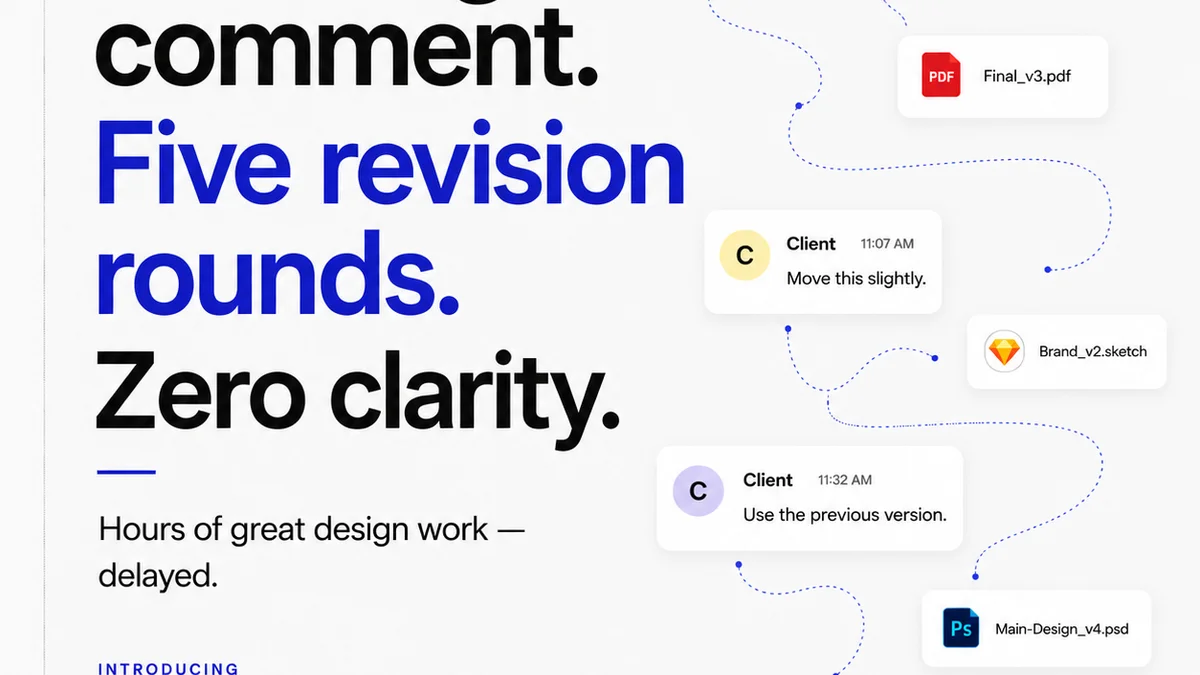
But once you add more teams, especially if they work on related projects or the same clients, this autonomy becomes a bottleneck. Information gets lost. Duplication of effort becomes rampant. Client feedback becomes a game of telephone, distorted with every transfer.
The Cost of Disconnection
Think about what happens:
- Team A gets feedback from the client. They translate it for Team B, who needs to implement a change. Something gets missed.
- Team C is working on a campaign element that Team D already completed a version of six months ago. No one remembered to check the archive.
- Client reviews become chaotic. Different teams present different versions. The client is confused, and their feedback becomes generic.
- Deadlines slip because one team is waiting on another, and no one has visibility into the dependency.
This isn't about blaming individuals. It’s about the system.
2. Centralize Feedback, Not Just Files
Your creative teams need a single source of truth for *feedback*. Not just final assets, but the entire conversation around them.
When feedback is scattered across emails, Slack channels, and random meeting notes, it’s impossible to track progress or understand the client's true intent. This is where most scaling efforts fail.
You need a system that captures every comment, every revision request, every approval, in context, tied directly to the creative asset itself. This isn't just about organization; it's about clarity and accountability.
What a Centralized System Looks Like
- Contextual Comments: Feedback attached directly to the specific version of the design, video, or copy it refers to.
- Revision Tracking: A clear history of changes made, who requested them, and when.
- Approval Workflows: Defined steps for review and sign-off, eliminating ambiguity.
- Version Control: Easy access to all previous versions, preventing accidental overwrites or confusion.
This eliminates the
Frequently asked questions
What's the biggest mistake agencies make when trying to scale creative output?
Focusing solely on adding more people or tools without addressing the underlying workflow inefficiencies. If the process is broken, more resources will just break it faster and more expensively.
How can multiple creative teams work together without stepping on each other's toes?
By establishing clear communication channels and a centralized system for feedback and approvals. This ensures everyone is working from the same information and understands project dependencies.
Is it really possible to track feedback effectively across many projects and teams?
Yes, with the right tools. Look for platforms that allow feedback to be attached directly to creative assets, with clear version control and approval tracking. This makes managing complex projects feasible.
How does centralized feedback help with client relationships?
It reduces confusion and miscommunication. Clients see a clear, organized process for their reviews, leading to more precise feedback and faster approvals. It builds trust and demonstrates professionalism.