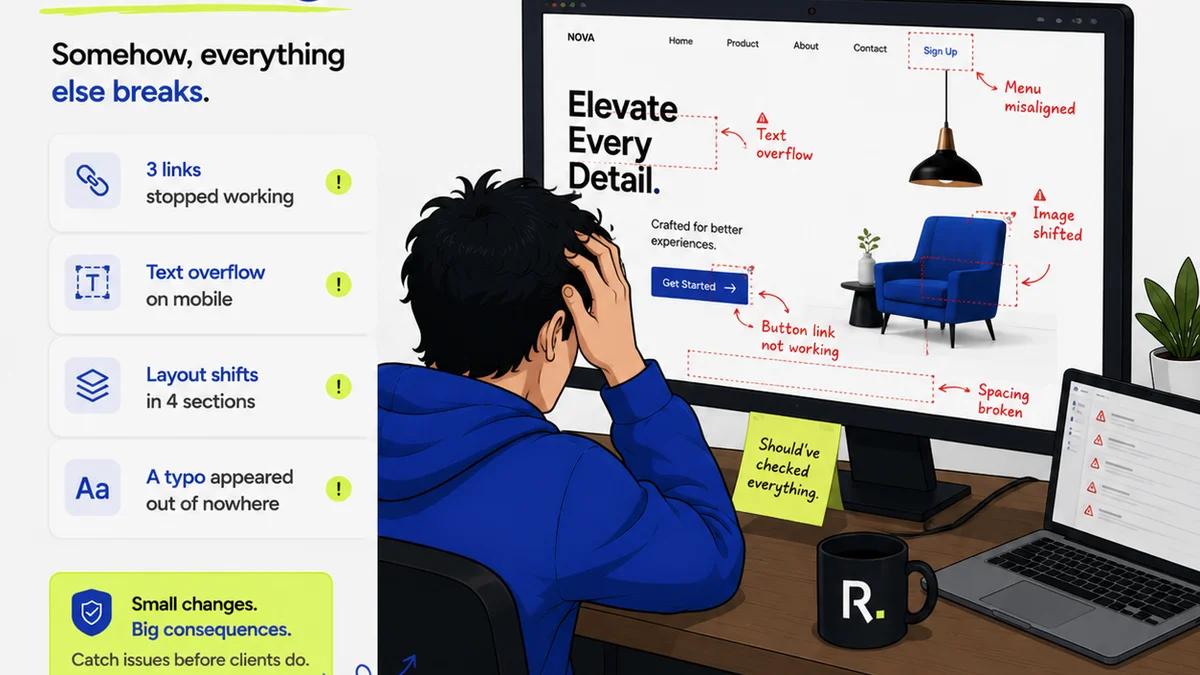
Everyone wants to scale their design agency. More clients, bigger projects, higher revenue. It’s the dream, right?
But there’s a common narrative: scaling means hiring more people, working longer hours, and pushing harder. It’s often framed as a necessary evil, a painful but inevitable phase.
None of that is wrong. But it’s incomplete.
The real truth is that scaling an agency without burning out your team isn't about working *harder*. It’s about working *smarter*. It requires a fundamental shift in how you manage workflow, client communication, and internal processes.
Burnout isn't a badge of honor; it's a symptom of systemic inefficiency. And it’s the fastest way to tank your agency’s growth, culture, and profitability.
1. Redefine Your Definition of “Busy”
Agencies often confuse busyness with productivity. A packed schedule doesn't equal progress.
When you're scaling, the goal isn't to fill every minute of every day. It's to ensure the minutes you *are* filling are focused on high-value activities that move the needle.
The Myth of Constant Activity
Many agency owners fall into the trap of thinking that if the team isn't actively designing or in a client meeting, they aren't working effectively. This leads to:
- Unnecessary meetings that break up deep work.
- Constant context-switching that kills efficiency.
- Pressure to appear busy, even when tasks are done.
- Internal projects or training being deprioritized.
This frantic pace is unsustainable and leads directly to burnout.
Focus on Impact, Not Just Output
True productivity comes from focused effort on the right tasks. Scaling requires you to identify and protect that focus time.
- Define clear project milestones and deliverables.
- Ruthlessly prioritize tasks based on client impact and agency goals.
- Implement time-blocking for deep work sessions.
- Empower your team to say “no” to distractions or low-impact requests.
When you shift the focus from being constantly busy to consistently delivering high-impact work, you create space for efficiency and reduce the pressure that leads to burnout.
2. Systematize Your Client Feedback Loop
Client feedback is the lifeblood of any design agency. But it’s also a notorious bottleneck and a prime source of frustration and wasted time.
Unstructured, back-and-forth feedback is a silent killer of team morale and agency profitability. Scaling this kind of process is like pouring gasoline on a fire.
The Chaos of Disconnected Feedback
How many times has feedback come through:
- A long email chain with buried comments?
- A Slack message that gets lost?
- A verbal note from a sales rep that wasn't fully captured?
- A client call where everyone *thought* they agreed on revisions, but didn't document them?
This leads to:
- Misinterpretations and rework.
- Arguments over what was actually requested.
- Endless revision cycles that drain resources.
- Team members feeling like they’re constantly chasing moving targets.
Create a Single Source of Truth
To scale effectively, you need a centralized, organized system for all client feedback and approvals.
- Establish clear communication channels for feedback.
- Use a dedicated platform where feedback can be logged, tracked, and resolved.
- Ensure all stakeholders are using the system.
- Make feedback actionable by requiring specific comments tied to design elements.
When feedback is clear, documented, and easily accessible, you eliminate ambiguity, reduce rework, and speed up the revision process. Your team can focus on design, not deciphering cryptic notes.
3. Master the Art of Revision and Approval
Revisions and approvals are where projects live or die. And for many agencies, they are a black hole of time and energy.
The assumption is that clients just want to tweak things. The reality is, most clients want clarity and confidence that their project is on track and meeting their goals.
The Approval Paralysis
When the revision and approval process is messy, you see:
- Endless rounds of minor tweaks that don't significantly improve the work.
- Clients feeling like they don't have a clear path to
Frequently asked questions
What is the biggest mistake agencies make when trying to scale?
The biggest mistake is assuming scaling means working harder or faster without improving underlying processes. This often leads to team burnout, decreased quality, and unsustainable growth.
How can I improve client feedback processes to avoid rework?
Implement a centralized feedback system where all comments and approvals are logged and tracked. This eliminates ambiguity, ensures everyone is on the same page, and reduces the chances of costly rework.
Is it possible to scale an agency without hiring more people?
While hiring is often part of scaling, it's not the only way. Optimizing your internal processes, automating tasks, and improving efficiency can allow you to handle more work with your existing team, or hire strategically rather than reactively.
How does managing revisions impact team burnout?
Poorly managed revisions are a major source of frustration. Endless, unclear feedback cycles lead to wasted effort and stress. Streamlining the revision and approval process with clear tools and expectations significantly reduces team burnout.