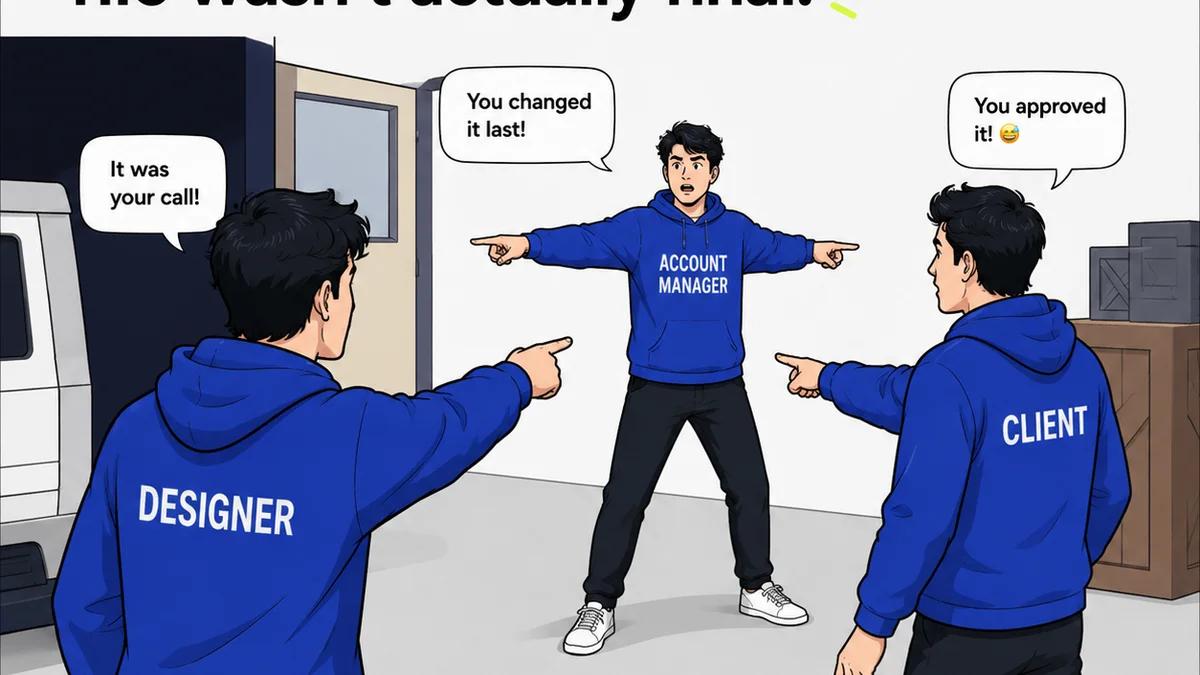
You’ve probably heard that design handoff is all about clear communication. That you need detailed specs, organized files, and maybe a slick presentation deck. None of that is wrong. But it’s incomplete.
The real hard truth? Scaling design handoff across global teams isn't about perfecting the *final* delivery. It's about building a transparent, efficient, and repeatable *process* that works regardless of time zones, languages, or team structures.
Think of it less as a gate and more as a pipeline. A pipeline that needs constant, intelligent maintenance to keep creative output flowing.
1. The Myth of the 'Final' Handoff
Many teams treat handoff as the finish line. The designer throws the baton over the wall to development, QA, or marketing, and their job is done. Then, chaos.
This linear, sequential thinking breaks down the moment you add complexity:
- Multiple time zones mean delays and misinterpretations.
- Different cultural contexts can lead to misunderstandings of tone or intent.
- Remote or distributed teams lack the spontaneous hallway conversations that clarify issues.
- Varying levels of technical expertise across teams require different approaches.
The assumption is that once the design is 'done,' the rest is just execution. This ignores the inherent ambiguity in creative work and the friction of distributed collaboration.
The Real Problem: Information Silos
When handoff is treated as an endpoint, critical context gets trapped. Designers might understand the 'why' behind a certain element, but if that context isn't passed on, developers might make suboptimal technical decisions or QA might miss crucial edge cases.
This creates rework. It creates friction. It kills velocity.
2. Building a Continuous Handoff Pipeline
Scaling means building a system, not relying on heroic individual efforts. A continuous handoff pipeline is one where information flows freely and transparently, from initial concept through to final deployment and beyond.
Establish a Single Source of Truth
Every team, no matter how distributed, needs access to the same, up-to-date information. This means centralizing:
- Design files (obviously)
- Style guides and design systems
- Brand guidelines
- Project briefs and objectives
- Feedback and revision history
- Asset libraries
Scattered documents, outdated links, and version control nightmares are the enemy of scale. A single, accessible hub is non-negotiable.
Define Clear Handoff Stages (Not Just One Moment)
Handoff isn't a single event. It’s a series of checkpoints. Think about:
- Early Asset Handoff: Providing developers with key UI components or early mockups for foundational work.
- Interactive Handoff: Sharing prototypes that allow for realistic user flow testing.
- Asset Export Handoff: The more traditional export of final graphics, icons, and fonts.
- Content Handoff: Ensuring copy and any localized text are ready and correctly formatted.
- Performance Handoff: Discussing or documenting any design decisions that impact performance (e.g., image optimization).
Each stage has specific needs and deliverables. Documenting these clearly prevents surprises.
Automate Where Possible
Repetitive tasks eat up valuable time, especially across time zones. Look for opportunities to automate:
- Asset export and optimization.
- Generating basic code snippets from design elements.
- Notifying relevant teams when updates are ready.
- Linking design elements to their corresponding code components.
Automation reduces human error and speeds up the process significantly.
3. Embracing Asynchronous Collaboration
Global teams inherently operate asynchronously. Fighting this is a losing battle. Instead, lean into it.
Document Everything, Assume Nothing
If it’s not written down, it doesn’t exist. This applies to:
- Design decisions and their rationale.
- Feedback provided and incorporated.
- Scope changes and approvals.
- Technical constraints or considerations.
- User flow logic.
Detailed documentation serves as a shared brain for the team, accessible anytime. This is crucial for teams that can’t just hop on a quick sync call.
Leverage Visual Communication Tools
While text is essential, visuals are often clearer and faster, especially for design.
- Annotate designs directly.
- Use video walkthroughs to explain complex interactions.
- Create flowcharts for user journeys.
- Use visual cues in project management tools.
This reduces the need for real-time translation or lengthy explanations.
Set Clear Expectations for Response Times
When you’re not all online at the same time, you need to know when to expect a reply. Define:
- Standard turnaround times for feedback.
- Escalation paths for urgent issues.
- Core working hours for each region (if applicable).
This manages expectations and prevents bottlenecks caused by waiting for a reply that’s unlikely to come for another 12 hours.
4. The Role of the Handoff Champion
Even with the best systems, people are key. Designating a handoff champion or point person on both the design and receiving teams can smooth out the process.
This isn't about adding bureaucracy. It’s about having a dedicated individual responsible for:
- Ensuring all necessary documentation is complete.
- Facilitating communication between teams.
- Troubleshooting issues that arise during handoff.
- Gathering feedback on the handoff process itself.
This person acts as a bridge, ensuring smooth transitions and continuous improvement.
5. Where Revue Fits In
Scaling design handoff across global teams demands visibility, clarity, and accountability. You need a central hub that doesn't just store files, but manages the entire feedback and approval lifecycle.
Revue acts as that central nervous system for your creative workflow. It consolidates client feedback, making it impossible for crucial comments to get lost in email chains or scattered across different platforms. Designers can present work, gather structured feedback, and track every revision. Developers and other stakeholders can see exactly what was approved, when, and why. This transparency is invaluable for distributed teams.
When everyone is working from the same, approved version of truth, and the history of decisions is clear, the friction of handoff melts away. You reduce the need for constant syncs and build confidence that the right thing is being built. It’s not just about sharing files; it’s about sharing understanding.
6. Final Thought
Are you treating design handoff as a final step, or the start of a continuous, scalable process? The answer reveals whether you’re building a creative engine or just a series of bottlenecks. How can you shift your perspective today?
Frequently asked questions
What is the biggest challenge in scaling design handoff globally?
The biggest challenge is the breakdown of communication and context due to time zone differences, cultural nuances, and lack of a unified process. Treating handoff as a single 'final' step rather than a continuous pipeline exacerbates these issues.
How can asynchronous collaboration improve design handoff?
Asynchronous collaboration allows teams in different time zones to contribute and review work without needing to be online simultaneously. This relies heavily on detailed documentation, clear communication channels, and robust version control to ensure everyone has access to the latest information.
What role does documentation play in global design handoff?
Documentation is critical. It serves as the shared brain for distributed teams, capturing design rationale, feedback, approvals, and technical specifications. This ensures that context isn't lost and that everyone is working from the same understanding, regardless of when they access the information.
How can technology help scale design handoff?
Technology can help by centralizing assets and communication, automating repetitive tasks like asset export, facilitating visual feedback and annotation, and providing a clear audit trail of revisions and approvals. Tools that offer a single source of truth are essential.