Everyone thinks scaling review automation is about finding the right software. That the problem lies in integrations, APIs, or maybe a more powerful AI tool.
None of that is wrong. But it’s incomplete.
The hard truth is that scaling review automation, especially across global teams, is fundamentally a workflow problem. It’s about standardizing how feedback is given, revisions are managed, and approvals are tracked, regardless of time zones or office locations.
Software can’t fix broken processes. It only amplifies them.
1. Standardize the Source of Truth for Feedback
Global teams mean dispersed teams. Dispersed teams mean a higher chance of fragmented communication. This is where feedback goes to die.
You can’t automate what you can’t find. You can’t track what isn’t documented. And you certainly can’t enforce standards when feedback lives in:
- Endless email chains
- Random Slack channels
- Personal cloud storage links
- Scattered Google Docs
- Verbal notes that disappear into thin air
The first step to scaling automation is creating a single, accessible place where all feedback lives. This isn’t just about storing it; it’s about structuring it.
Centralized vs. Decentralized Feedback
Some argue for decentralized feedback, letting each regional team manage its own process. This sounds like flexibility. In reality, it’s a recipe for chaos.
When each region uses different tools or methods, you lose visibility. You can’t compare performance, identify bottlenecks, or ensure brand consistency. It’s like trying to conduct an orchestra where each musician has their own sheet music.
A centralized system for feedback means:
- One platform: Everyone uses the same tool.
- Clear ownership: Project managers can see who’s assigned to review what.
- Version control: Feedback is tied to specific creative assets and versions.
- Audit trails: Every comment, revision, and approval is recorded.
This isn't about micromanagement; it's about establishing a common language and process for creative critique.
2. Define Your Review Stages and Workflows
Automation thrives on predictability. If every project has a unique review process, your automation efforts will be a constant firefighting exercise.
You need to map out the typical lifecycle of a creative asset. What are the standard stages it goes through?
Typical Stages in Creative Review
- Internal Draft Review: Initial check by the creative team or ACD.
- Client Review 1: First round of feedback from the primary client contact.
- Revision Pass: Creative team implements feedback.
- Secondary Client Review: Further feedback from client stakeholders.
- Legal/Compliance Check: If applicable, a review by legal or brand compliance.
- Final Approval: Sign-off from the key decision-maker.
For each stage, define:
- Who is responsible for providing feedback?
- What is the expected turnaround time?
- What is the output of this stage? (e.g., consolidated feedback, specific approval)
- What triggers the next stage?
This level of detail is crucial. Without it, your automation tools are just guessing.
Automating Workflow Triggers
Once defined, these stages become triggers for automation. For example:
- When Client Review 1 is complete (all required stakeholders have commented), automatically notify the creative lead.
- When a revision pass is uploaded, automatically trigger a notification to the client stakeholder who requested the changes.
- When Final Approval is given, automatically move the asset to the final delivery folder and notify the production team.
This might seem basic, but it’s the foundation for scaling. You’re building a predictable sequence that software can reliably manage.
3. Establish Clear Roles and Responsibilities
Global teams often have complex reporting structures. When it comes to creative reviews, ambiguity is a killer.
Who has the final say? Who is responsible for consolidating feedback? Who needs to be notified at each stage?
This isn’t just about org charts; it’s about defining roles within the review process itself.
Common Pitfalls in Global Roles
- The 'Everybody's Invited' Trap: Sending every asset to every person on a global stakeholder list. This leads to feedback overload and paralysis.
- The 'Silent Stakeholder': Key decision-makers who never weigh in until the last minute, then demand major changes.
- The 'Feedback Bottleneck': A single person or small group responsible for consolidating feedback from multiple regions, creating delays.
You need to assign clear roles for each review stage:
- Feedback Provider: The person whose input is required.
- Consolidator: The person responsible for gathering and synthesizing feedback from multiple sources (often a project manager or creative lead).
- Approver: The person with the final sign-off authority.
- Notifier: The person responsible for escalating issues or moving the process forward.
Automation can help enforce these roles. By assigning specific users to specific tasks within a workflow, you ensure the right people are engaged at the right time, and that no one’s input is missed or ignored.
4. Implement Smart Notification Systems
When you have teams spread across continents, timely communication is non-negotiable. Automated notifications are your lifeline.
But simply blasting emails isn’t effective. It creates noise.
Smart notifications are contextual, relevant, and actionable.
What Makes a Notification 'Smart'?
- Timeliness: Sent when an action is required or completed.
- Relevance: Specific to the user’s role and the task at hand.
- Context: Includes direct links to the asset and the relevant feedback.
- Actionability: Clearly states what needs to be done.
- Escalation: Forwards to a manager or triggers an alert if deadlines are missed.
Consider the time zones. A notification that arrives at 3 AM local time for a reviewer isn't helpful. Your system should ideally have basic time-zone awareness or allow users to set their preferred notification times.
Automated reminders for pending reviews are a game-changer. They reduce the need for manual follow-ups, freeing up project managers.
5. Leverage Automation for Quality Control
Scaling review automation isn't just about speed; it's about maintaining quality and consistency across all your global output.
Automation can act as a gatekeeper, ensuring that assets meet predefined standards before they move to the next stage.
Automated QC Checks
- Brand Guideline Compliance: Basic checks for logo usage, color palettes, and typography.
- Completeness Checks: Ensuring all required elements (e.g., legal disclaimers, call-to-actions) are present.
- Format Checks: Verifying that assets are in the correct file format and dimensions for their intended use.
While complex creative judgment still requires human eyes, these automated checks catch common errors that can slip through in a high-volume, global environment. They ensure that the creative work hitting the client’s desk, or the market, is polished and professional.
Where Revue Fits In
Scaling review automation across global teams isn't about replacing human judgment. It’s about streamlining the process so that human judgment can be applied more effectively.
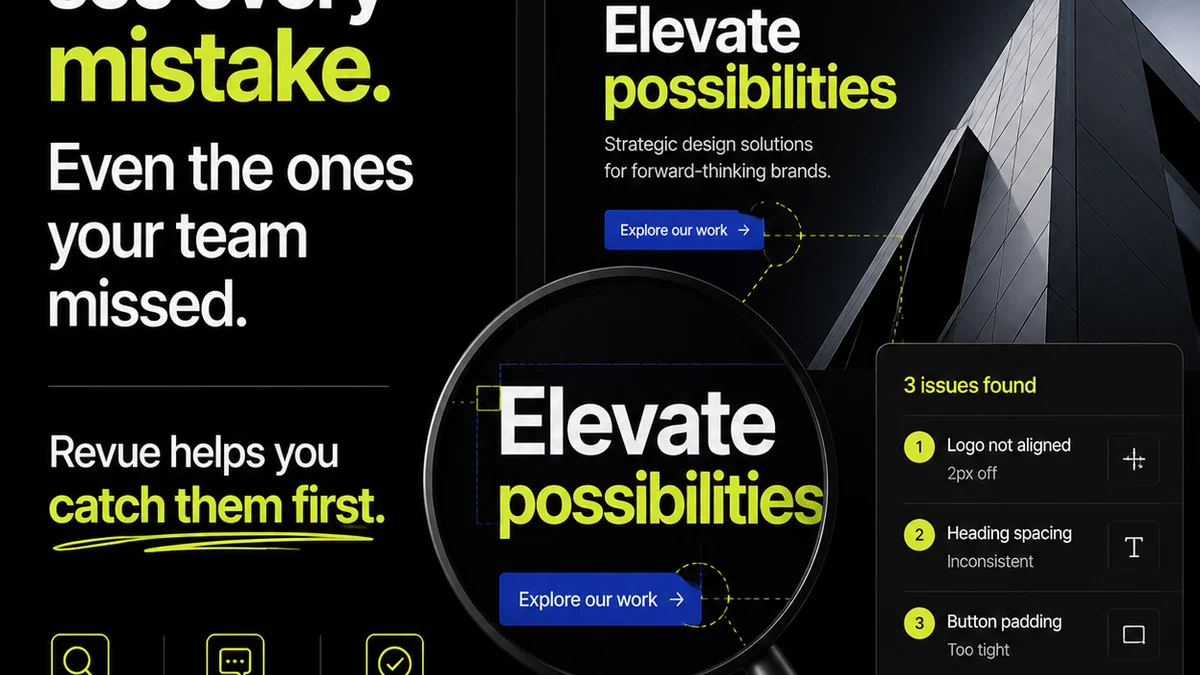
Revue is built to tackle these workflow challenges head-on. It provides a centralized platform where feedback is captured, organized, and acted upon, regardless of where your team is located.
With Revue, you can:
- Centralize all feedback: Keep conversations and comments tied directly to creative assets, creating a single source of truth.
- Define and automate workflows: Set up custom review stages and triggers to ensure predictable progress across global projects.
- Manage revisions and approvals: Gain clear visibility into who needs to review what, when it's due, and whether it's approved.
- Enhance quality control: Ensure that all feedback is addressed and that final assets meet project requirements before delivery.
By standardizing your review processes on a platform like Revue, you remove the friction caused by scattered communication and manual follow-ups. This allows your global teams to operate with greater efficiency and consistency.
Final Thought
The real challenge in scaling review automation isn't the technology itself, but the discipline to standardize your processes and define clear workflows. Are you ready to move beyond the assumption that more tech is the answer, and focus on the operational rigor that truly drives global efficiency?
Frequently asked questions
What's the biggest mistake agencies make when scaling review automation globally?
The biggest mistake is focusing solely on the technology. Scaling review automation is primarily a workflow and process challenge. Without standardized processes for feedback, revisions, and approvals, software will only amplify existing inefficiencies.
How can I ensure consistency in feedback across different global teams?
Establish a single, centralized platform for all feedback. Define clear roles and responsibilities for who provides feedback, who consolidates it, and who has final approval. Standardize the review stages and expected outcomes for each.
What are the key elements of an automated creative review workflow?
Key elements include defining distinct review stages (e.g., internal draft, client review, revisions), assigning specific roles and responsibilities for each stage, setting clear turnaround times, and establishing automated triggers that move assets between stages and notify the right people.
How does automation help with quality control in a global context?
Automation can enforce quality control by implementing checks for brand guideline compliance, ensuring all required elements are present, and verifying file formats and dimensions. This catches common errors before assets reach the final stage or client, maintaining consistency across global output.