Everyone says scaling creative operations means more process. More workflows, more approvals, more project managers. More meetings, probably.
And none of that is wrong. But it’s incomplete. It’s like saying building a skyscraper is about more concrete. Sure, you need a lot of it. But what really matters is how you pour it, reinforce it, and what design you’re building *with* it.
The hard truth about scaling creative requests across global teams isn’t about adding more layers of process. It’s about achieving radical clarity at every single touchpoint. Without it, your “scaled” operation just becomes a bigger, more complex mess.
1. The Illusion of Standardized Process
You’ve probably seen the templates. The intake forms. The Gantt charts. The status update meetings that could have been an email.
These are all attempts to standardize. To make sure that whether the request comes from London, New York, or Singapore, it follows the same path.
But what happens when the request itself is vague? Or when the brief is missing critical context only the local team understands?
The Brief is King (and Queen)
A standardized process applied to an unstandardized brief is a recipe for disaster. You’re just packaging confusion.
Global teams amplify this. What’s obvious to a designer in Berlin might be completely alien to a copywriter in Sydney. Cultural nuances, market specifics, even just different ways of speaking – they all get lost in translation if the brief isn’t razor-sharp.
- Missing target audience details.
- Unclear project objectives.
- Vague deliverables.
- Assumed knowledge that doesn’t travel.
These aren’t process failures. They are clarity failures.
2. Defining “Done” When Everyone’s Apart
What does “approved” mean when the client is in one timezone, the agency team in another, and the legal review in a third?
This is where global scaling hits a wall. Everyone assumes they’re on the same page, but they’re reading different books.
The Ambiguity of Remote Feedback
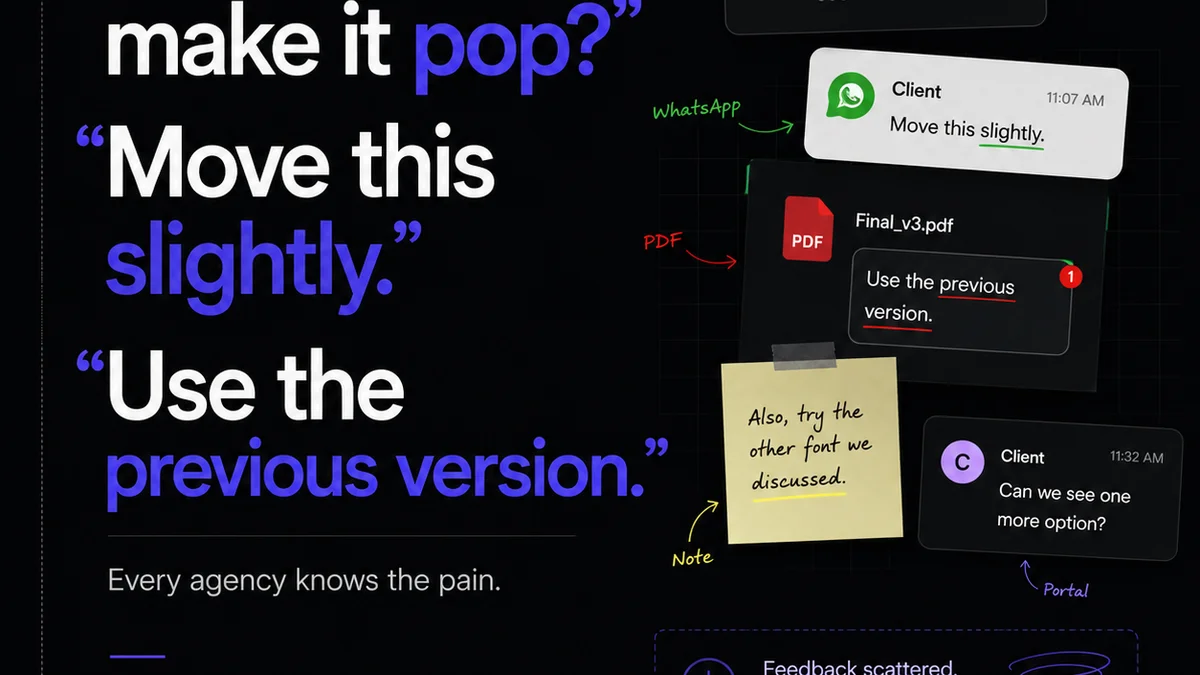
Feedback is the lifeblood of creative work. But remote feedback, especially across timezones, can become a black hole.
Imagine a designer in Tokyo waiting for feedback from a stakeholder in Los Angeles. By the time the feedback arrives, the designer is offline, and the stakeholder has already moved on to the next thing, leaving the designer to guess the *real* intent.
Or worse, conflicting feedback from different stakeholders, none of whom have visibility into what the others have said.
- “Make it pop more.”
- “I don’t love the blue.”
- “Can we try something more… energetic?”
What does this actually mean in practice? Who owns the decision when feedback is subjective and dispersed?
This isn’t a workflow problem. It’s a communication and clarity problem, amplified by distance and time.
3. The Myth of the Centralized Hub
Many agencies think a central project management tool will solve everything. A single source of truth, right?
Wrong. A tool is only as good as the information *inside* it. A cluttered, unclear tool is just a more efficient way to lose things.
Information Silos in Disguise
You might have a central platform, but if the information isn’t structured, contextualized, and easily digestible, you’re creating silos within your hub.
Global teams need more than just access to a tool. They need context. They need to understand the *why* behind the request, the history of decisions, and the exact scope of work, regardless of who is interacting with the asset.
- Static documents lost in folders.
- Endless email chains that are hard to search.
- Version control chaos.
- Lack of clear ownership for tasks and feedback.
A centralized system without centralized clarity is just a bigger problem.
4. Building Clarity: The Real Scaling Lever
If process isn’t the answer, and a tool isn’t enough, what is?
Clarity. It’s the bedrock of efficient, scalable creative operations, especially across distributed teams.
1. Crystal-Clear Briefs, Always.
This means going beyond a template. It means training your teams (and clients) on *how* to brief effectively. What questions *must* be answered? What context is non-negotiable?
Invest time upfront. A few extra hours on a brilliant brief saves days of rework. This needs to be a global standard, with local adaptations where necessary, but the core clarity must be universal.
2. Contextualized Feedback Loops.
Feedback needs to be actionable, attributable, and visible. When a stakeholder comments on a design, they need to see what others have said. They need to understand the original objective. And the creative team needs to know *who* is making the final call.
Establish clear feedback protocols. Define what constitutes a
Frequently asked questions
What's the biggest mistake agencies make when scaling creative requests globally?
The biggest mistake is focusing solely on adding more process (workflows, approvals, meetings) without ensuring radical clarity at every step. This leads to a larger, more complex version of the same problems.
How can global teams ensure feedback is clear and actionable?
Implement systems that make feedback contextual, attributable, and visible. Ensure stakeholders can see previous comments, understand the original brief, and know who has the final decision-making authority. Tools that allow for direct annotation on creative assets are crucial.
Is a central project management tool enough for global teams?
No. A tool is only effective if the information within it is clear, structured, and contextualized. A disorganized tool used by global teams simply becomes a more efficient way to mismanage information and create silos.
What are the key elements of a clear creative brief for global projects?
A clear brief must go beyond a template. It requires answering essential questions about objectives, target audience, deliverables, and success metrics. It should also include essential context that might be assumed locally but is unknown globally. Investing time in the brief upfront saves significant rework later.