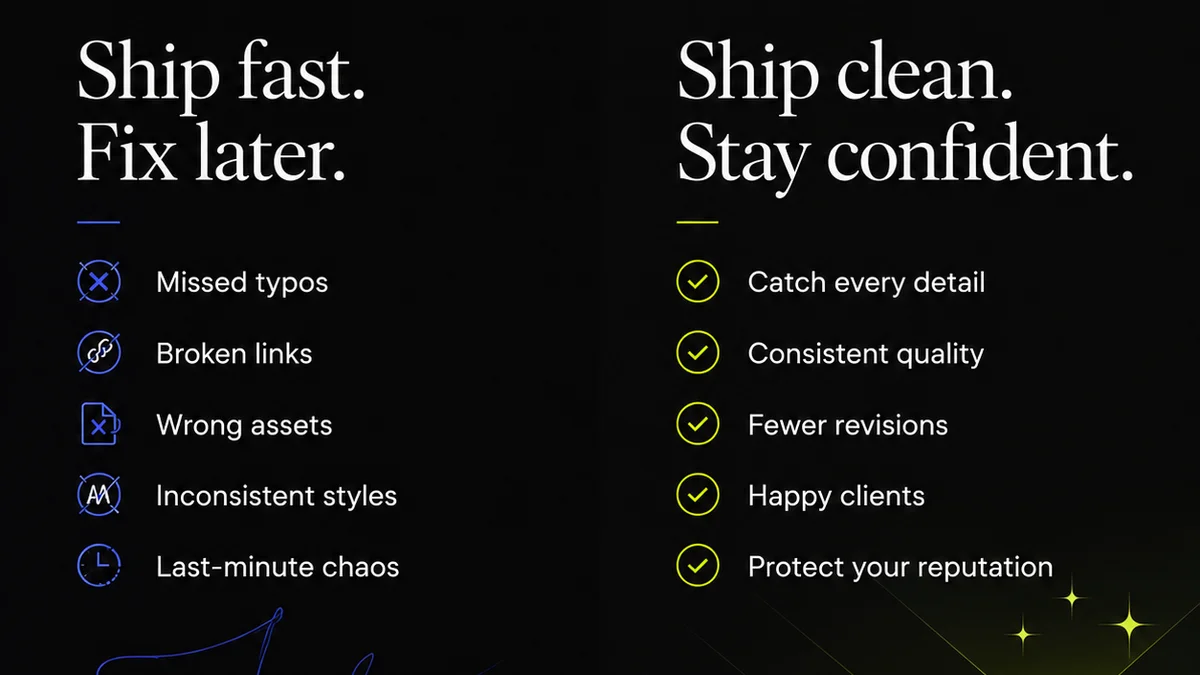
Most agencies think scaling means hiring more bodies. More designers, more account managers, more strategists. The assumption is simple: more people equals more output, equals more revenue.
None of that is wrong. But it’s incomplete.
The hard truth about scaling creative teams is that growth isn't about adding capacity. It’s about optimizing your existing processes so that every person you have, and every person you *will* have, operates at peak efficiency.
Hiring more people into a broken system just creates more chaos. It’s like adding more lanes to a traffic jam. You need to fix the bottleneck first.
1. The Myth of the 'Full-Time Equivalent'
Agencies love to talk about FTEs. It’s a convenient metric for billing and capacity planning. But it often masks a deeper problem: the uneven distribution of actual productive work.
Think about it. How much of a creative’s day is spent actually creating?
The Time Sinks
- Chasing down feedback scattered across emails, Slack, and shared docs.
- Managing endless revision rounds that go in circles.
- Waiting for approvals that are stuck in someone’s inbox.
- Navigating internal miscommunications and duplicated effort.
- Administrative overhead that pulls focus from creative tasks.
When you’re not scaling, these are annoyances. When you’re trying to scale, they become critical chokepoints. Each hour lost to inefficiency is an hour that could have been spent on billable work or strategic thinking.
You can hire ten more designers, but if they’re all bogged down in the same communication mess, you haven't scaled. You've just multiplied your problems.
2. Process Over People (At First)
Before you even think about the next hire, look at your workflow. Where are the delays? Where is the confusion? Where is the rework happening?
Scaling isn't about hiring the *best* talent; it’s about enabling *all* your talent to do their best work with minimal friction.
Identify Your Bottlenecks
Walk through a typical project lifecycle from brief to final delivery. Map out every step. Then, ask yourself:
- What’s the average time spent waiting for feedback?
- How many revision cycles are typical for a project?
- Where do projects most often get stalled?
- Are clients confused about the process?
- Are your creatives clear on what’s expected at each stage?
The answers will point you to your biggest opportunities for improvement. And these improvements are the bedrock of scalable operations.
Focus on clarity, communication, and accountability. These are the engines of efficiency.
3. Standardize, Don't Stifle
Growth requires standardization. But that doesn't mean turning your agency into a factory churning out soulless, identical work.
Standardization is about creating predictable, repeatable processes that ensure quality and efficiency, without sacrificing creativity.
The Framework for Creativity
- Clear Briefing: A robust process for gathering and clarifying client needs upfront.
- Structured Feedback: A single source of truth for comments and markups, with clear deadlines.
- Defined Revision Cycles: Agreed-upon limits on rounds of changes.
- Formal Approvals: A clear sign-off mechanism that signals project completion.
- Quality Control: Checkpoints to ensure work meets standards before delivery.
These aren't rigid rules; they're guardrails. They protect your team from scope creep, client confusion, and the dreaded
Frequently asked questions
What's the biggest mistake agencies make when trying to scale?
The biggest mistake is focusing solely on headcount. Agencies often hire more people into inefficient or broken processes, which only amplifies existing problems and leads to frustration, burnout, and wasted resources.
How can an agency improve its workflow without hiring more people?
Start by mapping your current project lifecycle to identify bottlenecks. Standardize your briefing, feedback, revision, and approval processes. Implement tools that centralize communication and asset management.
What role does technology play in scaling a creative team?
Technology is crucial. Tools for project management, client feedback, asset storage, and communication can automate repetitive tasks, centralize information, and provide visibility, freeing up your team to focus on creative work.
How do you balance standardization with creative freedom?
Standardization should provide a clear framework and guardrails, not dictate creative execution. Establish clear processes for input (briefs), output (deliverables), and communication (feedback, approvals), but allow flexibility within those boundaries for creative problem-solving.