Everyone assumes scaling localization means hiring more linguists, buying more software, and pushing harder. That’s the obvious path. The one that feels like progress.
None of that is wrong. But it’s incomplete.
The hard truth? Scaling localization isn't about more resources. It's about smarter coordination. It’s about building systems that let multiple teams work together seamlessly, without tripping over each other.
1. The Myth of the Lone Wolf Linguist
We like to think of localization as a specialized craft, best handled by dedicated individuals or small, siloed teams. Each language gets its expert. Each project gets its assigned translator.
This works, up to a point. It’s manageable when you’re dealing with one or two languages, or a handful of small projects.
But what happens when you’re suddenly launching in ten new markets? Or when your product roadmap doubles the complexity of your existing translations?
The lone wolf model breaks down. Suddenly, you have:
- Inconsistent terminology across languages.
- Duplicated translation effort.
- Delayed project timelines because one language team is swamped.
- Missed nuances because no one has the full picture.
This isn't a failure of the linguists. It's a failure of the system.
2. Building a Centralized Hub, Not a Silo
The biggest mistake when scaling is to simply replicate existing silos. You don't want ten independent localization teams. You want one coordinated function.
Think of it like an air traffic control tower. Individual planes (language teams) need to fly, but they all need to be managed from a central point to avoid collisions and ensure smooth flow.
This requires a shift in mindset:
From Language-Specific Teams to Role-Based Functions
Instead of a “French Team” and a “German Team,” consider:
- A Terminology Management Lead: Owns the glossary, ensures consistency across all languages.
- A Translation Quality Manager: Sets QA standards, audits output, manages feedback loops.
- A Localization Project Manager: Oversees the entire workflow, assigns tasks, manages timelines.
- Linguist Pools: Teams of translators and reviewers organized by language, but reporting into a central function.
This structure creates clear ownership and accountability, even as the number of languages and projects grows.
Establishing a Single Source of Truth
Every team needs access to the same information. This means:
- A central Translation Memory (TM) and Terminology Database (TB).
- A clear style guide that applies globally.
- A shared understanding of project priorities.
When teams operate from the same data, consistency becomes the norm, not the exception.
3. Standardizing Workflows for Predictability
If every team has its own way of doing things, scaling becomes chaos. You need standardized processes that can be applied across the board.
This isn't about stifling creativity; it's about ensuring efficiency and quality at scale.
The Localization Workflow Blueprint
Map out a repeatable workflow for every project, from content creation to final delivery.
- Content Handover: How is source content prepared and delivered?
- Translation & Review: Who does what, and in what order?
- Quality Assurance (QA): What checks are performed, and by whom?
- Integration: How are translated assets integrated back into the product or marketing materials?
- Feedback Loop: How is linguistic feedback captured and acted upon?
A documented workflow acts as your operational playbook. It’s essential for training new team members and for ensuring that every project, regardless of language or complexity, follows the same rigorous path.
Leveraging Technology Wisely
Technology is an enabler, not a silver bullet. A robust Translation Management System (TMS) is crucial for:
- Automating file handling.
- Managing translation memory and termbases.
- Routing work to the right linguists.
- Tracking progress and deadlines.
- Facilitating collaboration.
But technology only works if the underlying processes are sound. A bad process with a great TMS is still a bad process.
4. Communication: The Glue That Holds It Together
Scaling localization requires more than just process and technology. It demands exceptional communication.
When teams are spread across geographies and time zones, and working on different aspects of the same global project, miscommunication is a constant threat.
Cross-Functional Collaboration
Localization doesn't exist in a vacuum. It's deeply intertwined with product development, marketing, and customer support.
- Regular syncs between localization leads and stakeholders in other departments.
- Clear channels for providing context about source content.
- Proactive updates on localization timelines and potential roadblocks.
Get the marketing team to understand why a literal translation of a tagline might fail. Get the product team to appreciate the need for early access to UI strings.
Internal Team Communication
Ensure your own localization teams are talking to each other, not just to their direct managers.
- Shared Slack channels for language pairs or project types.
- Knowledge-sharing sessions where teams can present challenges and solutions.
- A central repository for best practices and lessons learned.
Encourage linguists to flag issues, share insights, and help each other out. This builds a stronger, more resilient team.
5. Where Revue Fits In
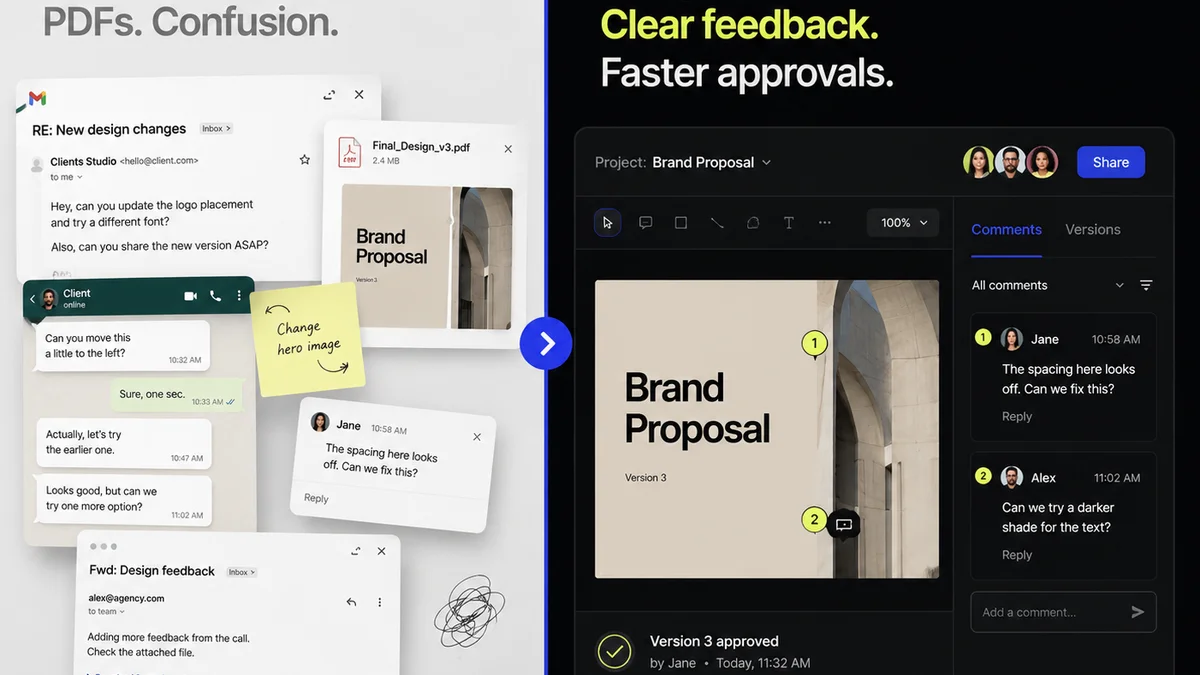
Managing feedback and approvals across multiple languages and teams can quickly become a tangled mess. Different versions, conflicting comments, missed deadlines – it’s a recipe for disaster.
Revue provides a centralized platform designed to streamline exactly these kinds of complex workflows.
- Centralized Feedback: All client and stakeholder feedback, in context, for every creative asset, regardless of language or version. No more hunting through emails or disparate documents.
- Revision & Approval Visibility: Track the status of every review cycle at a glance. Know exactly where approvals stand for each localized asset, preventing bottlenecks.
- Quality Checks: Ensure consistency and adherence to brand guidelines across all localized materials before they go live.
By bringing all creative assets and their associated feedback into one accessible place, Revue helps ensure that your scaled localization efforts remain organized, efficient, and aligned.
Final Thought
Scaling localization isn't just about adding people or tools. It's about architecting a system where collaboration thrives, information flows freely, and quality remains paramount, even as complexity grows.
Are you building a network of independent operators, or a cohesive, high-performance localization engine?
Frequently asked questions
What is the biggest mistake agencies make when scaling localization?
The most common mistake is simply replicating existing silos instead of building a centralized, coordinated function. This leads to duplicated effort, inconsistent terminology, and project delays.
How can I ensure consistency across multiple localized versions?
Establish a single source of truth by using a central Translation Memory (TM) and Terminology Database (TB). Implement a global style guide and ensure all teams adhere to it. Regular audits and a dedicated terminology manager are key.
What role does technology play in scaling localization?
Technology, particularly a robust Translation Management System (TMS), is crucial for automating file handling, managing TMs and termbases, routing work, and tracking progress. However, technology is an enabler; it works best when built upon sound, standardized processes.
How important is communication for scaled localization?
Communication is paramount. It involves fostering cross-functional collaboration with other departments (product, marketing) and ensuring seamless internal communication among localization teams. Clear, proactive communication prevents misunderstandings and keeps projects on track.