The common wisdom for scaling marketing design? Hire more designers. Build bigger teams. More hands mean more output, right?
None of that is wrong. But it’s incomplete.
The hard truth is that scaling marketing design, especially across global teams, isn't about headcount. It's about ruthless standardization of process, communication, and quality control. Without it, your 'scaled' operation becomes a chaotic mess of duplicated effort, inconsistent branding, and missed deadlines.
1. The Illusion of Centralized Control
Many companies assume that because they have a central marketing team, design output is inherently controlled. They picture a single, well-oiled machine churning out assets.
But what happens when that central team is in New York, and the regional team in Tokyo needs a localized campaign *yesterday*? Or when the EMEA team in London has a different take on brand guidelines?
Suddenly, control evaporates. You get:
- Designers working off outdated templates.
- Brand assets that don't quite match the global standard.
- Duplicated creative work because teams don't know what others are doing.
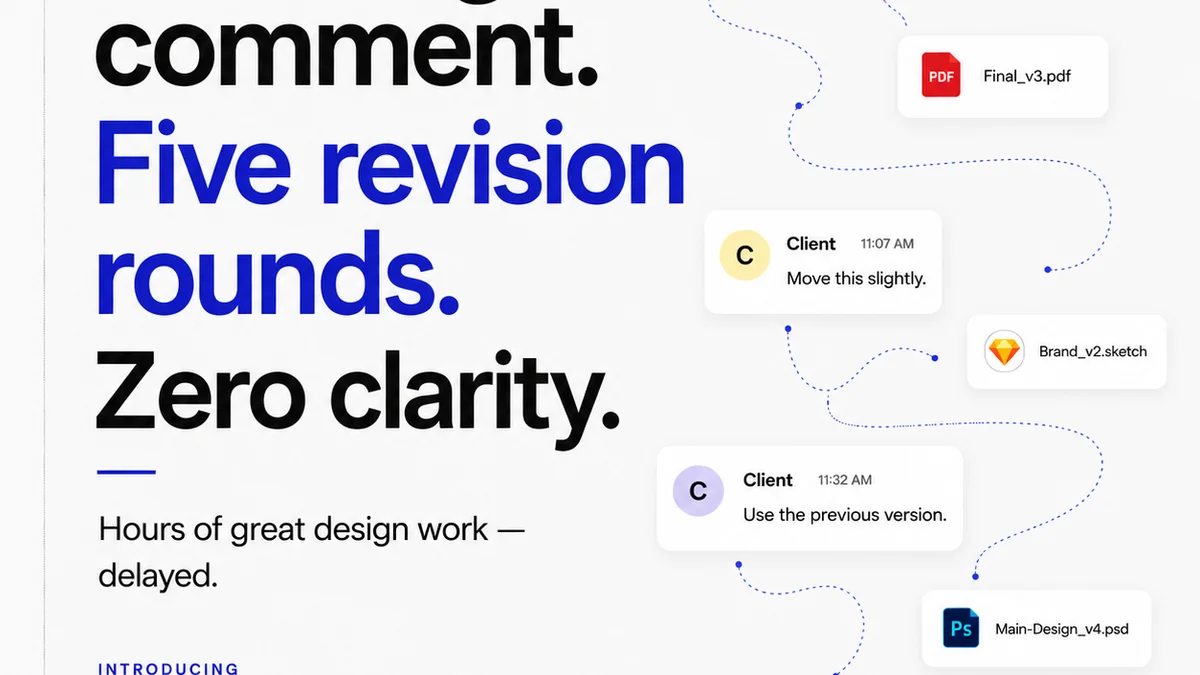
- Endless back-and-forth about minor visual differences.
This isn't a failure of individual designers. It's a failure of the system.
The Real Bottleneck: Communication Breakdown
Global teams inherently mean time zone differences, language barriers, and cultural nuances. These aren't minor hurdles; they're fundamental challenges to clear, consistent communication.
When design feedback is informal, verbal, or lost in translation, the intended message gets distorted. What one team thinks is a minor tweak can be a major brand deviation for another.
This breakdown leads directly to wasted time and resources. It's the silent killer of design scalability.
2. Standardizing the 'How,' Not Just the 'What'
Scaling design means more than just having a brand style guide. It means having documented, repeatable processes for every stage of the design lifecycle.
What are the exact steps from brief to final asset delivery?
How is feedback collected, consolidated, and actioned?
What are the approval workflows, and who owns them?
Answering these questions with clear, actionable SOPs (Standard Operating Procedures) is critical.
The Power of Playbooks
Think of it like a playbook for your design operations. This isn't about stifling creativity; it's about providing a framework so creativity can flourish efficiently.
A good design playbook should cover:
- Briefing Protocols: What information *must* be included in every design request? What's the turnaround time for a standard request?
- Feedback Loops: How is feedback submitted? Who provides it? What's the maximum number of revision rounds?
- Asset Management: Where are final assets stored? What are the naming conventions?
- Tooling Standards: What software is mandatory? Are there approved plugins or templates?
- Brand Governance: Clear, visual examples of what's on-brand and what's not.
This level of detail prevents the 'I thought you meant...' conversations that plague global teams.
3. Building Bridges, Not Silos
Global teams often operate in functional or regional silos. Marketing in APAC might not talk to Marketing in EMEA, and design sits within those silos.
This isolation breeds inefficiency. It means teams are reinventing the wheel, creating assets that already exist elsewhere, or developing campaigns that clash with global strategy.
True scaling requires breaking down these walls.
Cross-Pollination and Knowledge Sharing
How do you foster this connection?
- Regular Cadence Calls: Dedicated design syncs across regions, even if brief.
- Shared Repositories: Centralized access to all approved creative assets and templates.
- Internal Showcases: Opportunities for teams to share their work and learnings.
- Cross-Regional Projects: Occasionally pairing designers from different regions on the same project.
The goal is to create a sense of a single, unified design function, even with dispersed members. It’s about making sure everyone feels part of the same mission.
4. The Unseen Cost of Inconsistency
You might think a slightly different logo placement or a minor color variation is no big deal. It's just design, right?
Wrong.
Inconsistency erodes brand equity. It makes your company look unprofessional and untrustworthy. Globally, this effect is magnified.
When a customer encounters your brand in different markets, they expect a cohesive experience. If that experience is jarringly different, it signals a lack of attention to detail at best, and a disorganized company at worst.
Quality Control is Non-Negotiable
Scaling without robust quality control is like trying to build a skyscraper on sand. It will eventually collapse.
This means:
- Automated Checks: Where possible, use tools to flag brand guideline violations.
- Peer Reviews: Implement a mandatory peer review step before final sign-off.
- Dedicated QA: Even a part-time role focused solely on design QA can catch critical errors.
- Clear Sign-off Authority: Ensure there's always one person accountable for the final quality check.
This isn't about micromanaging; it's about protecting the brand and ensuring your global marketing efforts are effective, not counterproductive.
Where Revue Fits In
Managing these complexities across global teams is where specialized tools become essential. Trying to coordinate feedback, revisions, and approvals via email chains and scattered documents is a recipe for disaster.
Revue provides a centralized hub for all creative collaboration.
Imagine this:
- A single source of truth for all design projects, accessible by teams worldwide.
- Clear, contextual feedback directly on the creative assets, eliminating misinterpretation.
- Visible revision histories, so everyone knows what changes were made, why, and by whom.
- Streamlined approval workflows that ensure accountability and reduce bottlenecks.
- Built-in quality check features to catch errors before they go live.
This level of clarity and control is what transforms a collection of regional design teams into a truly scaled, efficient global marketing design operation.
Final Thought
Scaling marketing design isn't about adding more seats at the table. It's about redesigning the table itself. Are your processes robust enough to handle the complexity of global operations, or are you just hiring more people to manage the chaos?
Frequently asked questions
What's the biggest mistake companies make when scaling design globally?
The biggest mistake is focusing solely on hiring more designers. True scaling requires standardizing processes, communication protocols, and quality control across all teams, regardless of location.
How can I ensure brand consistency across different regions?
Establish clear, documented design playbooks that cover everything from brief intake to final asset delivery. Implement rigorous quality control checks and foster knowledge sharing between regional teams.
What are the key elements of a scalable design process?
A scalable design process includes standardized briefing protocols, defined feedback loops with limited revision rounds, clear asset management and version control, mandatory tooling standards, and detailed brand governance examples.
How do time zone differences impact global design teams?
Time zone differences exacerbate communication breakdowns. They can lead to delays, misinterpretations of feedback, and a lack of real-time collaboration. Centralized platforms and clear asynchronous communication strategies are crucial to overcome this.
Can technology really help scale global design operations?
Yes, absolutely. Tools like Revue can centralize feedback, manage revisions, provide visibility into approval workflows, and enforce quality checks, significantly reducing the operational friction inherent in global collaboration.