Everyone talks about a “single source of truth” in design. It sounds like a nice-to-have, a bit of management jargon for keeping things organized. Maybe you think it means having a shared drive or a project management tool.
None of that is wrong. But it’s incomplete.
The hard truth? A true single source of truth isn't about where the files live. It's about creating a system where every decision, every piece of feedback, and every revision is visible, actionable, and indisputable. Without it, you’re building on shifting sand.
1. The Chaos of Disconnected Feedback
Think about your last few projects. How much time was wasted chasing down feedback? Was it buried in emails? Scattered across Slack messages? Did a client “reply all” and miss a crucial comment from someone else?
This isn't just annoying. It’s a direct hit to your bottom line.
The Cost of Context Switching
Every time a designer has to stop what they’re doing to hunt for a missing piece of feedback, their productivity plummets. They lose their flow, their creative momentum.
Then they have to re-read the thread, figure out who said what, and try to decipher ambiguous notes. This isn’t just wasted time; it's mental overhead that kills creativity.
The Risk of Misinterpretation
When feedback lives in a dozen different places, it’s easy for things to get lost or misunderstood. A minor tweak requested in an email might be missed entirely if the final approval comes from a different channel.
This leads to:
- Endless rounds of revisions because the *right* feedback wasn’t acted upon.
- Projects going over budget because of duplicated effort.
- Client frustration when the final output doesn’t match their (unstated) expectations.
- Team burnout from the constant firefighting.
Your team is brilliant. Don't let your workflow be the thing holding them back.
2. Defining Your Single Source of Truth
A single source of truth (SSOT) means that for any given project artifact—a design mock, a video draft, a copy deck—there is one, and only one, authoritative place where all decisions, comments, and approvals are recorded.
It’s not about storing every file version. It’s about centralizing the *conversation* around those files.
It’s About Intent, Not Just Assets
What did the client *really* want? What was the rationale behind a specific change? Where does the approved version live, and who signed off on it?
An SSOT answers these questions definitively. It provides a clear, documented history of the project’s evolution.
Key Components of an SSOT System
To build an effective SSOT, you need:
- Centralized Communication: All feedback and discussion related to a specific asset happens in one place.
- Version Control with Context: It's clear which version is the current one and what changes were made in each iteration.
- Clear Approval Workflows: A defined process for who needs to approve what, and when.
- Audit Trail: A record of who said what, when, and what decisions were made.
This isn't about micromanagement. It's about clarity and efficiency.
3. The Operational Benefits of Centralization
When you implement a true SSOT, the operational impact is profound. It’s not just about saving time; it’s about fundamentally changing how your team operates.
Reduced Revision Cycles
With all feedback consolidated and visible, your team can act on it immediately and accurately. No more hunting, no more second-guessing. This drastically cuts down on unnecessary revision rounds.
Improved Team Collaboration
When everyone is working from the same, up-to-date information, collaboration becomes seamless. Team members can see the status of tasks, understand the rationale behind decisions, and contribute more effectively.
Enhanced Client Relationships
Clients appreciate clarity. When they see a structured process for feedback and approvals, and when their input is clearly incorporated, trust deepens. They feel heard and understood.
This leads to fewer disputes and smoother project handoffs.
Better Knowledge Retention
Projects end. Team members move on. Without a documented SSOT, critical project knowledge walks out the door. With one, you have a living record of decisions, challenges, and solutions that can inform future projects.
Streamlined Quality Assurance
QA becomes more efficient when the team has a clear reference point for what the final deliverable should be, based on all approved iterations and feedback.
4. Where Revue Fits In
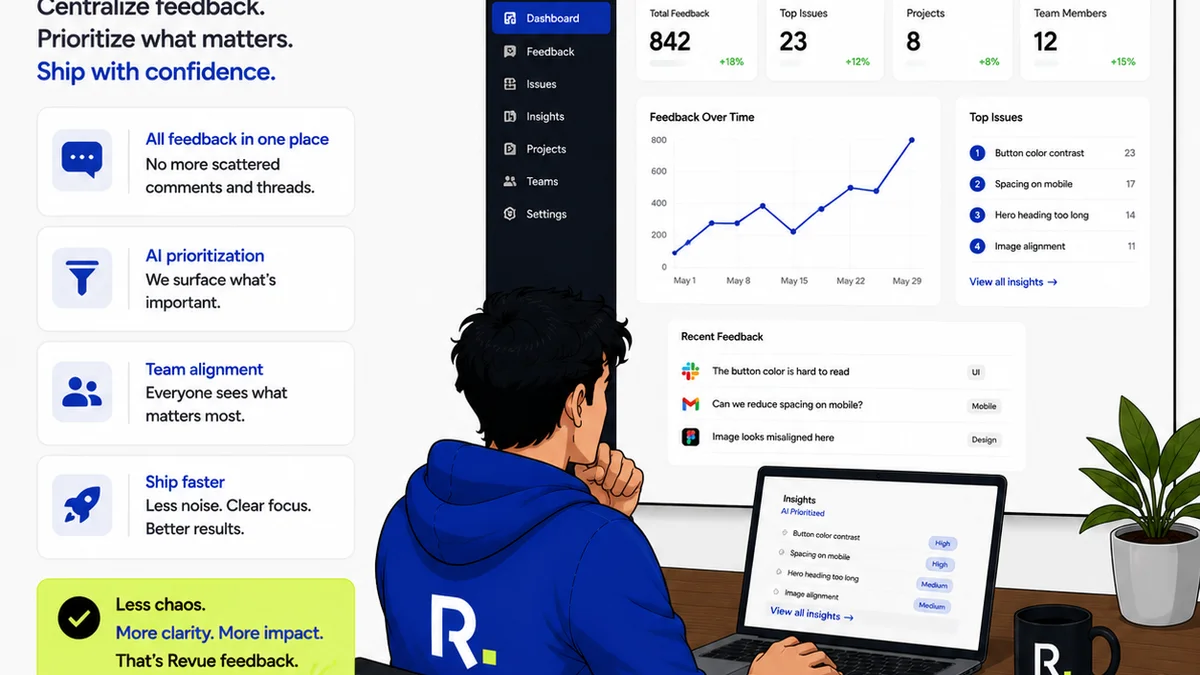
Revue is built to be the nerve center for creative feedback and approvals. It’s designed to help you establish and maintain that critical single source of truth.
Instead of feedback scattering across emails, Slack, and random documents, Revue centralizes it all. You upload your creative assets—designs, videos, copy—and all communication happens directly on that asset, within Revue.
Centralized Feedback Hub
Every comment, every annotation, every discussion is logged against the specific version of the asset it pertains to. Stakeholders can provide feedback directly, and your team can see it immediately, in context.
Clear Revision and Approval Tracking
Revue makes it easy to manage revisions and track approvals. You can see exactly which version is under review, who has approved it, and what the next steps are. This eliminates ambiguity and ensures accountability.
Visibility for Everyone
From the designer to the account manager to the client, everyone involved has access to the same, up-to-date information. This transparency reduces miscommunication and keeps everyone aligned.
Revue helps you move from a chaotic, fragmented feedback process to a streamlined, documented, and efficient system.
5. Building Your SSOT Culture
Technology is only part of the equation. A true SSOT requires a cultural shift within your team and with your clients.
Lead by Example
As a leader, you need to champion the SSOT. Make it clear that this is the *way* things are done. Use the system yourself, encourage your team to use it, and gently redirect anyone who falls back into old habits.
Educate Your Clients
Onboard your clients to the process. Explain *why* you use a centralized system and the benefits it brings to their project—faster turnaround, clearer communication, better results. Make it easy for them to participate.
Iterate and Improve
No system is perfect from day one. Regularly check in with your team. What’s working? What’s causing friction? Be prepared to adjust your workflows and refine your SSOT approach based on real-world use.
This is an ongoing commitment, not a one-time setup.
Final Thought
Are you managing your creative projects, or are your projects managing you? The difference often comes down to whether you have a clear, indisputable single source of truth.
If your team spends more time searching for feedback than acting on it, it’s time to build a system that makes clarity the default.
Frequently asked questions
What is a single source of truth in a design context?
A single source of truth (SSOT) in design refers to having one authoritative place where all project decisions, feedback, and version history are recorded and accessible. It ensures everyone is working from the same, up-to-date information, eliminating confusion and misinterpretation.
How does a single source of truth help reduce revision cycles?
By centralizing all feedback and approvals in one place, teams can act on the correct information immediately. This prevents the back-and-forth caused by missed or misinterpreted feedback from scattered sources, leading to fewer, more efficient revision rounds.
Is a single source of truth just about file storage?
No, a single source of truth is much more than just file storage. While file management is a component, the core of an SSOT is centralizing the *conversation* and *decisions* around those files, providing a clear audit trail of intent and approvals.
How can clients benefit from a design team's SSOT?
Clients benefit from increased transparency, faster project turnaround, and clearer communication. They can see their feedback being incorporated and approvals being tracked, leading to greater trust and confidence in the project's progress and outcome.