Everyone talks about Standard Operating Procedures (SOPs) for creative agencies. They’re supposed to bring order to chaos, ensure consistency, and make sure nothing falls through the cracks. That’s the theory, anyway.
But most SOPs are written to satisfy an auditor, not a designer. They end up as dusty binders or forgotten cloud folders, rarely consulted and even less often followed. They become a compliance exercise, not a workflow enhancement.
The hard truth? Your SOPs are failing because you’re not building them for the people doing the work. You’re building them for an imagined, perfect-world scenario, not the messy reality of creative collaboration.
1. The Myth of the Universal Workflow
The biggest mistake is assuming there's a single, perfect workflow that fits every project, every client, and every team member. This leads to overly rigid SOPs that feel like a straitjacket.
Creative work is inherently iterative and often unpredictable. Clients change their minds. Unexpected challenges arise. A process that works for a straightforward banner ad campaign won’t fly for a complex brand identity project.
Why One-Size-Fits-All Fails
- It stifles creativity and problem-solving.
- It creates bottlenecks when exceptions arise.
- It breeds resentment among team members who feel micromanaged.
- It’s impossible to document every single edge case.
Your SOPs need to provide a framework, not a rigid script. They should guide decision-making, not dictate every single action.
2. Documenting What Actually Happens
Most SOPs are written from a top-down perspective, outlining how things *should* work. This is rarely how they *do* work.
To build effective SOPs, you need to start from the ground up. Observe your teams. Talk to your designers, your account managers, your project leads. Understand their pain points, their workarounds, and their existing (often undocumented) best practices.
This isn't about catching people doing things wrong. It’s about understanding the reality of your operations.
Gathering Real-World Insights
- Conduct informal interviews with team members at all levels.
- Shadow different roles for a day to see their processes firsthand.
- Analyze common project delays and identify recurring workflow issues.
- Look at your existing project management tool data – where are the bottlenecks?
Once you have this data, you can start to codify the best practices that are already emerging organically, or identify areas where a more structured approach would genuinely help.
3. Building for Flexibility, Not Rigidity
An SOP should be a guide, not a cage. It needs to provide clear steps for common scenarios while allowing for adaptation when needed.
Think of your SOPs as providing a common language and a set of reliable pathways, not a single, unchangeable road.
Designing for Adaptability
- Define core stages: Outline the essential phases of a project (e.g., Briefing, Concepting, Development, Review, Delivery).
- Identify decision points: Clearly state when a choice needs to be made and who is responsible for making it.
- Provide templates and checklists: Offer tools that streamline common tasks, but allow for customization.
- Establish escalation paths: Define how and when to deviate from the standard process and who needs to be involved.
- Regularly review and update: Treat SOPs as living documents, not static pronouncements.
This approach acknowledges that creativity requires space to breathe. It empowers your team to make good decisions within a supportive framework.
4. The Crucial Role of Feedback and Revisions
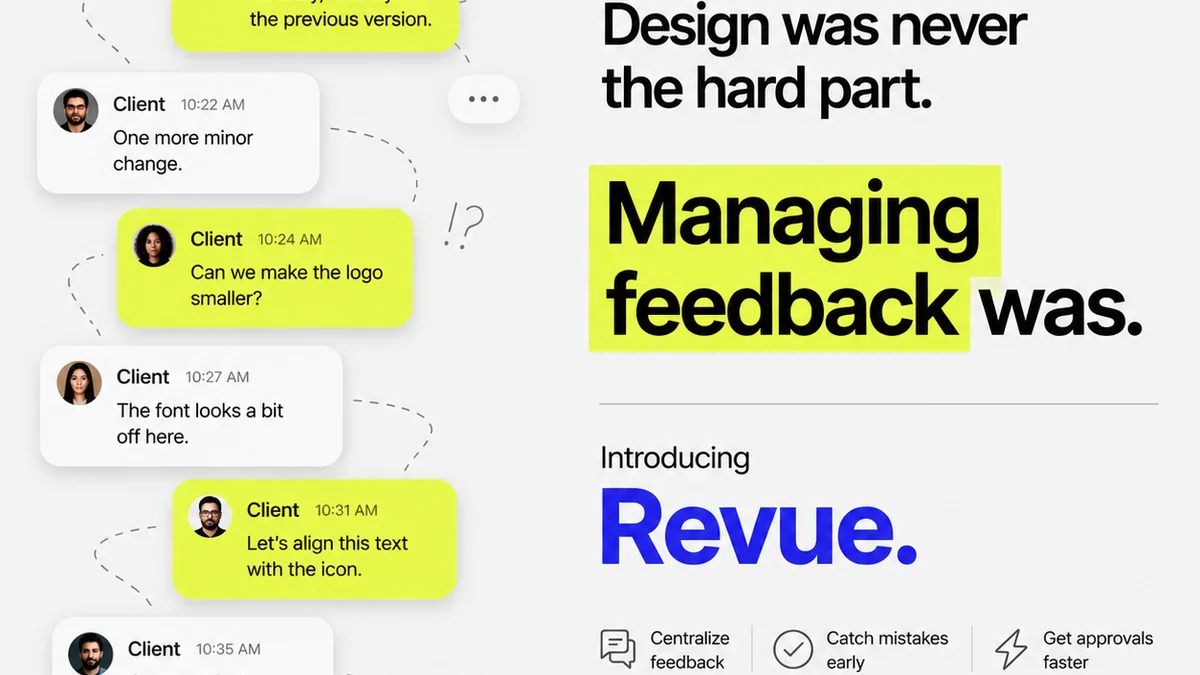
Few areas are as critical, or as prone to breakdown, as client feedback and revision cycles. This is where most creative projects get bogged down.
Your SOPs must provide crystal-clear guidelines on how feedback is collected, communicated, and actioned.
Streamlining Feedback Loops
- Standardize feedback submission: Define *how* clients should provide feedback (e.g., via a specific tool, in structured comments, with clear timelines).
- Centralize all feedback: Ensure all comments, notes, and requests are in one place, accessible to the relevant team members.
- Define revision scope: Clearly outline what constitutes a
Frequently asked questions
What is the main benefit of well-defined SOPs for design collaboration?
Well-defined SOPs reduce ambiguity, streamline communication, minimize errors, and ensure consistency in how your team collaborates on design projects. This leads to more efficient workflows and higher quality output.
How can I ensure my team actually uses the SOPs?
Involve your team in the creation process, make SOPs easily accessible, train them thoroughly, and lead by example. Regularly solicit feedback and update SOPs based on real-world usage to keep them relevant and practical.
Should SOPs be rigid or flexible?
Effective SOPs for creative work should be flexible. They provide a framework and clear guidelines for common scenarios but must allow for adaptation and decision-making when unique project circumstances arise. Avoid overly prescriptive rules that stifle creativity.
How do I handle client feedback within SOPs?
Your SOPs should clearly define the process for receiving, organizing, and acting on client feedback. This includes specifying preferred feedback channels, establishing clear timelines, and outlining how to manage revision rounds and scope changes.