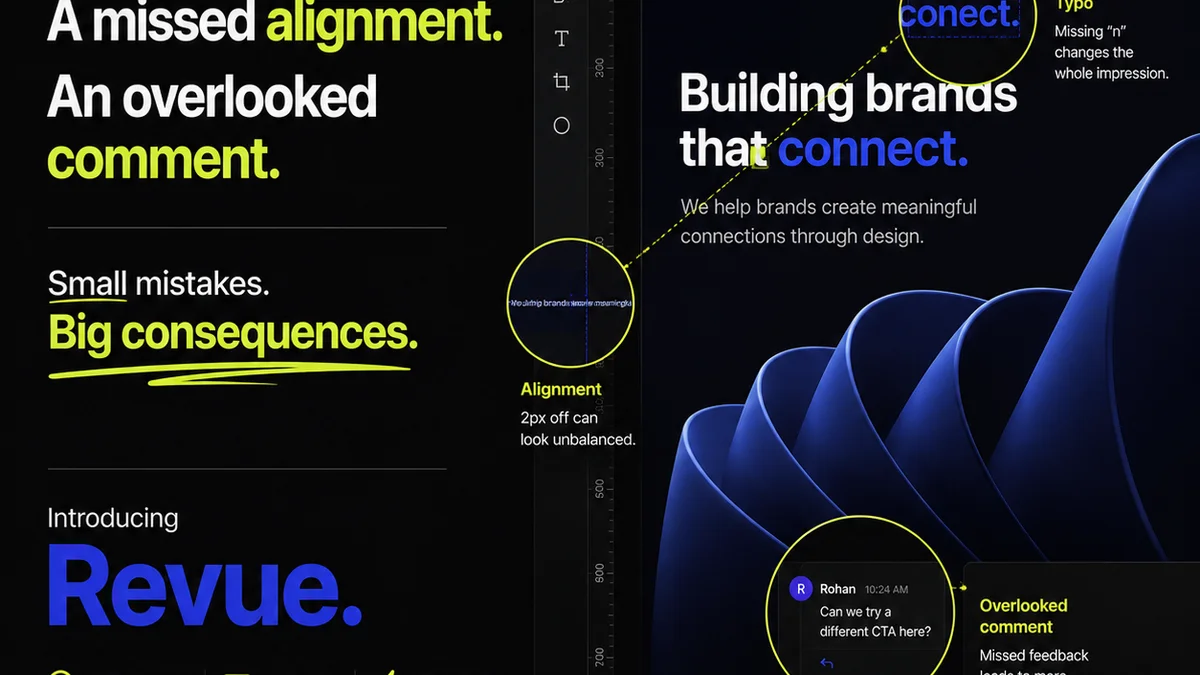
Everyone thinks they've got quality control covered. You’ve got your proofreaders, your style guides, your spell checkers. You’re good to go, right?
None of that is wrong. But it’s incomplete.
The hard truth is that true creative quality goes way beyond grammar and typos. It’s about strategic alignment, brand consistency, and client satisfaction. And those things? Spell check won't catch them.
1. The Illusion of Accuracy
Spell check is a tool. A useful one, for sure. It catches obvious errors that can undermine credibility.
But it’s a blunt instrument.
It doesn't understand context. It doesn't know your client's brand voice. It certainly doesn't know if the copy actually sells the product or if the design is on-brand.
You might have perfect grammar and zero spelling mistakes, but the work can still be completely off the mark.
The Limits of Automated Checks
- Failing to spot factual errors.
- Missing nuanced tone or voice issues.
- Ignoring incorrect terminology specific to an industry.
- Overlooking grammatical structures that are technically correct but awkward or unclear.
- Not flagging brand-specific jargon or preferred phrasing.
These aren't minor oversights. They're fundamental failures that impact the effectiveness of the creative work.
2. Beyond the Surface: Strategic Alignment
Creative work isn't just about looking pretty or sounding good. It has a job to do.
Does the campaign meet the client's business objectives?
Is the messaging consistent with the overall brand strategy?
Does the visual language reinforce the intended message?
These are the questions that define quality in our industry.
Spell check offers zero insight here.
What Quality Really Means
- Strategic Fit: Does it solve the client's problem?
- Brand Cohesion: Is it unmistakably *their* brand?
- Audience Resonance: Will it connect with the target market?
- Objective Achievement: Does it move the needle on KPIs?
When you focus only on the surface-level mechanics, you risk delivering work that is technically flawless but strategically useless. That's not quality; it's a waste of everyone's time and money.
3. The Human Element: Nuance and Judgment
Creative quality relies heavily on human judgment. It requires understanding intent, anticipating audience reaction, and making subjective calls.
A great copywriter knows when to bend the rules for impact. A sharp designer knows when a layout feels *right*, even if it doesn't follow a rigid template.
This intuition is built on experience, context, and a deep understanding of the project goals.
It's something an algorithm simply can't replicate.
Why Human Review is Non-Negotiable
- Contextual Understanding: Interpreting briefs and client goals.
- Subjective Assessment: Evaluating aesthetic appeal and emotional impact.
- Risk Assessment: Identifying potential misinterpretations or negative reactions.
- Creative Problem-Solving: Finding solutions that automated tools miss.
- Client Empathy: Understanding the client's perspective and concerns.
Relying solely on automated checks is like asking a calculator to write a novel. It's missing the entire point.
4. The Cost of Cutting Corners
What happens when you skip the deeper quality checks? You get problems.
Maybe the client's internal legal team flags an issue late in the game. Maybe the campaign doesn't perform because the messaging is muddled. Maybe a competitor points out inconsistencies.
These aren't just embarrassing moments. They're expensive.
Revisions take time. Lost client trust takes a lot longer to rebuild. Missed opportunities are often unrecoverable.
Common Pitfalls of Inadequate QC
- Expensive, last-minute revisions.
- Damaged client relationships.
- Underperforming campaigns.
- Brand reputation damage.
- Wasted creative resources.
The time you
Frequently asked questions
What are the main limitations of spell check for creative work?
Spell check cannot understand context, brand voice, strategic goals, or factual accuracy. It only flags spelling and basic grammatical errors, missing crucial elements of effective creative work.
How does strategic alignment relate to creative quality?
Creative quality is defined by how well the work meets client objectives, aligns with brand strategy, and resonates with the target audience. Spell check offers no insight into these strategic aspects.
Why is human judgment essential for creative quality control?
Human judgment provides contextual understanding, subjective assessment of aesthetics and impact, risk evaluation, and creative problem-solving that automated tools cannot replicate. It's about nuance and intuition.
What are the risks of relying too heavily on automated checks?
Relying on automated checks can lead to costly last-minute revisions, damaged client relationships, underperforming campaigns, and reputational harm because fundamental strategic and qualitative issues are missed.