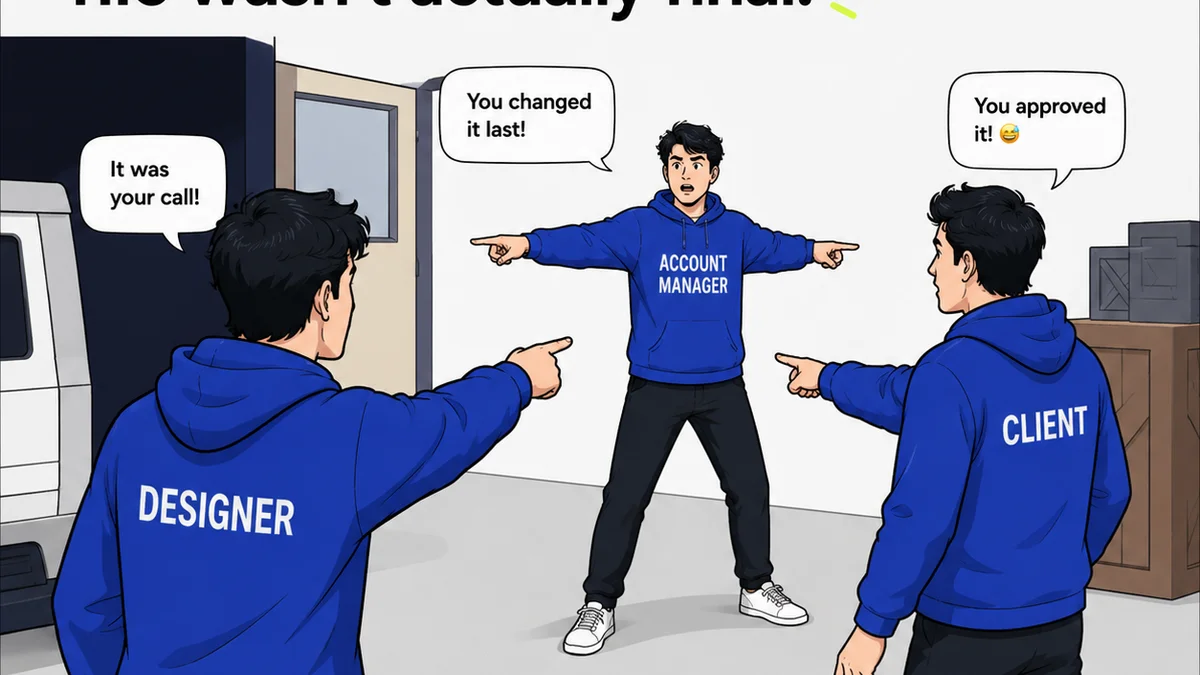
Everyone talks about stakeholder review meetings. They’re often framed as a necessary evil, a tense dance where agencies try to shepherd vague feedback into actionable direction. It’s easy to blame the client for not knowing what they want, or for changing their mind last minute.
None of that is wrong. But it’s incomplete.
The hard truth is, the bottleneck isn't the client's ambiguity. It's your agency's inability to manage that ambiguity effectively. The real problem lies in how you collect, organize, and act on feedback. It’s a process breakdown, not a people problem.
1. The Illusion of Control
Agencies often operate under the assumption that managing stakeholder feedback is a linear, predictable process. You present, they react, you revise. Simple, right?
Wrong. Creative feedback is inherently messy. It’s subjective, emotional, and often contradictory. Relying on a single review meeting or a scattered email thread to capture this complexity is like trying to catch a tidal wave with a teacup.
The Symptoms of Poor Feedback Management
- Endless revision cycles that seem to go nowhere.
- Misunderstandings about scope creep versus necessary iteration.
- Frustration on both the agency and client side.
- A general sense of chaos around project delivery.
- Deliverables that miss the mark, despite numerous reviews.
This isn't about clients being difficult. It’s about agencies not having the right tools and processes to handle the natural messiness of creative collaboration.
2. Deconstructing the Feedback Loop
A broken feedback loop isn't just inefficient; it actively damages creative output and client relationships. It’s a constant drain on resources, time, and morale.
Where Feedback Goes to Die
- Scattered Communication: Feedback arrives via email, Slack, carrier pigeon, and whispered suggestions in the hallway.
- Lack of Context: A comment about color might be made without referencing the overall brand strategy or campaign goals.
- Subjectivity Over Strategy:
Frequently asked questions
What is the main challenge with stakeholder review in creative agencies?
The main challenge is often the agency's process for managing feedback, rather than the client's ambiguity. Scattered communication, lack of context, and unclear approval stages lead to inefficiencies and misunderstandings.
How can agencies improve their stakeholder review process?
Agencies can improve by centralizing feedback, establishing clear communication channels, defining approval stages, using dedicated tools for review, and ensuring all feedback is tied back to project objectives.
What are the benefits of a streamlined stakeholder review process?
Benefits include reduced revision cycles, clearer project scope, improved client satisfaction, increased team efficiency, and faster project delivery. It also leads to better creative outcomes.
How does centralized feedback help with stakeholder review?
Centralized feedback ensures all comments and decisions are in one place, providing a single source of truth. This eliminates confusion, speeds up the review process, and makes it easier to track revisions and approvals.