The common wisdom about stakeholder review for marketing and media teams is that it's about getting a 'yes' or 'no'. It’s the final gate before launch. Get the sign-off, and you're good to go. Miss it, and you're back to the drawing board.
None of that is wrong. But it’s incomplete. It’s like saying a car's only purpose is to reach its destination. You’re missing the entire journey, the engineering, the experience, and the potential for a breakdown.
The hard truth is that stakeholder review isn't just a checkpoint; it's a critical strategic conversation. When managed poorly, it becomes a bottleneck. When managed well, it’s a powerful engine for alignment, refinement, and ultimately, better creative work.
1. The 'Rubber Stamp' Fallacy
Most teams operate under the assumption that stakeholders are just there to give permission. Their job is to say 'looks good' or 'change this'.
This view immediately lowers the stakes. It signals that their input isn't truly valued beyond a surface-level check.
This leads to:
- Late-stage feedback that’s often vague or misses the strategic mark.
- A disconnect between the creative team’s execution and the business objectives.
- Frustration on both sides: creatives feel micromanaged, and stakeholders feel their concerns aren’t heard.
- Increased revision cycles, eating up valuable time and budget.
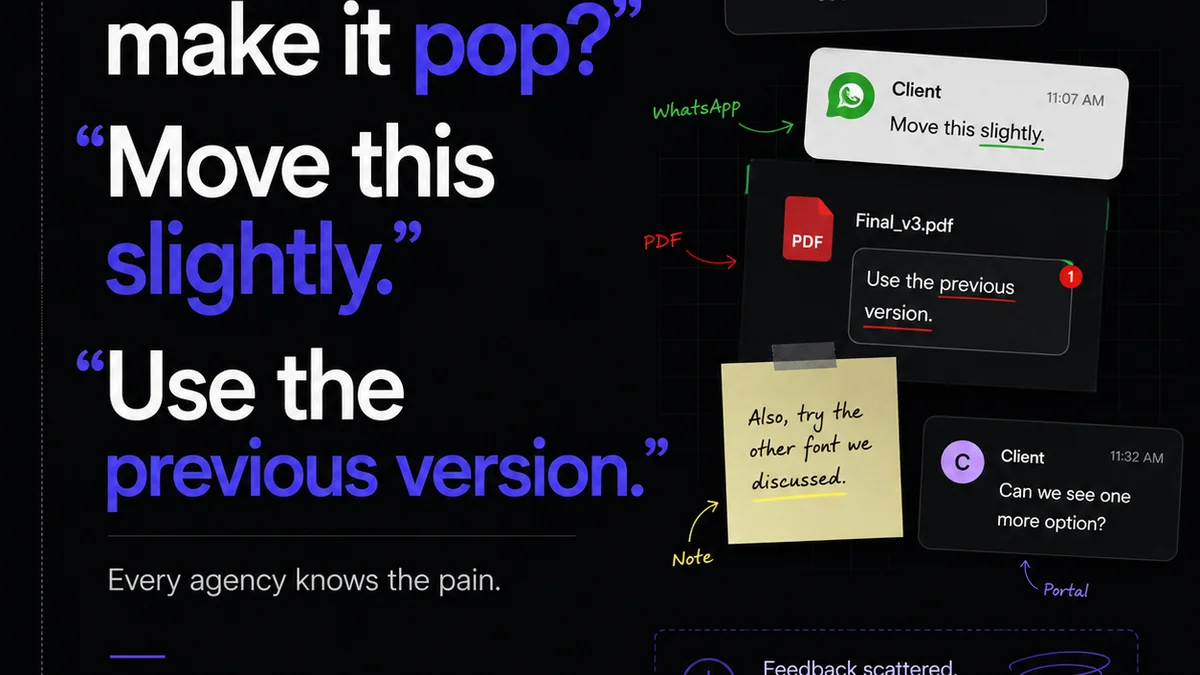
We’ve all seen it. The email chain with dozens of replies, each one adding a tiny, often contradictory, tweak. Or the dreaded 'can we just make the logo bigger?' comment that derails the entire concept.
2. Stakeholder Review as Strategic Alignment
Shift your perspective. Stakeholder review is your prime opportunity to ensure the creative output directly serves business goals. It’s not about *if* it’s good, but *if it’s effective*.
This requires a different approach to preparation and execution.
Setting the Stage
Before the review even happens, you need to:
- Clarify Objectives: What is this creative supposed to achieve? Who is it for? What’s the key message?
- Define Success Metrics: How will we know if this campaign works?
- Establish Review Criteria: What specific aspects will stakeholders be evaluating? (e.g., brand consistency, message clarity, call to action effectiveness, legal compliance).
- Identify the Right Stakeholders: Who *needs* to weigh in? Who is a 'nice-to-have' but might complicate things?
This upfront work is crucial. It frames the discussion and provides a shared understanding of what 'good' looks like.
During the Review
The review itself should be structured, not a free-for-all.
- Present with Context: Remind everyone of the objectives and how the creative addresses them.
- Guide the Feedback: Ask specific questions related to the review criteria. Instead of 'What do you think?', try 'Does this headline clearly communicate the offer?' or 'Is the call to action prominent enough for the target audience?'.
- Document Everything: Use a system that captures feedback clearly, attributing it to the right person and linking it to the specific creative asset.
This structured approach transforms review from a passive 'listening session' into an active, strategic dialogue.
3. The 'Why' Behind the 'What'
When stakeholders provide feedback, it often comes in the form of a 'what'. 'Change this color.' 'Rewrite that copy.' 'Add an image here.'.
The real value lies in understanding the 'why' behind these requests.
Is the color change because it clashes with brand guidelines? Is the copy rewrite because it's unclear or doesn't resonate with the target audience? Is the image request because a key benefit isn't being visualized?
Your job as the creative lead or project manager is to probe deeper.
- Ask
Frequently asked questions
What is the primary goal of stakeholder review in marketing?
The primary goal is not just to get a 'yes' or 'no' but to ensure the creative work aligns with strategic business objectives, resonates with the target audience, and is effectively executed. It's a strategic conversation, not just an approval gate.
How can I get more specific feedback from stakeholders?
Set clear review criteria beforehand, present the creative with context about objectives, and ask targeted questions. Instead of 'What do you think?', ask 'Does this headline clearly communicate the offer?' or 'Is the call to action prominent enough?'.
What are the risks of poor stakeholder review management?
Poor management leads to vague or contradictory feedback, late-stage changes, increased revision cycles, wasted time and budget, and a disconnect between creative execution and business goals.
How can technology help with stakeholder review?
Tools like Revue can centralize feedback, making it visible, traceable, and actionable. This ensures all input is captured, attributed, and easily managed, reducing miscommunication and streamlining the revision process.