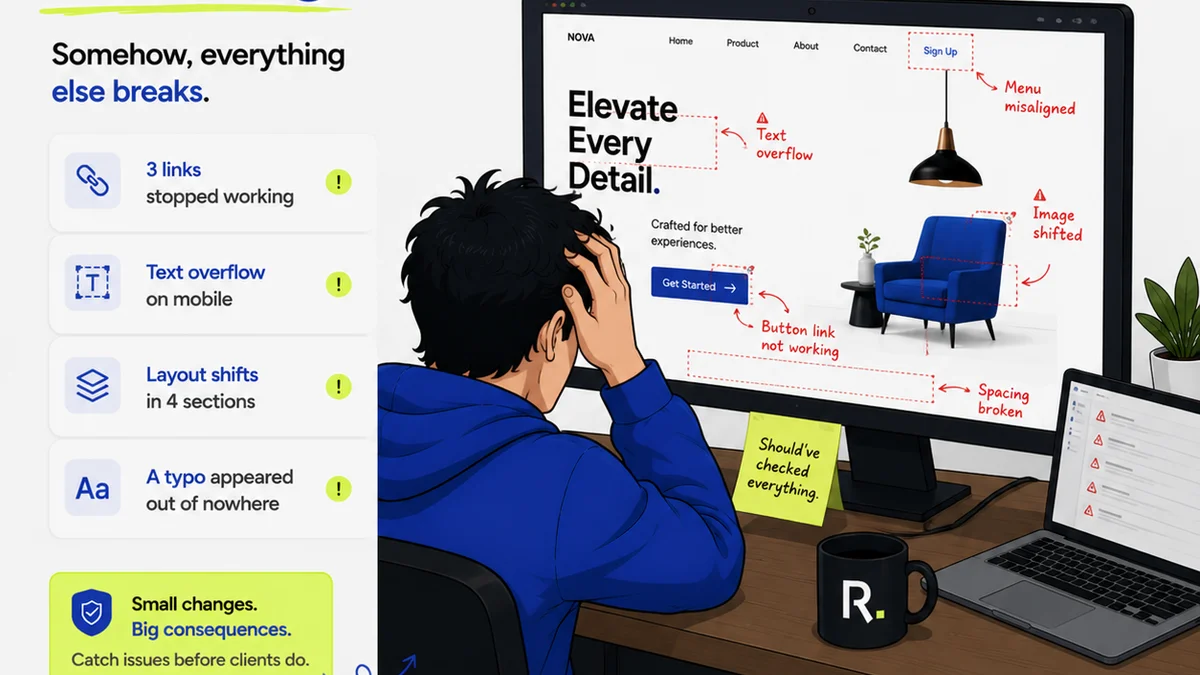
Everyone knows that stakeholder reviews are a bottleneck. You get the files back, and suddenly you’re drowning in a sea of conflicting feedback, vague suggestions, and requests that seem to come out of left field. We blame the client, of course. We talk about their inability to make decisions, their lack of understanding of the creative process, or their general tendency to meddle.
None of that is wrong. But it’s incomplete.
The real reason stakeholder reviews slow down creative teams isn’t just the client’s input. It’s the operational chaos that surrounds that input. It’s the lack of a clear, efficient system for receiving, organizing, and acting on feedback. It’s the structural weaknesses in how agencies and in-house teams manage the review process itself.
1. The Illusion of Clarity: When Feedback Becomes Noise
We operate under the assumption that feedback, even messy feedback, is actionable. We think if we just *try harder* to decipher it, we’ll get there. This is a dangerous assumption.
The truth is, feedback is only as good as the system that captures it. Without a structured approach, feedback becomes noise, and deciphering that noise consumes precious creative time.
The Symptoms of Feedback Chaos
- Scattered Sources: Emails, Slack messages, PDF annotations, verbal comments in meetings, scribbled notes on printouts.
- Conflicting Directives: Two stakeholders want opposite things, and nobody remembers who said what first.
- Vague Critiques: “Make it pop,” “I don’t love it,” “It needs more… something.”
- Delayed Responses: Waiting days or weeks for feedback means pushing back deadlines and losing momentum.
- Loss of Context: Feedback arrives without the original brief or project goals in mind, leading to misinterpretations.
This isn’t about the client being difficult. It’s about the client being human, and the review process being unstructured.
2. The Revision Rabbit Hole: Uncontrolled Iteration
Once feedback starts rolling in, the real work begins. Or, more accurately, the *real-time-wasting* begins.
The assumption here is that revisions are straightforward. You get feedback, you make the changes, you send it back. Simple.
The hard truth is that uncontrolled iteration is a black hole for productivity. Without clear version control and defined scope, revisions can spiral into endless cycles.
The Dangers of Unchecked Revisions
- Scope Creep: New requests sneak in under the guise of “just a small tweak.”
- Version Confusion: Which is the latest version? Which feedback applies to which iteration?
- Repetitive Work: Making changes only to have them reverted or changed again by another stakeholder.
- Demoralized Teams: Creatives feel like they’re on a hamster wheel, never reaching a final state.
- Missed Deadlines: Each revision cycle adds days, sometimes weeks, to the project timeline.
This isn’t just about extra work. It’s about the erosion of project efficiency and team morale.
3. The Approval Abyss: Ambiguity and Accountability
The final hurdle is approval. We assume that once feedback is addressed, approval is a formality. A rubber stamp.
This assumption is often where projects get stuck indefinitely. The real problem isn't the final sign-off; it's the lack of clarity around *who* has the authority to approve and *what* constitutes approval.
Why Approvals Get Lost
- Unclear Decision-Makers: Multiple stakeholders have input, but no single person is accountable for the final go-ahead.
- Informal Sign-offs: A quick “looks good to me” in an email that isn’t formally logged.
- The
Frequently asked questions
What is the biggest operational issue with stakeholder reviews?
The biggest issue isn't just the client's input, but the lack of a structured system to manage that input. This leads to scattered, conflicting feedback, version confusion, and endless revision cycles that drain creative team resources.
How can agencies manage conflicting feedback from multiple stakeholders?
Establish a single point of contact or a clear hierarchy for feedback. Use a centralized platform that tracks all comments and decisions, making it clear who has the final say and what the agreed-upon direction is.
What's the difference between revisions and approvals in a project?
Revisions are the changes made to creative work based on feedback. Approvals are the formal sign-off that the work meets the requirements and is ready to move forward. Without clear approval processes, revisions can continue indefinitely.
How does version control help with stakeholder reviews?
Version control ensures everyone is looking at and commenting on the most current iteration of the creative asset. This prevents confusion, reduces the risk of making changes to outdated versions, and clarifies which feedback applies to which specific iteration.