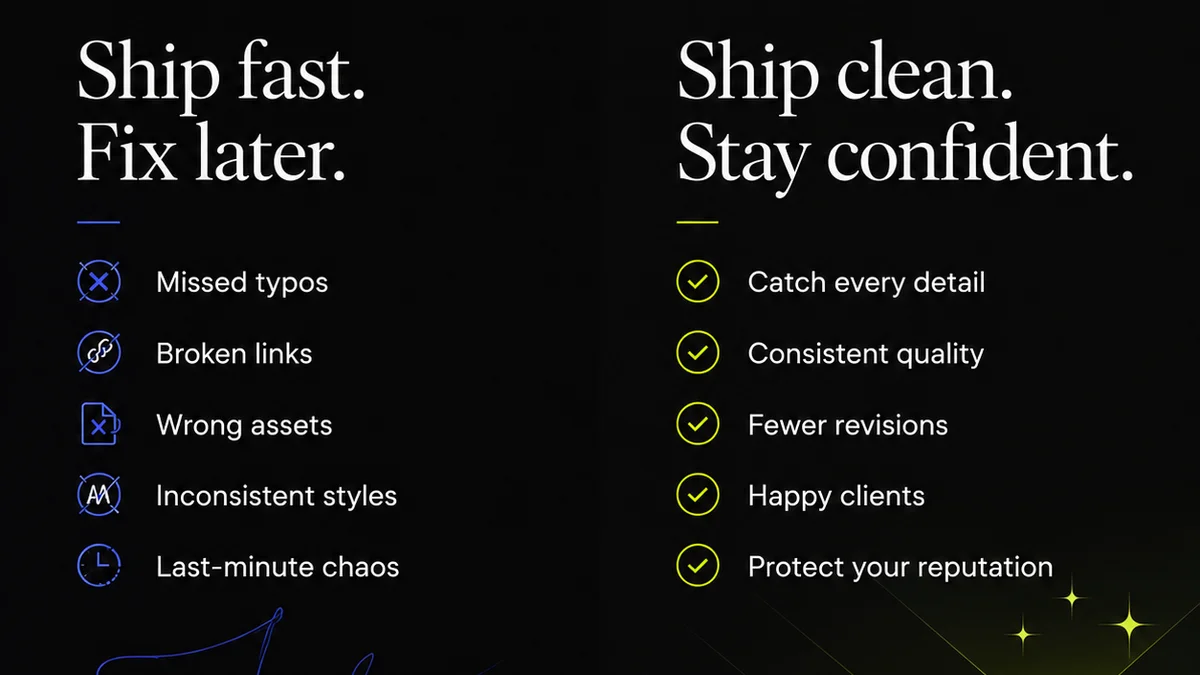
Everyone says creative compliance is about brand guidelines. That it’s about making sure logos are the right size and colors are on-brand. None of that is wrong. But it’s incomplete.
The hard truth? Creative compliance is an operational system. It’s about building repeatable processes that eliminate guesswork and ensure quality, consistently, across every project and every team member. It’s not a checklist; it’s a workflow.
1. The Myth of the Lone Genius vs. The Reality of Scalable Output
We romanticize the brilliant designer who just *knows* the brand. The one who never makes a mistake. This is a nice story. It’s terrible for business.
Agencies and in-house teams grow. More people mean more variables. Relying on individual brilliance is a bottleneck. It’s a recipe for inconsistency and missed deadlines.
True creative compliance scales. It’s built into the process, not the person.
The Symptoms of Unchecked Inconsistency
- Brand assets used incorrectly across different projects.
- Marketing materials with off-brand messaging or visuals.
- Legal or regulatory red flags appearing late in the review cycle.
- Team members constantly asking for clarification on basic brand rules.
- Client confusion due to conflicting visual or tonal elements.
These aren't isolated incidents. They're systemic failures.
2. Defining Your Creative Compliance Framework
A compliance framework isn't just a PDF manual. It’s a living, breathing system that guides your team’s output. It needs structure.
Think of it like building a house. You need blueprints, building codes, and skilled tradespeople working from the same plan. Everyone needs to know what
Frequently asked questions
What is creative compliance?
Creative compliance refers to the adherence to established brand guidelines, legal requirements, accessibility standards, and other rules that govern creative output. It ensures consistency, quality, and risk mitigation across all marketing and design materials.
Why is creative compliance important for agencies?
For agencies, creative compliance is crucial for maintaining client trust, ensuring brand consistency for clients, avoiding costly revisions, and mitigating legal or reputational risks. It underpins efficient project delivery and client satisfaction.
How can I enforce creative compliance?
Enforcement involves clear documentation, accessible resources, standardized workflows, automated checks where possible, and regular training. Centralized feedback and approval tools also play a key role in ensuring adherence throughout the creative process.
Does creative compliance stifle creativity?
When implemented as rigid rules without context, yes. However, a well-defined compliance framework provides clear boundaries, freeing creatives to focus on innovative solutions within those parameters, rather than wasting time on basic adherence questions.