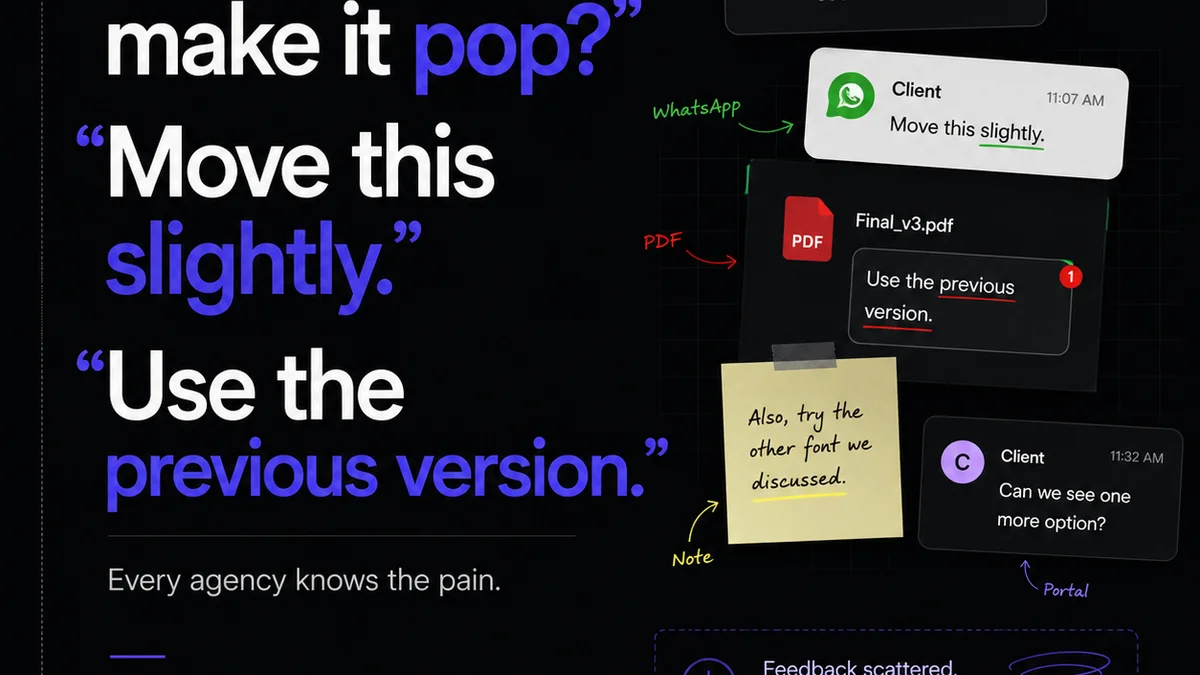
Everyone talks about measuring creative success. You’ve probably heard it all: track engagement, monitor conversion rates, look at client satisfaction scores. None of that is wrong. But it’s incomplete.
The hard truth? Without standardized metrics, you’re flying blind. You can’t compare apples to apples, you can’t identify real trends, and you can’t scale what works.
1. The Myth of Subjective Success
Creative work is inherently subjective. That’s the common wisdom. So, how can you possibly apply objective metrics? Many teams throw up their hands, relying on gut feelings and anecdotal evidence. They might track client smiles or vague feedback like “they loved it.”
This approach leads to chaos. It means:
- Inconsistent project outcomes.
- Difficulty in forecasting timelines and budgets.
- No clear path for team members to improve.
- Clients wondering why results vary so wildly.
It’s a recipe for stagnation.
2. Defining Your Core Creative Metrics
Standardization starts with definition. You need to agree on what matters and how you’ll measure it. This isn’t about turning art into a spreadsheet; it’s about understanding the business impact of creative output.
Key Areas for Measurement
Think about the lifecycle of a creative project and its ultimate goals. What are the critical touchpoints where you can gather meaningful data?
Consider these categories:
- Efficiency: How quickly and cost-effectively is work being produced?
- Effectiveness: Is the creative achieving its intended goals (e.g., engagement, conversion, brand perception)?
- Quality: Is the work technically sound and free of errors?
- Client Satisfaction: Is the client happy with the process and the outcome?
Choosing the Right Metrics
Within these areas, select specific, measurable, achievable, relevant, and time-bound (SMART) metrics. Avoid vanity metrics that look good but don’t drive business value.
Examples of Standardized Metrics
- Time to First Draft: Average time from brief to initial concept delivery.
- Revision Cycles: Average number of rounds of feedback per project type.
- On-Time Delivery Rate: Percentage of projects delivered by the agreed-upon deadline.
- Client Approval Time: Average time from final delivery to client sign-off.
- Error Rate: Number of critical errors found post-launch (e.g., broken links, typos, incorrect specs).
- Goal Conversion Rate: Percentage of campaigns that meet their specific KPI (e.g., click-through rate, lead generation).
- Client Net Promoter Score (NPS): A measure of client loyalty and satisfaction.
These aren’t just numbers; they’re indicators of process health and business impact.
3. Establishing a Baseline
You can’t standardize without knowing where you’re starting from. This means auditing your past projects.
Gather data from the last 6–12 months. If you don’t have this data, start collecting it immediately. Even imperfect data is better than no data.
Look for patterns. Where are the bottlenecks? Which project types consistently take longer? Are there specific clients or teams that show higher error rates?
This baseline provides context for your standardization efforts. It highlights areas needing the most attention.
4. Implementing Standardized Workflows
Metrics are useless without consistent processes to generate them. This is where workflow standardization comes in.
Define clear steps for each phase of the creative process. This includes:
- Briefing: What information is mandatory? How is it captured?
- Concepting: What are the expected deliverables? What’s the review process internally?
- Feedback Rounds: How is feedback collected? Who provides it? What’s the turnaround time?
- Revisions: How are changes tracked? How are they communicated?
- Approvals: What constitutes final approval? How is it documented?
- Delivery: What are the final file formats and specifications?
Document these workflows. Make them accessible to everyone. Train your teams on them.
Consistency in process leads to consistency in output, and therefore, consistency in metrics.
5. The Role of Technology
Trying to track and manage standardized metrics manually is a losing battle. You need tools.
Project management software, feedback platforms, and reporting dashboards are essential. They automate data collection and provide a centralized view of performance.
Look for tools that integrate with your existing stack. The goal is to make data collection seamless, not add another layer of complexity.
Where Revue Fits In
This is precisely why Revue was built. It addresses the core challenges of standardizing creative workflows and tracking progress.
Revue provides a single source of truth for client feedback and project status. This centralization is key to accurate metric collection.
- Centralized Feedback: All comments, markups, and approvals live in one place, eliminating scattered emails and endless searching. This directly impacts metrics like revision cycles and client approval time.
- Revision Visibility: Track every iteration of a creative asset. Understand where delays occur and how efficiently teams are moving through feedback loops.
- Quality Assurance Checks: Build in mandatory QA steps before final delivery. This helps track and reduce error rates.
- Streamlined Approvals: Formalize the approval process, making it clear when work is signed off. This improves on-time delivery metrics and client satisfaction.
By structuring your feedback and approval process within Revue, you automatically capture valuable data points that feed into your standardized metrics. It transforms subjective interactions into quantifiable insights.
6. Analyzing and Iterating
Collecting data is just the first step. The real value comes from analysis.
Regularly review your standardized metrics. Look for trends, outliers, and areas for improvement.
Is your average time to first draft increasing? Why?
Are revision cycles longer for a particular service offering?
Are error rates creeping up on a specific type of deliverable?
Use these insights to refine your workflows, provide targeted training, and adjust your processes. Standardization isn't a one-time fix; it's an ongoing commitment to improvement.
Communicating Performance
Share these metrics transparently with your teams. Celebrate successes and openly discuss challenges. This fosters a culture of accountability and continuous learning.
It also helps in client conversations. Instead of vague assurances, you can point to data that demonstrates efficiency and effectiveness.
7. The Long-Term Payoff
Standardizing creative metrics might seem like a bureaucratic headache at first. It requires effort and discipline.
But the payoff is immense.
Predictable performance. Scalable operations. Clearer communication with clients. A team that understands how their work contributes to business goals.
It moves your agency or creative department from a reactive, gut-feeling operation to a proactive, data-informed powerhouse.
Final Thought
What if the most subjective part of your business—creative output—could become your most predictable? By focusing on standardized metrics, you gain the clarity needed to manage, scale, and consistently deliver exceptional creative work.
Frequently asked questions
Why is standardizing creative metrics important?
Standardizing creative metrics is crucial for comparing performance, identifying trends, forecasting accurately, and scaling operations effectively. Without standardization, you risk inconsistent outcomes and an inability to pinpoint what's truly working.
What are some examples of standardized creative metrics?
Key examples include Time to First Draft, Revision Cycles, On-Time Delivery Rate, Client Approval Time, Error Rate (post-launch), Goal Conversion Rate (for campaigns), and Client Net Promoter Score (NPS).
How can technology help in standardizing metrics?
Technology, like project management and feedback platforms (e.g., Revue), automates data collection, centralizes information, and provides reporting dashboards. This makes tracking metrics seamless and provides a unified view of performance.
Is standardizing metrics about stifling creativity?
No, it's about understanding the business impact and operational efficiency of creative work. Standardization provides a framework for repeatable success, allowing creativity to thrive within clear objectives and processes, rather than being hampered by chaos.