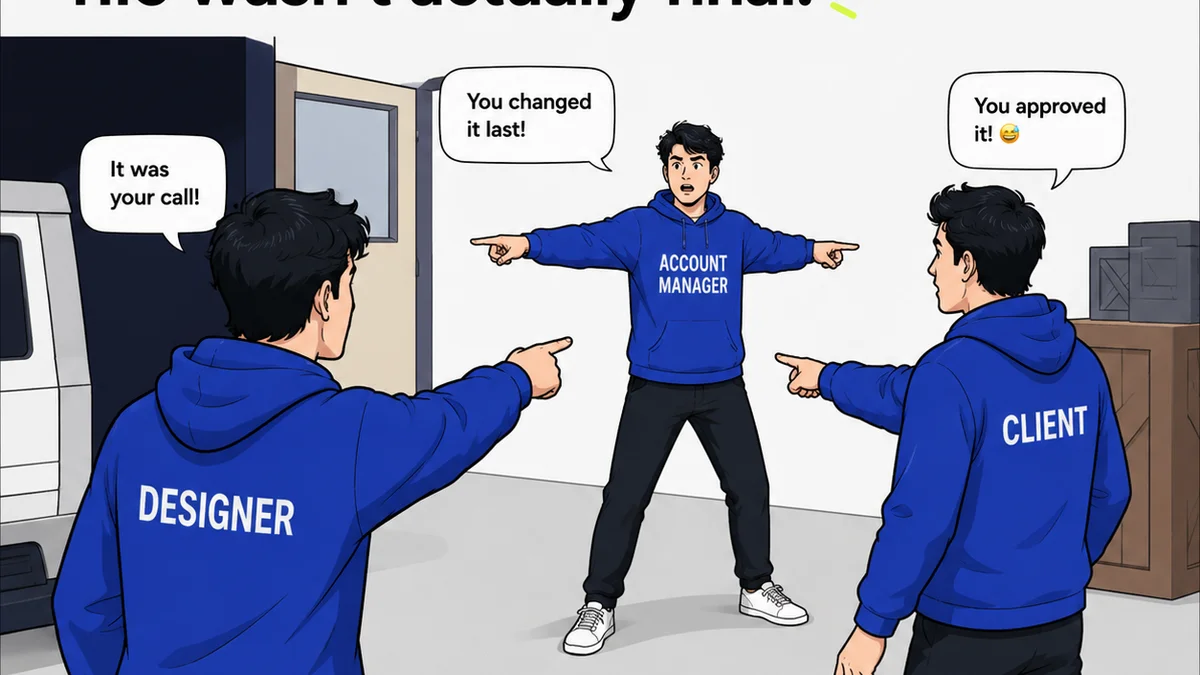
Everyone agrees that clear, efficient creative reviews are crucial for agency success. You’ve probably heard it a million times: establish clear briefs, set realistic timelines, and foster open communication.
None of that is wrong. But it’s incomplete.
The hard truth is that without a standardized, systemized approach to *how* reviews happen, you’re leaving quality, speed, and profitability to chance. Relying on ad-hoc conversations, endless email chains, and tribal knowledge means your best work is often a happy accident, not a predictable outcome.
Standardizing creative reviews isn’t about stifling creativity; it’s about creating a predictable framework so creativity can flourish without getting bogged down in process friction.
1. The Myth of the 'Good Enough' Review
Many teams operate under the assumption that as long as feedback is eventually incorporated and the client signs off, the review process was “good enough.” This is a dangerous assumption.
It ignores the hidden costs:
- Wasted hours in unnecessary clarification loops.
- Missed details that lead to costly rework later.
- Burnout from constant context-switching and chasing feedback.
- Inconsistent quality due to subjective review standards between team members or projects.
- Missed opportunities for proactive problem-solving.
The goal isn't just *client approval*. The goal is *client success*, delivered efficiently and profitably.
2. Defining Your Standardized Review Workflow
A standardized workflow means everyone knows what to expect, when, and how. It removes ambiguity and builds a predictable rhythm.
A. The Trigger: When Does a Review Officially Start?
Not every draft needs a formal review. Define clear trigger points. Is it after internal QA? After a specific milestone? Before client-facing delivery?
Example: For a website design, a formal review might be triggered *only* after the internal design lead has signed off on the wireframes and initial mockups. A quick check-in on a sketch isn't a formal review.
B. The Participants: Who Needs to Weigh In?
Clearly define roles. Who provides feedback? Who approves? Who needs to be informed?
Common Roles:
- Feedback Provider: Offers input, suggestions, and critiques.
- Decision Maker/Approver: Has the final say.
- Facilitator/Manager: Ensures the process stays on track.
- Subject Matter Expert: Provides input on specific areas (e.g., legal, technical).
Avoid the “more is merrier” trap. Too many cooks spoil the broth, and too many reviewers dilute accountability and introduce conflicting opinions.
C. The Method: How is Feedback Captured and Communicated?
This is where most teams falter. Email chains become unwieldy. Slack messages get lost. Phone calls lead to misinterpretations.
You need a centralized, visual method for capturing and discussing feedback. This could be:
- A dedicated project management tool with annotation features.
- A specialized creative review platform.
- A shared document with strict commenting protocols.
The key is that feedback is tied directly to the creative asset and accessible to all relevant parties. No more “Did you see my email from Tuesday?”
D. The Cadence: How Often and When?
Set expectations for review turnaround times. How long does a reviewer have? When can the creative team expect consolidated feedback?
Example: “All feedback must be submitted within 48 business hours of the review being initiated. The creative team will consolidate feedback within 24 hours of the deadline.”
E. The Output: What Constitutes 'Done' for a Review Cycle?
What does a successful review cycle look like? Is it a list of actionable comments? A formal sign-off? A clear record of decisions made?
Define what “approved” means. Does it mean no further changes, or no further *major* changes? Clarity here prevents scope creep disguised as minor tweaks.
3. Standardizing Feedback Quality
It's not just about the *process*, but the *quality* of the input. Unhelpful feedback is almost worse than no feedback.
A. Actionable vs. Vague
Train your reviewers to provide feedback that is specific and actionable. “I don’t like it” is useless. “The headline is too small to read from a distance” is actionable.
B. Objective vs. Subjective
Encourage feedback grounded in project goals, brand guidelines, and user experience principles, rather than purely personal preference. “This color doesn’t align with our brand palette” is objective. “This color feels sad” is subjective.
C. Consolidated vs. Scattered
Ensure feedback is gathered and presented holistically. A single reviewer shouldn't be bombarded with individual comments; they should see consolidated, prioritized feedback.
D. Timely vs. Delayed
Late feedback cripples schedules. Standardize deadlines and hold people accountable. If feedback is late, the asset might move forward without it.
4. The Role of Technology in Standardization
Trying to standardize reviews with spreadsheets and email is like trying to build a skyscraper with hand tools. It’s possible, but inefficient and prone to collapse.
Technology provides the structure, visibility, and audit trail that manual processes lack.
- Centralized Hub: A single source of truth for all assets, feedback, and revisions.
- Version Control: Clear tracking of what’s been updated and when.
- Annotation Tools: Precise feedback directly on the creative.
- Approval Workflows: Automated routing and status tracking.
- Audit Trails: A clear record of who said what, when, and what was decided.
This isn't about adding another tool; it's about implementing a tool that *enables* standardization and makes the entire process more efficient and less painful for everyone involved.
Where Revue Fits In
Revue acts as the central nervous system for your creative review and approval process. It’s designed to take the chaos out of feedback and make standardization not just possible, but effortless.
Instead of juggling scattered comments across emails, Slack, and random documents, Revue provides a single, visual space where feedback is contextual, actionable, and auditable. You can upload any creative asset, invite stakeholders, and gather precise feedback directly on the work. Revision tracking and clear approval statuses mean everyone is always on the same page, reducing back-and-forth and accelerating your time to final delivery.
This isn’t about replacing client conversations; it’s about making those conversations far more productive by having a clear, documented history of feedback and decisions leading up to them. It’s about ensuring that when a client approves, you have a verifiable record, minimizing disputes and maximizing efficiency.
5. Overcoming Resistance to Standardization
Change is hard. Some team members might resist a more structured approach, viewing it as bureaucracy or a loss of freedom.
A. Educate on the 'Why'
Clearly articulate the benefits: less wasted time, fewer errors, more clarity, and ultimately, more creative freedom because the administrative burden is reduced.
B. Start Small
Pilot a standardized process with one team or one project type. Demonstrate its success before rolling it out company-wide.
C. Involve the Team
Get input from the people who will be using the new process. They often have the best insights into what will and won’t work in practice.
D. Lead by Example
Management and team leads must actively use and champion the standardized process. If leadership doesn’t adhere to it, no one else will.
6. The Long-Term Payoff: Predictable Excellence
Standardizing creative reviews isn’t just an operational tweak; it’s a strategic imperative.
When your review process is predictable, your output becomes predictable. You reduce the risk of costly errors, improve team morale by reducing frustration, and deliver work that is consistently high-quality and on-time.
This frees up your creatives to focus on what they do best: creating. It allows your account managers to manage with confidence, knowing the process is under control. And it enables agency leaders to forecast timelines and profitability with much greater accuracy.
Final Thought
Are you still treating creative reviews as a necessary evil, or are you building them into a predictable, scalable engine for delivering exceptional client work? The difference isn't just about saving time; it's about fundamentally changing how effectively your agency operates.
Frequently asked questions
What are the key benefits of standardizing creative reviews?
Standardizing creative reviews leads to fewer errors, reduced rework, faster turnaround times, improved team communication, consistent quality, and increased profitability by making the process predictable and efficient.
How can I ensure feedback is actionable and objective?
Train reviewers to provide specific, task-oriented comments tied to project goals and brand guidelines, rather than vague personal opinions. Encourage them to explain the 'why' behind their suggestions and focus on measurable outcomes.
What's the best way to handle conflicting feedback from multiple reviewers?
Designate a clear decision-maker or a small approval committee. The facilitator should consolidate feedback, highlight discrepancies, and present them to the decision-maker for a final call, ensuring the team aligns on a single direction.
How can technology help standardize creative reviews?
Technology like dedicated review platforms offers a centralized hub for assets and feedback, visual annotation tools, version control, automated workflows, and audit trails. This provides clarity, accountability, and a single source of truth, removing reliance on scattered emails and messages.