Everyone talks about creative ROI. They say it’s about brand lift, engagement, conversions. None of that is wrong. But it’s incomplete. It’s a surface-level take that overlooks the messy reality of creative production.
The hard truth? Standardizing creative ROI isn’t about the final campaign metric. It’s about the operational rigor *behind* the creative. It’s about process, visibility, and accountability.
1. The Myth of the 'Creative Genius' Metric
We often treat creative output like magic. A brilliant idea strikes, a designer executes, and *poof* – revenue. This narrative absolves us of the need for structured measurement. It’s easier to point to a viral hit than to dissect the workflow that made it possible.
But this approach kills scalability. It makes reliable forecasting impossible. And it leaves you guessing about which investments actually pay off.
You can’t standardize ROI when you can’t even standardize the *input* that generates it.
The Symptoms of Unstandardized Input
- Creative teams operate in silos, using different tools and methods.
- Feedback is scattered across emails, Slack, and random documents.
- Revision cycles are opaque; no one knows who’s blocking progress or why.
- There’s no clear record of what was approved, when, and by whom.
- Post-project analysis is rare, superficial, or non-existent.
Sound familiar?
2. Define What 'Creative ROI' Means *For You*
Before you can measure anything, you need a clear definition. What are you trying to achieve with your creative work? This isn’t a one-size-fits-all answer.
Is it driving direct sales? Building brand awareness? Improving customer retention? Supporting a new product launch?
Your definition of creative ROI should align with your overarching business objectives. If your goal is brand awareness, a campaign’s ROI might be measured by reach, sentiment, and share of voice, not direct conversions.
Aligning Creative Goals with Business Goals
- Direct Revenue: Track conversion rates, average order value, and customer lifetime value influenced by specific creative assets.
- Brand Building: Measure brand recall, aided and unaided awareness, social mentions, and website traffic from brand campaigns.
- Product Adoption: Monitor feature usage, user onboarding completion rates, and support ticket reduction tied to new creative assets.
- Efficiency Gains: Calculate time saved on revisions, reduced rework, and faster time-to-market for creative deliverables.
You might have multiple definitions for different types of creative work. That’s okay. The key is to be explicit.
3. Map Your Creative Workflow to Measurement Points
This is where operational rigor comes in. You need to understand every step of your creative process and identify where you can collect meaningful data.
Think of it like this: every stage of creative production is an opportunity to gather insights that contribute to the overall ROI picture.
Key Workflow Stages and Measurement Opportunities
- Briefing: Track clarity of briefs, alignment with objectives, and time spent clarifying requirements.
- Concepting & Design: Monitor iteration cycles, feedback volume per concept, and time spent on revisions.
- Review & Approval: Log stakeholder feedback, identify bottlenecks, and record approval times.
- Production: Track asset variations, localization efforts, and quality assurance pass rates.
- Deployment & Performance: Link creative assets to campaign performance metrics (clicks, conversions, engagement).
Without this mapping, you’re flying blind. You can’t connect the dots between a design iteration and a conversion rate.
4. Centralize Feedback and Version Control
Scattered feedback is the enemy of standardized ROI. When feedback lives in email threads, Slack channels, or Word docs, you lose context. You can’t trace decisions or understand the evolution of an asset.
This chaos makes it impossible to say, definitively, “This change, requested by X on Y date, led to Z outcome.”
You need a single source of truth for all creative feedback and approvals.
This is crucial for identifying costly rework and understanding which feedback loops are productive versus destructive.
5. Track Revision Cycles and Approval Times
How long does it *really* take to get a design approved? How many rounds of revisions are typical for a banner ad versus a landing page?
If you don’t have this data, you’re leaving money on the table. Extended revision cycles drain resources and delay launches, directly impacting your bottom line.
Tracking these times helps you:
- Identify process bottlenecks.
- Estimate future project timelines more accurately.
- Understand the true cost of creative iteration.
- Benchmark performance between teams or projects.
This operational data is a critical component of creative ROI. It’s not just about the final *what*, but the *how long* and *how much* it cost to get there.
6. Implement Standardized Quality Checks
Quality assurance (QA) isn't just a final gate; it’s a continuous process. A robust QA process catches errors *before* they go live, preventing costly fixes and damage to brand reputation.
This directly impacts ROI. A bug-ridden campaign or a misaligned asset doesn’t just look bad; it performs poorly and costs more to fix post-launch.
Standardized QA means:
- Clear checklists for different asset types.
- Defined roles and responsibilities for QA.
- Automated checks where possible.
- A clear process for reporting and resolving issues.
This operational discipline ensures that the creative output meeting the market is polished, professional, and aligned with objectives.
7. Connect Creative Output to Business Outcomes
This is the final, and perhaps most critical, step. You’ve standardized your inputs and processes; now you need to link them to the desired outcomes.
This requires integration. Your creative tools need to talk to your analytics platforms. Your project management system needs to inform your CRM.
It’s about building a data pipeline that shows the journey from a creative brief to a satisfied customer.
Examples of Connecting Creative to Outcomes
- E-commerce: Link specific ad creatives or landing page designs to conversion rates and AOV.
- SaaS: Correlate in-app creative elements with feature adoption or churn reduction.
- Content Marketing: Tie blog post visuals or social media graphics to traffic, engagement, and lead generation.
This linkage is what transforms operational data into true business impact.
Where Revue Fits In
Standardizing creative ROI requires visibility and control over your entire creative workflow. This is precisely where Revue excels.
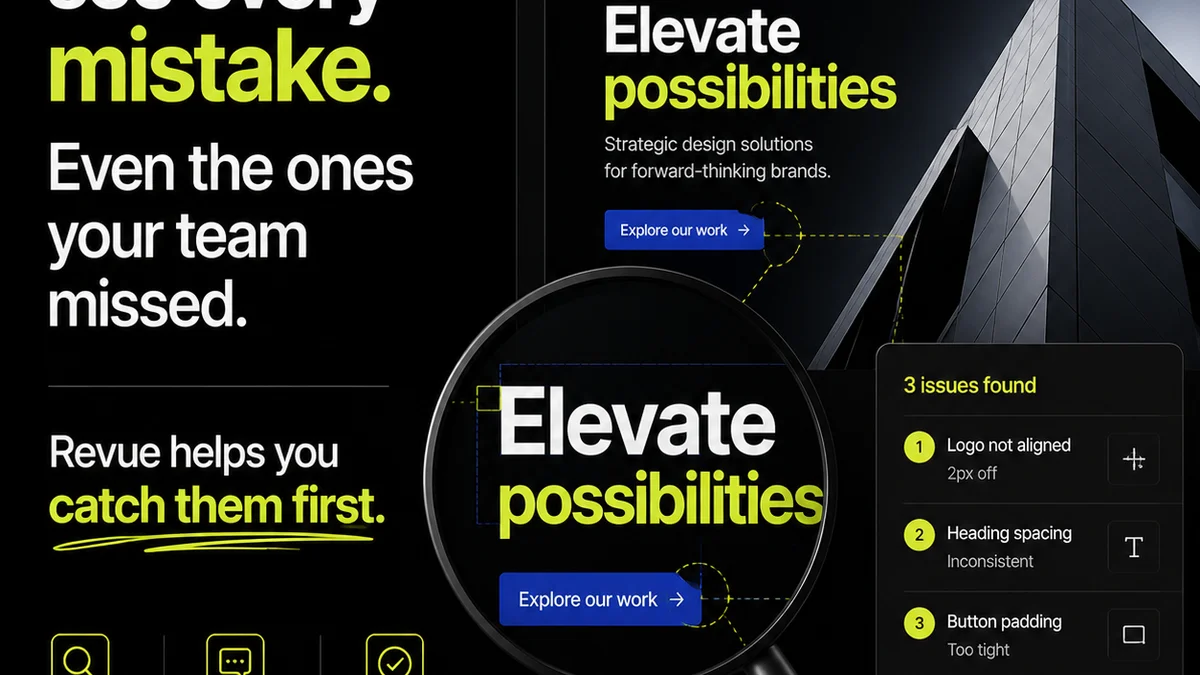
Revue provides a central hub for managing client feedback, streamlining revision cycles, and gaining clear approval visibility. Instead of tracking feedback across disparate channels, you have a single, organized system.
This means:
- Centralized Feedback: All comments, annotations, and discussions live on the asset itself, providing clear context and reducing misinterpretation.
- Revision Management: Track every version of an asset, see who made what changes, and manage the entire revision history effortlessly.
- Clear Approvals: Get explicit sign-offs from stakeholders, eliminating ambiguity and accelerating timelines.
- Quality Assurance: Integrate QA steps directly into your workflow, ensuring assets meet standards before final delivery.
By bringing structure to these critical stages, Revue helps you collect the operational data needed to understand and prove creative ROI, team by team.
Final Thought
Are we asking the right questions about creative work? We obsess over the final metric, but often ignore the operational engine that drives it. Standardizing creative ROI isn't about stifling creativity; it's about giving it the best possible environment to thrive and be demonstrably valuable.
Frequently asked questions
What is creative ROI?
Creative ROI is the measure of the return on investment for creative work. It connects the cost of producing creative assets to the business value they generate, whether that's in terms of revenue, brand awareness, customer engagement, or operational efficiency.
Why is standardizing creative ROI important?
Standardizing creative ROI allows agencies and creative teams to consistently measure the impact of their work, identify what's working and what's not, justify investments, and improve future performance. It moves beyond subjective opinions to data-driven insights.
How can I start measuring creative ROI?
Begin by clearly defining what 'ROI' means for your specific creative goals and business objectives. Then, map your creative workflow to identify key measurement points and implement systems for tracking feedback, revisions, approvals, and final performance metrics.
What role does workflow play in creative ROI?
Workflow is foundational. An inefficient, opaque, or unstandardized workflow leads to wasted time, increased costs, and unclear accountability. Standardizing workflows ensures better input quality, more predictable output, and enables accurate measurement of the entire process, which is a key component of ROI.