Everyone talks about brand consistency. They say it’s about logos, colors, and fonts. That’s not wrong. But it’s incomplete.
The real goal isn’t just a consistent look; it’s a consistent *experience*. And you can’t achieve that by just handing out a brand guide. The deeper truth is that standardizing marketing design across teams requires a robust operational framework, not just a visual one.
1. The Myth of the Static Brand Guide
You’ve got the brand guide. Maybe it’s a PDF, maybe it’s a Figma file. It lives somewhere on a shared drive. Everyone *can* access it.
But can everyone *use* it effectively? Can every designer, every copywriter, every account manager instantly pull the right assets, apply the correct guidelines, and ensure pixel-perfect execution on every single project, every single time?
Probably not.
Static guides are a starting point, not a solution. They don't account for:
- Version control nightmares.
- Asset sprawl across multiple platforms and personal drives.
- Misinterpretation of complex rules.
- The sheer time it takes to *find* the right asset.
- New hires struggling to get up to speed.
The Operational Bottleneck
This static approach creates an operational bottleneck. Instead of empowering teams, the brand guide becomes another hurdle. Every minor deviation requires a clarification, a re-creation, or a frantic search for the “official” version.
This isn't about laziness; it's about workflow. Creative teams are busy. Deadlines are tight. The path of least resistance often leads away from perfect adherence.
2. Building a Living Design System
A true solution is a living design system. Think of it as your brand guide’s operational big brother. It’s not just about *what* things look like, but *how* they get made and deployed consistently.
A design system codifies your brand’s visual identity, but crucially, it also includes reusable components, clear usage rules, and accessible resources.
Key Components of a Functional Design System
- Component Library: Pre-built, approved elements (buttons, cards, forms, headers, footers) that adhere to brand standards.
- Style Guide: Beyond colors and fonts, this includes typography scales, spacing rules, voice and tone guidelines, and imagery principles.
- Pattern Library: Examples of how components and styles are used together to solve common design problems (e.g., a hero banner pattern, a product listing pattern).
- Brand Guidelines: The foundational rules for logo usage, color palettes, typography, and overall brand expression, integrated directly into the system.
- Accessibility Standards: Baked-in considerations for contrast ratios, focus states, and semantic structure, often referencing guidelines like the WCAG.
This isn't just for giant tech companies. Agencies and in-house teams of any size can benefit from this modular approach.
Accessibility as a Non-Negotiable
Standardization also means ensuring your marketing assets are accessible to everyone. This isn't an afterthought; it's a core principle.
A well-defined design system should integrate accessibility checks from the start. This means:
- Ensuring sufficient color contrast ratios.
- Defining clear focus states for interactive elements.
- Using semantic HTML for web assets.
- Providing alt text guidelines for images.
When accessibility is part of the system, it’s not an extra step; it’s just how things are done.
3. The Role of Technology in Standardization
Let’s be honest: managing a comprehensive design system manually is a losing battle. You need tools that support the system, not hinder it.
This means leveraging technology to:
- Centralize Assets: A single source of truth for all brand elements, logos, images, and templates.
- Automate Checks: Tools that can flag inconsistencies or non-compliance with brand rules.
- Streamline Collaboration: Platforms that allow for clear feedback and approvals on design assets.
- Ensure Version Control: Tracking changes and ensuring everyone is working with the latest approved versions.
This isn't about replacing designers with software. It's about freeing them from repetitive tasks and manual checks so they can focus on strategy and creativity.
Choosing the Right Tools
Consider the tools you already use. Are they integrated? Do they support a component-based workflow? Tools like Figma offer robust design system capabilities, allowing you to build and share component libraries. But the system needs to extend beyond the design file.
Think about how assets are handed off, reviewed, and approved. This is where the operational side of standardization truly shines.
4. Implementing and Maintaining Your System
Launching a design system isn't a one-and-done event. It’s an ongoing commitment.
Adoption is Key
How do you get your team to actually *use* the system?
- Training: Comprehensive onboarding and regular refreshers.
- Documentation: Clear, concise, and easily searchable guides.
- Champions: Designate team members to advocate for and support the system.
- Feedback Loop: Make it easy for users to report issues or suggest improvements.
The system should be a helper, not a dictator. If it’s too rigid or too difficult to use, people will revert to old habits.
Continuous Improvement
Your brand, your market, and your technology will evolve. Your design system must evolve with them.
Regularly review:
- New component requests.
- Performance data related to design elements.
- User feedback on usability.
- Emerging best practices in design and accessibility.
Treat your design system like a product. It has users, it needs updates, and it requires ongoing investment.
Where Revue Fits In
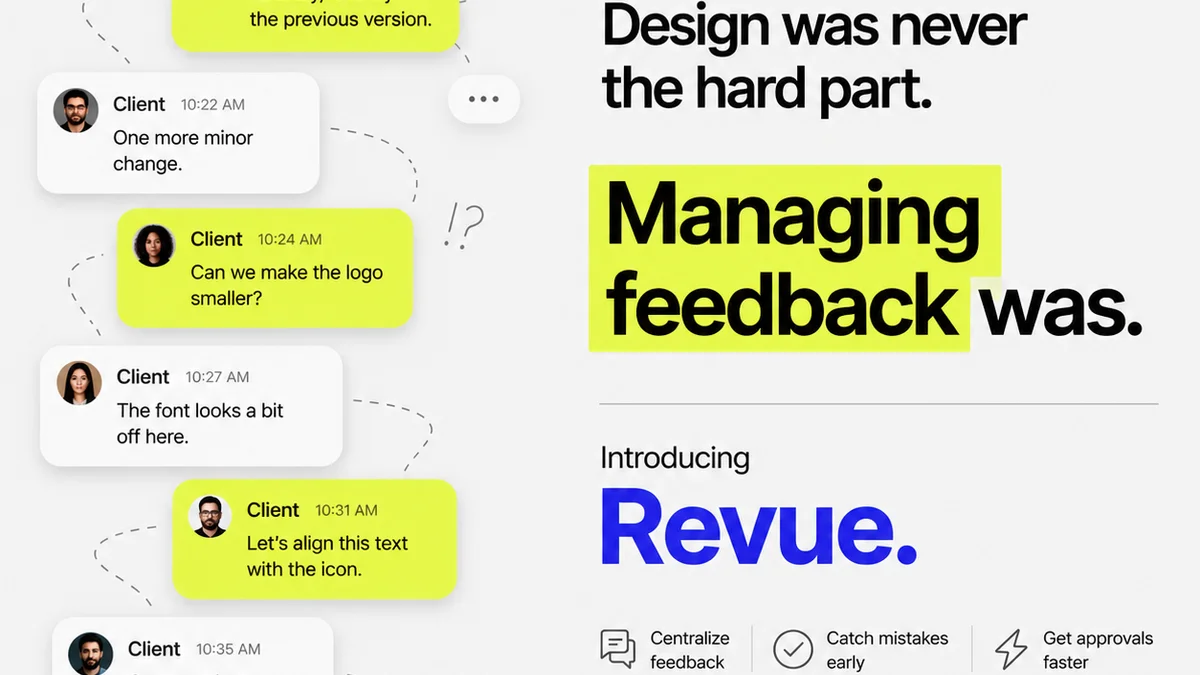
Standardizing marketing design isn't just about creating assets; it's about managing the entire lifecycle of creative work. This is where a centralized feedback and approval platform like Revue becomes critical.
When your team uses a system like Revue, you gain visibility into:
- Centralized Feedback: All client and stakeholder comments are in one place, linked to specific versions of the creative asset. No more hunting through email chains or Slack messages. s
- Revision and Approval Tracking: Clear, auditable history of every revision, comment, and approval. This eliminates ambiguity and ensures accountability.
- Quality Assurance: The structured workflow helps ensure that designs are reviewed against brand guidelines and project requirements before final sign-off.
Revue helps operationalize your design system by providing a clear, controlled environment for the review and approval stages, ensuring that the intended standardization is maintained right through to final delivery.
Final Thought
Is your team truly building brand consistency, or are they just chasing a look? The difference lies in the operational rigor behind the creative output. A well-defined, technologically supported design system, managed through a centralized workflow, is the only way to achieve true, scalable standardization. What’s holding your team back from this operational clarity?
Frequently asked questions
What is a design system?
A design system is a comprehensive set of standards, principles, and reusable components that guide the design and development of digital products. It includes style guides, component libraries, pattern libraries, and brand guidelines, ensuring consistency and efficiency.
How does a design system improve marketing design?
A design system ensures that all marketing assets adhere to brand guidelines, maintain visual consistency, and are built with accessibility in mind. This reduces errors, speeds up production, and creates a unified brand experience across all touchpoints.
Is a design system only for large companies?
No, design systems are beneficial for agencies and in-house teams of all sizes. They provide a scalable framework for managing creative assets and ensuring consistency, regardless of team size or project volume.
How can technology help standardize marketing design?
Technology can centralize assets, automate compliance checks, streamline collaboration, and manage version control. Tools for design, asset management, and feedback/approval platforms are crucial for operationalizing a design system effectively.