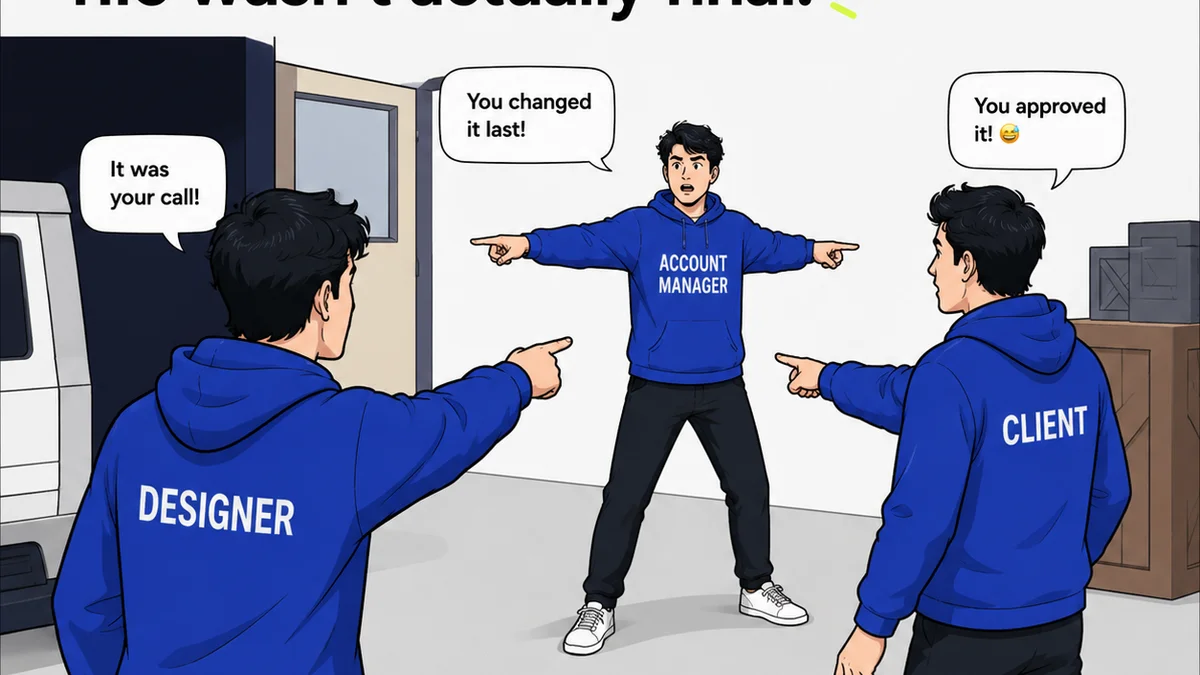
Everyone thinks their way of getting creative work out the door is the best. Or at least, the most *creative*. That's why standardizing publication workflow across teams feels like herding cats. Or worse, like trying to impose rigid rules on a fundamentally artistic process.
None of that is wrong. But it’s incomplete.
The hard truth? If your publication workflow isn’t standardized, you’re building a house of cards. It might look impressive for a while, but a single gust of wind—a new client, a tight deadline, a team member leaving—and it all comes crashing down.
Standardization isn't about crushing creativity. It's about creating a predictable, repeatable foundation so creativity can thrive. It’s about moving from chaos to control, from guesswork to consistent delivery. Especially when you’re managing multiple projects, multiple clients, and multiple team members all at once.
1. Define Your Core Publication Process
Before you can standardize anything, you need to know what "it" is. What are the actual steps involved in getting a piece of creative work from an idea to published reality?
This sounds obvious, but most agencies and teams haven't truly mapped it out. They operate on tribal knowledge, on "how we’ve always done it," or on individual habits. That’s a recipe for inconsistency.
Start by mapping the end-to-end process for your most common publication types. Think:
- New website design
- Social media campaign assets
- Blog post production
- Client presentation decks
- Video content
For each, break down the stages. Be granular. Don't just say "design." Say: brief review, concepting, wireframing, mockups, client review 1, revisions, client review 2, final polish, handoff, QA, deployment.
Map the Handoffs
Crucially, identify every single handoff point. Who is responsible for what, and when do they receive assets or information from the previous stage? Where do bottlenecks typically form?
This is where most teams stumble. They assume handoffs are smooth. They're not. Information gets lost. Files are in the wrong format. The next person doesn't have the context they need.
Documenting these handoffs makes the invisible visible. It forces you to address the friction points that slow everything down.
2. Establish Clear Roles and Responsibilities
Once you have a process map, assign ownership. Who owns each step? Who is accountable for approvals?
This isn't about micromanagement. It's about clarity. When everyone knows exactly what’s expected of them and when, you reduce confusion and duplicated effort.
Use a RACI matrix (Responsible, Accountable, Consulted, Informed) if it helps. Even a simpler list of "Owner" and "Approver" for each stage can be incredibly effective.
Consider:
- Who briefs the designer?
- Who provides the copy?
- Who is the primary client point of contact for feedback?
- Who gives the final go-ahead?
- Who is responsible for quality assurance (QA)?
Ambiguity here is a creativity killer. It leads to "I thought someone else was doing that" and missed deadlines.
3. Standardize Feedback and Approval Loops
This is often the biggest pain point in creative publication workflows. Feedback arrives late, is contradictory, or comes from people who shouldn't be giving it.
Approvals become black holes. You send something off, and then… nothing. Days pass. You chase people. The project stalls.
Standardization here means:
- Defined channels for feedback: No more feedback scattered across emails, Slack messages, and random documents. Use a single, designated tool.
- Clear deadlines for feedback: Clients and internal stakeholders must know *when* their feedback is due.
- Structured feedback: Guide feedback providers. Ask them to be specific, constructive, and to focus on the brief.
- Designated approvers: Only allow feedback from the pre-defined approvers. Everyone else can be 'informed' or 'consulted'.
Without this structure, you’re constantly re-doing work, fighting scope creep, and burning through billable hours (or worse, doing free work).
4. Implement a Quality Assurance (QA) Process
Publication isn't done when the client says "looks good." It's done when it's live, and it works as intended.
A standardized QA process catches errors *before* they go public. This protects your agency's reputation and saves you from costly post-publication fixes.
Your QA checklist should cover:
- Technical checks: Does the link work? Is the image resolution correct? Is the code valid?
- Content accuracy: Is the copy error-free? Are names, dates, and facts correct?
- Brand consistency: Does it adhere to brand guidelines?
- Usability: Is it easy to navigate? Does it meet accessibility standards?
- Deliverable format: Is the file named correctly? Is it in the right format and size?
This is non-negotiable for any professional publication workflow.
5. Leverage Tools for Consistency
Trying to manage a standardized workflow with spreadsheets and email is like trying to build a skyscraper with a hammer and nails.
You need tools designed for the job. Project management software, proofing tools, and asset management systems are essential.
These tools don't just organize tasks; they enforce the workflow:
- Centralized feedback: A single source of truth for all comments and revisions.
- Version control: Track every iteration and ensure everyone is working on the latest version.
- Automated notifications: Remind team members and clients about upcoming deadlines and pending actions.
- Approval tracking: Maintain a clear audit trail of who approved what, and when.
The right technology makes standardization feel less like a burden and more like the default setting.
Where Revue Fits In
This is where Revue shines for creative teams. It’s built to bring order to the creative chaos of client feedback and approvals.
Instead of chasing emails or sifting through Slack, you get a centralized platform for all stakeholder feedback. Comments are placed directly on the creative asset, eliminating ambiguity.
Revue provides clear visibility into the revision and approval process. You can see who has commented, who needs to approve, and what the status is at any given moment. This drastically reduces the "black hole" effect of waiting for approvals.
Furthermore, Revue helps enforce your standardized QA and sign-off process. By requiring explicit approvals within the platform, you ensure that work is thoroughly reviewed before it's published. It creates that crucial audit trail, making accountability clear.
It’s not just about managing feedback; it's about streamlining the entire publication workflow, making it more efficient, transparent, and predictable for everyone involved.
Final Thought
Is your publication workflow a well-oiled machine, or a series of frantic, last-minute scrambles? Standardizing doesn't mean stifling your team's creativity. It means giving it the structure it needs to consistently deliver high-quality work, on time, every time. The question isn't *if* you should standardize, but *how* you're going to start.
Frequently asked questions
Why is standardizing a publication workflow important for creative teams?
Standardizing a publication workflow is crucial for creative teams because it eliminates ambiguity, reduces errors, ensures consistency, and improves efficiency. It creates a predictable process that allows creativity to thrive within defined boundaries, leading to more reliable delivery of high-quality work and better client satisfaction.
What are the key steps to standardizing a publication workflow?
The key steps include defining the core publication process for different types of projects, establishing clear roles and responsibilities for each team member, standardizing feedback and approval loops with defined channels and deadlines, implementing a robust quality assurance (QA) process, and leveraging appropriate tools to manage and enforce the workflow.
How can tools help standardize a publication workflow?
Tools like project management software, proofing platforms, and asset management systems centralize feedback, manage versions, automate notifications, and track approvals. They enforce the standardized process, making it easier for teams to follow and reducing the reliance on manual, error-prone methods like email and spreadsheets.
What is the role of client feedback in a standardized workflow?
In a standardized workflow, client feedback is managed through defined channels with clear deadlines and structured formats. This ensures feedback is constructive, relevant, and provided by designated approvers, preventing confusion and rework that can derail projects.