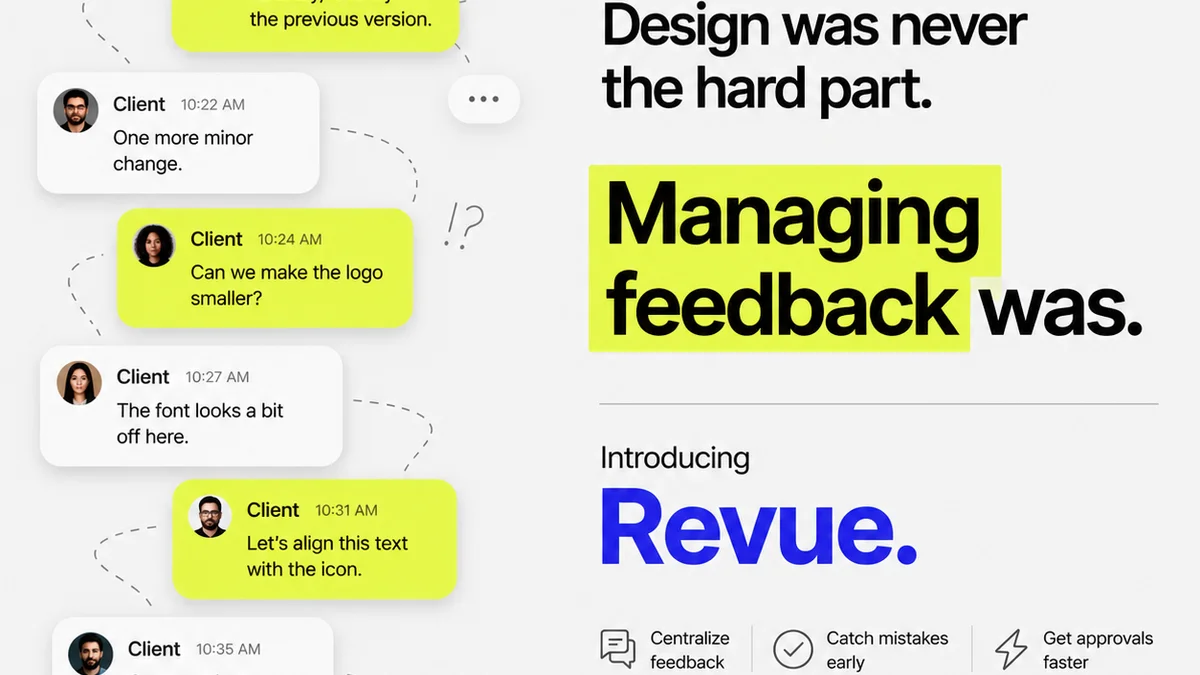
Everyone agrees that clear, constructive feedback is key to great design. And if you have a small team, you can probably get away with Slack messages, quick Zoom calls, and a shared drive. It’s messy, but you manage.
But what happens when your team grows? Or when you bring on multiple large clients, each with their own process and stakeholders? That simple system breaks. Fast.
The common assumption is that a larger team just needs more people managing the process. More project managers, more coordinators, more status meetings. More overhead.
None of that is wrong. But it’s incomplete.
The hard truth? You can’t scale a chaotic process. You need to standardize your design review workflow. Not just for efficiency, but for sanity and consistent quality.
1. The Myth of the 'Ad Hoc' Review
Many teams believe that design reviews should remain somewhat fluid, adapting to the specific project or client. They think a rigid process stifles creativity.
This leads to a frustrating reality:
- Inconsistent feedback quality.
- Endless revision loops.
- Difficulty tracking decisions.
- Stakeholders feeling left out or confused.
- Burnout for designers and project managers alike.
This isn't flexibility; it's chaos in disguise. It’s a ticking time bomb for project delays and client dissatisfaction.
2. Building Your Standardized Workflow: The Foundation
Standardization doesn't mean rigidity. It means predictability and clarity. It means everyone knows what to expect, when, and how.
Define Your Stages
Map out the typical lifecycle of a design project. What are the key review points? Common stages include:
- Initial concept review
- Mid-fidelity wireframe review
- High-fidelity mockup review
- Final pre-production review
Be specific. What deliverables are expected at each stage? Who needs to provide feedback?
Establish Feedback Guidelines
This is critical. What makes feedback actionable?
- Be specific: Instead of “I don’t like this,” say “The CTA button isn’t prominent enough, and the copy could be more direct.”
- Be constructive: Offer solutions or alternatives, not just criticisms.
- Be contextual: Refer back to project goals, target audience, or brand guidelines.
- Be timely: Set clear deadlines for feedback to avoid blocking the team.
Provide examples. Train your team and your clients on how to give and receive feedback effectively.
Choose Your Tools Wisely
This is where many teams falter. They cobble together a Frankenstein stack of email, spreadsheets, chat apps, and generic file-sharing services.
This creates silos.
You need a centralized platform where all feedback, revisions, and approvals live. A single source of truth.
3. Implementing Standardization: The Operational Shift
Getting buy-in is half the battle. Here’s how to make it stick.
Document Everything
Create a clear, accessible document outlining your standardized review process. Include:
- The defined stages.
- Roles and responsibilities at each stage.
- How to submit feedback.
- How feedback is consolidated and actioned.
- Approval workflows.
- Escalation paths for disagreements.
Make this document the go-to resource. Refer to it constantly.
Train Your Team (and Clients)
Don't just send out the document and expect magic. Conduct training sessions.
- Walk through hypothetical scenarios.
- Demonstrate the tools you’ll be using.
- Explain the 'why' behind the standardization.
For clients, integrate this into your onboarding process. Explain how your streamlined process benefits them with faster turnaround and clearer communication.
Start Small, Scale Gradually
If a full overhaul feels daunting, pilot the new process on a single project or with a specific client. Gather feedback, iterate, and then roll it out more broadly.
This phased approach builds confidence and allows for adjustments based on real-world application.
4. The Pitfalls to Avoid
Standardization isn’t a silver bullet. It requires vigilance.
Over-Automation
Don’t remove the human element entirely. AI can help flag issues, but it can’t replace nuanced creative judgment or client relationship management.
Ignoring Feedback on the Process Itself
Your standardized process should be adaptable. If a specific part of it consistently causes friction, listen and adjust.
Lack of Enforcement
The best process document is useless if no one follows it. Project managers and creative leads must champion the process and gently, but firmly, guide everyone back to it.
Treating All Feedback the Same
Not all feedback is created equal. Your process needs a mechanism to differentiate between subjective opinions and objective, goal-aligned critiques.
Where Revue Fits In
This is where tools designed for creative collaboration shine. Trying to manage standardized reviews with a patchwork of generic software is like trying to build a skyscraper with a hammer and nails.
Revue is built to solve this exact problem. It provides a single, centralized space for all your design assets and client feedback.
- Centralized Feedback: All comments, annotations, and discussions live directly on the design asset. No more hunting through emails or chat logs.
- Revision Visibility: Easily track every version, every change, and who approved what. This transparency is gold for large teams and complex client relationships.
- Streamlined Approvals: Define clear approval workflows so you know exactly who needs to sign off and when.
- Quality Checks: By having all feedback and revisions in one place, it’s easier to spot patterns, ensure brand consistency, and maintain quality across numerous projects and team members.
This isn’t about adding another tool to your stack. It’s about implementing a core piece of infrastructure that enables your standardized workflow.
Final Thought
Is your current design review process a source of efficiency, or a bottleneck? If you're struggling with consistency, missed deadlines, or team burnout, it's time to stop assuming more hands on deck will fix it. It's time to build a process that works, at scale.
Frequently asked questions
What are the key benefits of standardizing design reviews?
Standardizing design reviews leads to more consistent feedback quality, reduces revision cycles, improves decision tracking, clarifies stakeholder involvement, and boosts overall team efficiency and morale.
How do I get team buy-in for a new review process?
Clearly document the process, explain the 'why' behind it, provide hands-on training, demonstrate how it benefits individual roles and the company, and start with a pilot project to show its effectiveness before a full rollout.
Can standardization stifle creativity?
No, standardization doesn't mean rigidity. It provides a predictable framework that actually frees up creative energy by removing the friction of chaotic communication and unclear expectations. It ensures feedback is constructive and aligned with project goals.
What are the essential elements of a standardized design review process?
Key elements include clearly defined review stages, specific feedback guidelines, established communication channels (preferably a centralized tool), documented roles and responsibilities, and a defined approval workflow.