Your agency lives and dies by its ability to deliver great creative, on time and on budget. That means client feedback needs to flow smoothly. Everyone assumes that good communication is the key. That’s not wrong. But it’s incomplete.
The hard truth? Client feedback isn’t just about talking. It’s about a messy, often chaotic process that eats hours, erodes margins, and delays launch dates. It’s about managing dozens of email threads, deciphering vague comments, and chasing down sign-offs.
This isn’t just an annoyance. It’s a direct hit to your agency’s profitability and your team’s sanity.
1. The Illusion of Control: Why Your Current Feedback Loop is Broken
You think you’re on top of it. You’ve got a system. Maybe it’s a shared spreadsheet, a designated point person, or just a prayer and a strong cup of coffee.
But look closer.
- Are you sure you have the *latest* version of the creative asset?
- Can you instantly see *who* gave *what* feedback, and *when*?
- Is that “final approval” email buried under a hundred other messages?
- How much time does your project manager spend just collating notes?
This is where the real cost lies. Not in the creative work itself, but in the friction of getting it approved.
The Email Avalanche
Client communication often defaults to email. It feels familiar, accessible. But it’s also a black hole for feedback. Comments get lost, versions get confused, and critical decisions can be buried under a flood of daily correspondence.
The Version Control Nightmare
“Wait, is this the one with the blue logo or the green logo?” This question alone can derail an entire afternoon. Without a clear, centralized record of revisions, tracking the correct version becomes a full-time job.
The Ambiguity Trap
Vague feedback like “make it pop” or “I don’t love it” is the bane of creatives everywhere. When feedback isn’t tied to a specific element on a specific version, it’s impossible to act on effectively. This leads to endless rounds of revisions, none of which hit the mark.
2. The Real Cost of Delayed Approvals
Every hour spent chasing feedback is an hour not spent on billable work. This isn’t just about lost revenue; it’s about opportunity cost.
Consider the ripple effect:
- Missed Deadlines: Launch dates slip, impacting client satisfaction and future business.
- Eroded Margins: Extended timelines mean more billable hours spent on non-billable tasks like chasing feedback.
- Team Burnout: Frustration over inefficient processes leads to demotivation and turnover.
- Damaged Client Relationships: Delays and confusion can make clients question your agency’s competence.
Your agency’s profitability is directly tied to its efficiency. And efficiency in creative work hinges on a streamlined feedback and approval process.
3. Building a Better Feedback Workflow
The goal isn’t to eliminate client feedback—it’s to make it work *for* you, not against you.
Centralize Everything
All feedback, all versions, all approvals need to live in one place. Imagine a single source of truth where every stakeholder can see the latest asset and all associated comments.
Standardize the Process
Define clear steps for feedback and approval. Who needs to approve? By when? What constitutes a final approval? Make these expectations explicit from the start.
Make Feedback Actionable
Use tools that allow for annotation directly on the creative asset. This ties feedback to specific elements, eliminating ambiguity. Require commenters to be specific and constructive.
Visibility is Key
Everyone involved—your team, your client, stakeholders—should have clear visibility into the status of reviews and approvals. No more guessing games.
4. Where Revue Fits In
This is where the operational reality meets the creative ideal. Managing feedback and approvals doesn’t have to be a manual, error-prone process.
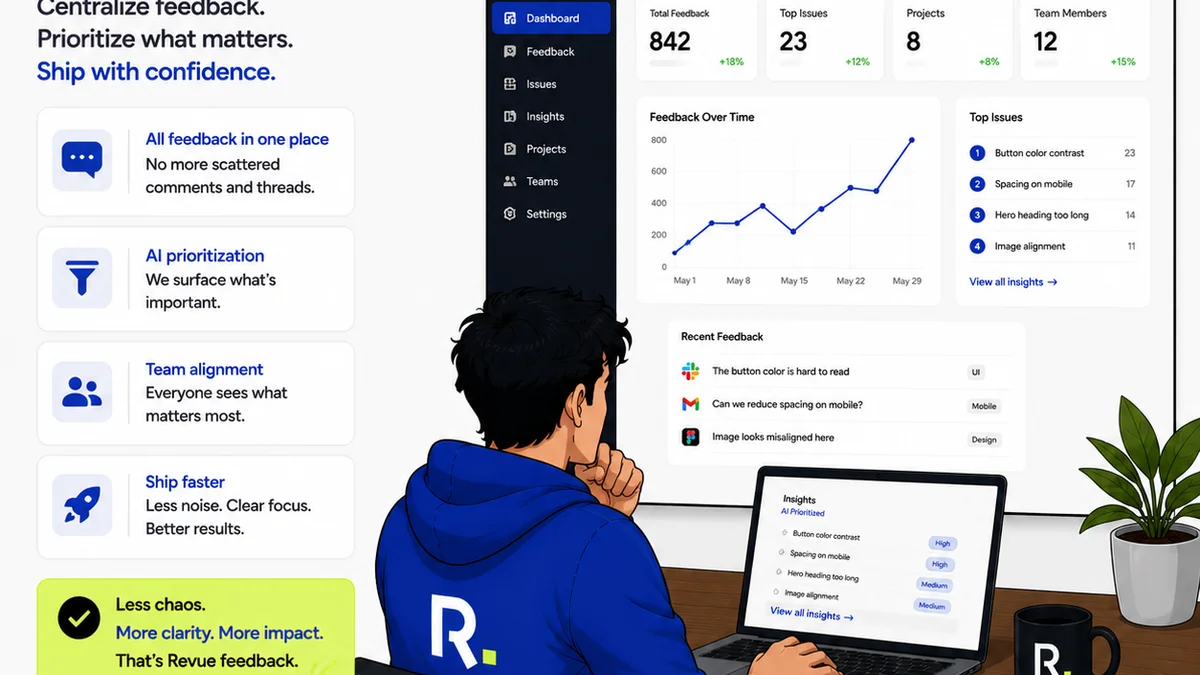
Revue acts as your central hub for all creative work and client communication related to it.
- Centralized Feedback: Upload your creative assets and gather all feedback in one place. No more scattered email threads or Slack messages.
- Version Control: Easily track revisions. Clients and your team always see the latest version, with a clear history of all previous iterations.
- Streamlined Approvals: Get clear sign-offs. See who has approved, who is pending, and what feedback is outstanding. Reduce the back-and-forth dramatically.
- Enhanced Visibility: Provide clients and internal teams with a clear, real-time view of the project status, feedback, and approval progress.
By bringing order to the chaos of feedback and revisions, Revue frees up your team to focus on what they do best: creating amazing work.
Final Thought
How much of your agency’s valuable time is currently spent managing the *process* of feedback, rather than acting on it? The answer might surprise you. And fixing it could unlock significant gains in profitability and team morale.
Frequently asked questions
How can I ensure clients provide clear, actionable feedback?
Use tools that allow for direct annotation on creative assets. This links feedback to specific elements and reduces ambiguity. Clearly communicate your expectations for feedback clarity upfront, perhaps even providing a template or guidelines.
What's the biggest mistake agencies make with feedback?
Relying solely on email for feedback and approvals. Email is unstructured, prone to lost messages, and makes version control a nightmare. Centralizing feedback on the asset itself is crucial.
How does streamlining approvals impact agency profitability?
Faster approvals mean shorter project timelines. This reduces non-billable hours spent managing feedback, minimizes scope creep from endless revisions, and allows your team to take on more billable projects.
Can I integrate a new feedback system with my existing tools?
Many modern platforms are designed to integrate with common agency tools. Check the specific platform's integration capabilities, but generally, solutions aim to fit into your existing workflow rather than requiring a complete overhaul.