Everyone thinks creativity is some wild, untamed force. That it needs chaos to thrive. That structure kills inspiration.
None of that is wrong. But it’s incomplete.
The hard truth? Your creative output isn’t limited by talent. It’s limited by your *systems*.
Bad processes don’t just slow you down. They actively sabotage the quality of the work itself. They introduce errors, stifle iteration, and drain your team’s energy until even good ideas feel like a chore.
Better systems don’t kill creativity. They liberate it.
1. The Myth of the Lone Genius
We’re fed this narrative of the tortured artist, fueled by caffeine and deadlines, producing magic out of thin air. It’s a romantic notion. It’s also a terrible business model.
In reality, great creative work is almost always a team sport. And like any team sport, it requires coordination, clear communication, and a reliable framework.
When your systems are weak, you get:
- Endless rounds of unclear feedback.
- Misunderstandings that lead to wasted effort.
- Team members stepping on each other’s toes.
- Critical details falling through the cracks.
- Burnout masquerading as passion.
This isn’t the mark of a genius. It’s the mark of a poorly managed project.
The Hidden Cost of “Agile” Chaos
Many agencies pride themselves on being agile. Flexible. Able to pivot on a dime. And that’s good.
But sometimes, “agile” becomes an excuse for a lack of process. We’re so busy reacting, we forget to build anything robust.
A truly agile team isn’t chaotic. It’s incredibly well-organized. It can move fast *because* its systems are solid. Think of a Formula 1 pit crew. Pure speed, pure precision, all built on drilled-down systems.
2. Feedback Loops: The Silent Killer
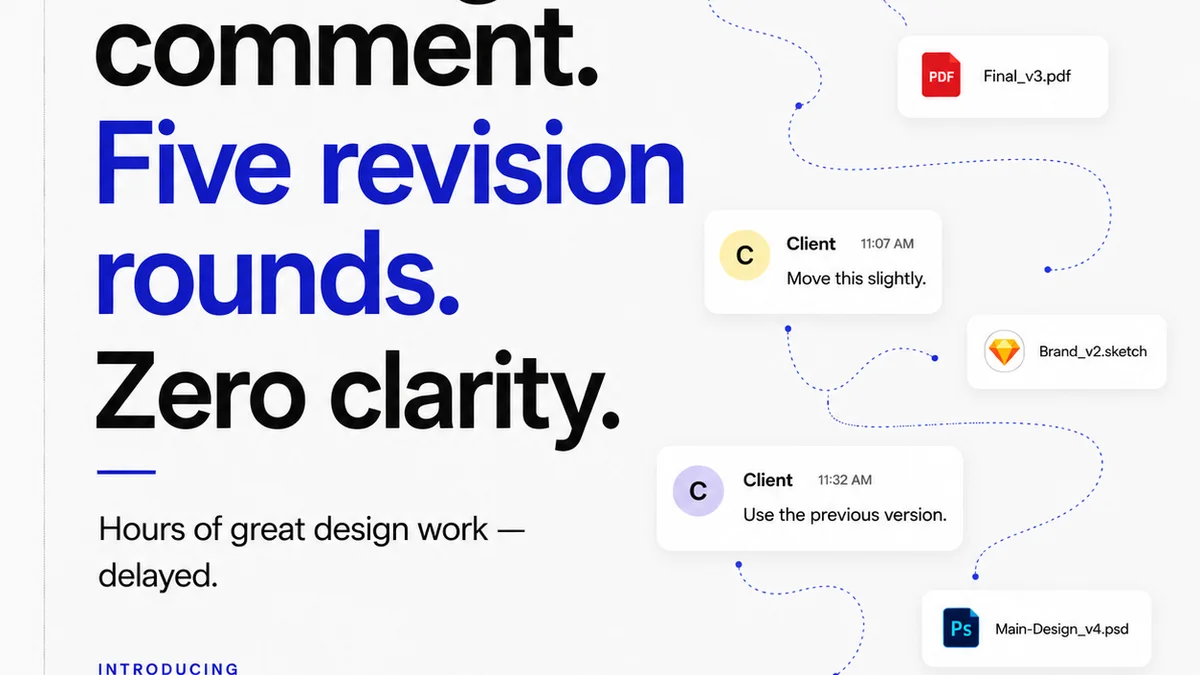
Client feedback is the lifeblood of most creative projects. But it’s also where good work goes to die. Why?
Because feedback is often:
- Vague: “Make it pop more.”
- Contradictory: “I want it bolder, but also more subtle.”
- Unstructured: Emails, Slack messages, random comments in meetings.
- Delayed: Leading to rework on outdated versions.
This isn’t a client problem. It’s a system problem.
Without a clear, centralized system for capturing, organizing, and acting on feedback, you’re building on shifting sand.
From Subjective to Actionable
The goal isn’t to eliminate feedback. It’s to make it useful.
This means moving from subjective opinions to objective, actionable notes. A good system prompts the right questions:
- What specifically needs to change?
- Why does it need to change?
- What is the desired outcome?
- Who is the final approver?
When feedback is clear and contextualized, your creative team can actually implement it effectively. They aren’t guessing. They’re executing.
3. Revision Rounds: The Treadmill of Doom
You’ve probably seen it. A project that should take weeks drags on for months.
It’s not the client being difficult. It’s the inefficient revision process.
Each revision round should be a step forward. Instead, it often feels like running in place.
Common culprits:
- Lack of version control: Multiple versions floating around.
- No clear scope for revisions: “Just a few tweaks” turning into a new brief.
- No accountability for feedback: Comments are made, but not tracked or resolved.
- Approval bottlenecks: Waiting days for a sign-off on minor changes.
This is soul-crushing for creatives. It’s demoralizing and it kills momentum.
Defining the Finish Line
A strong system sets clear expectations for revisions. It defines:
- What constitutes a revision vs. a new scope.
- The number of revision rounds included in the original estimate.
- The turnaround time for feedback and approvals.
When everyone understands the rules of engagement, you can manage expectations and keep projects moving forward efficiently.
4. Quality Control: The Afterthought
Think about the last time a piece of creative work went out the door with a glaring error. A typo. A broken link. The wrong logo.
It happens. But it shouldn’t happen often.
Often, quality control is an afterthought. A quick glance before hitting send. It’s done under pressure, when everyone is just trying to get the project *done*.
This is where systems are crucial.
Building Checks into the Workflow
A robust system incorporates quality checks at multiple stages, not just at the end.
- Checklists for common errors.
- Peer reviews before client delivery.
- Automated checks where possible (e.g., link checkers).
- A dedicated proofreading or QA phase.
This isn’t about micromanagement. It’s about diligence. It’s about protecting the agency’s reputation and ensuring the client receives polished, professional work every time.
5. Where Revue Fits In
Managing creative feedback, revisions, and approvals is a complex dance. Doing it with scattered emails, spreadsheets, and Slack messages is a recipe for disaster.
This is precisely why tools like Revue exist.
Revue provides a centralized hub for all client feedback. It turns subjective comments into actionable tasks, visible to everyone involved. You can track the history of every change, see who approved what, and ensure no feedback gets lost in the shuffle.
This clarity streamlines the revision process. It reduces misunderstandings and speeds up approvals. It gives you a clear audit trail, so you always know where the project stands.
Ultimately, Revue helps you replace chaotic communication with structured workflow. This means less time chasing feedback and more time creating great work.
Final Thought
Are your systems serving your creativity, or are they hindering it?
The difference between an agency that consistently delivers brilliant work and one that struggles with burnout and missed deadlines often comes down to this: the underlying operational framework.
Don’t let the myth of the chaotic genius fool you. Real creativity flourishes within well-designed systems.
Frequently asked questions
How do systems actually improve creativity?
Systems handle the operational noise—tracking feedback, managing revisions, ensuring quality. This frees up creative minds to focus on the actual creative problem-solving, iteration, and execution without getting bogged down in administrative tasks or dealing with confusion.
What are the biggest system flaws that hurt creative work?
The most common flaws include unstructured and vague client feedback, poor version control leading to rework, unclear revision scopes, delayed approvals, and a lack of dedicated quality control checkpoints. These issues create inefficiency and introduce errors.
How can an agency manage client feedback more effectively?
Centralize feedback in one platform, use tools that allow for contextual comments directly on the work, establish clear communication protocols with clients about feedback submission, and ensure all feedback is actionable and logged.
Is there a risk of systems making the creative process too rigid?
There's a risk if systems are implemented poorly or without understanding the creative need. The goal is not to stifle flexibility but to create a reliable framework that supports creativity. Think of it as guardrails on a highway—they guide you safely and efficiently, rather than preventing you from reaching your destination.
How does a tool like Revue help with creative systems?
Revue acts as a central hub for feedback and approvals, providing clarity, version control, and an audit trail. It transforms messy communication into structured tasks, streamlining revisions and quality checks, thereby supporting a more efficient and effective creative process.