Everyone agrees good UI/UX is crucial. It makes products usable, delightful, and successful. Agencies chase it, clients demand it, users expect it.
The common advice? Focus on user research, craft intuitive flows, polish the visual design, test relentlessly. None of that is wrong.
But it’s incomplete.
The hard truth is that most UI/UX failures in agencies aren't about a lack of skill or understanding. They’re symptoms of broken internal processes, misaligned teams, and a fundamental misunderstanding of how creative work actually gets done.
1. The Assumption: Design is a Black Box
Many agencies treat design like some magical, separate phase. Ideas go in, pretty screens come out. Clients get a PDF, maybe a prototype, and then… crickets, until the next big revision round.
This creates a disconnect. Clients don't see the *why* behind the design choices. They feel like they’re reacting to aesthetics, not collaborating on solutions.
The Deeper Problem: Lack of Continuous Collaboration
Good UI/UX isn't a final coat of paint. It's built through constant dialogue and iterative feedback, starting from day one.
When design is siloed, feedback becomes a blunt instrument. Clients feel pressured to make big, sweeping judgments on a near-final product. Designers feel attacked or misunderstood.
- Symptoms: Vague feedback like “I don’t like it.” Endless revision cycles on minor details. Clients pushing back on fundamental layout decisions late in the game.
- The Fix: Integrate design into the entire project lifecycle. Involve clients in early-stage wireframing and user journey mapping. Show them the *thinking*, not just the *pixels*. Break down feedback into smaller, actionable chunks.
2. The Assumption: Feedback is Always Actionable
Clients give feedback. That’s the job. You get comments, markups, sometimes even a quick email. You implement the changes.
Easy, right?
Wrong. Most client feedback is, frankly, terrible. It’s subjective, contradictory, and often misses the underlying user need.
The Deeper Problem: Unstructured, Unverified Feedback
Feedback without context is noise. A client saying “make the button bigger” might *think* they want a bigger button, but the real problem might be poor discoverability, a confusing call to action, or an unclear value proposition.
Agencies often struggle to parse this noise. They build systems to *collect* feedback, but not to *interpret* or *prioritize* it effectively.
- Symptoms: Implementing changes that don’t solve the real problem. Conflicting feedback from different stakeholders. Designers spending hours on subjective tweaks that don't improve usability.
- The Fix: Establish a clear feedback framework. Ask clarifying questions. Frame feedback requests around user goals and business objectives. Use tools that allow for contextual comments directly on the design elements. Categorize feedback by type: usability issue, visual preference, functional requirement.
3. The Assumption: Revisions are Just Tweaks
Clients expect to see changes. Designers make them. It’s a loop.
But what if the
Frequently asked questions
What's the most common UI/UX mistake agencies make?
The most common mistake is treating design as a siloed phase rather than an integrated part of the entire project lifecycle. This leads to disconnected feedback and a lack of shared understanding.
How can I make client feedback more actionable?
Establish a clear feedback framework. Ask clarifying questions, frame requests around user goals, and use tools that allow for contextual comments. Categorize feedback to prioritize effectively.
Is it okay for clients to have subjective design preferences?
Yes, subjective preferences are normal. The key is to understand the 'why' behind them and balance them with objective usability principles and user needs. Don't let preferences derail the core user experience.
How does a platform like Revue help with UI/UX feedback?
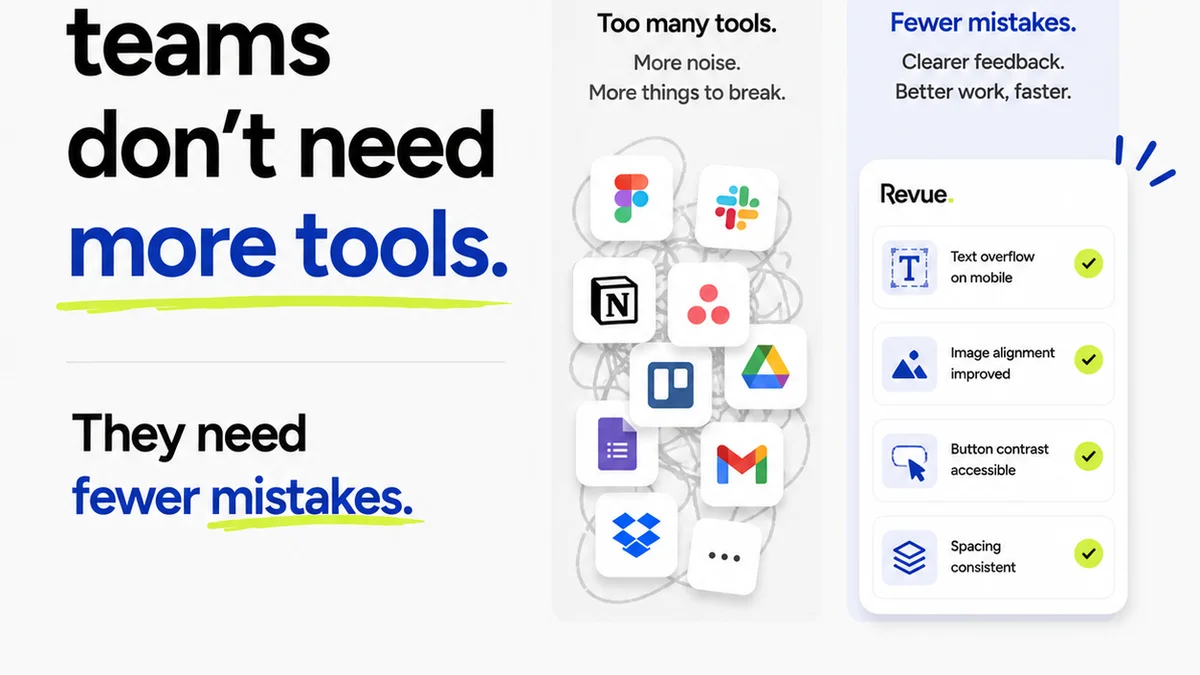
Revue centralizes all client feedback in one place, linked directly to the creative assets. This eliminates confusion, ensures everyone sees the same version, and makes it easy to track revisions and approvals, leading to more efficient and effective design.