Everyone thinks charging for revisions is the tricky part. The real money drain? Unlimited revisions.
Clients love it. Agencies offer it as a 'value-add,' a way to signal flexibility and partnership. It sounds like good business.
None of that is wrong. But it’s incomplete.
The hard truth is that 'unlimited revisions' is a contract for endless scope creep, disguised as client service. It’s an operational black hole that devours your profit margins.
1. The Illusion of Control
You think you’re managing expectations. You’re not. You’re setting them up for disappointment, and yourself up for a financial beating.
Unlimited revisions imply that the agency’s work is never quite done, or that the client’s initial brief was just a suggestion. This mindset erodes the foundational understanding of project scope.
The Brief Becomes a Suggestion
When revisions are unlimited, the initial brief loses its power. It’s no longer the North Star guiding the project. Instead, it becomes a loose starting point, subject to constant reinterpretation and expansion.
This leads to a gradual drift from the original objectives, often without a formal change order. The client might not even realize they’re asking for more than was agreed upon.
Team Burnout is Real
Your designers and account managers are the ones on the front lines. Facing endless rounds of tweaks and subjective feedback, their morale plummets. Productivity suffers. Good people leave.
This isn't just about overtime hours. It’s about the mental toll of feeling like you’re never finished, and that your work is never good enough.
2. The Hidden Costs of 'Free' Work
What does 'unlimited' actually cost you? It’s not just the hours logged. It’s the opportunity cost, the team’s energy, and the damage to your agency’s reputation.
Every hour spent on scope creep is an hour not spent on profitable new business, strategic client work, or internal development.
Opportunity Cost
Consider this: a project that should take 40 hours balloons to 80 because of unlimited revisions. That’s 40 hours of lost revenue potential. Those hours could have been billed to another client, or used to onboard a new, profitable project.
The agency isn't just losing money on the *current* project; it's losing the chance to *make* money elsewhere.
The 'Small' Tweak That Isn't
A client asks for a 'small change.' You code it. Then another 'small change.' Then another. Individually, they seem trivial. Collectively, they represent significant, unbilled work.
This death by a thousand cuts is insidious. It’s hard to push back on a 'quick fix,' but these quick fixes add up, hour by hour, draining your profitability.
Eroding Perceived Value
When clients can ask for endless changes, they start to devalue the work itself. They might think, “If it’s so easy to change, it wasn't that hard to create.”
This perception shift can make it harder to justify your fees on future projects, or even on the current one if the client feels they've 'paid enough' through their initial fee.
3. Why 'Unlimited' Is a Misnomer
No project is truly unlimited. There are always constraints: time, budget, and the agency’s capacity. ‘Unlimited’ is a marketing term, not an operational reality.
The real issue is that the contract doesn’t reflect operational truth.
What 'Unlimited' Really Means
In practice, ‘unlimited revisions’ often means ‘as many revisions as it takes to make the client happy, within reason.’ But 'within reason' is subjective and poorly defined in the contract.
This ambiguity is where the problems start. It gives the client an unspoken expectation that their satisfaction is the only metric, regardless of initial scope.
The Law of Diminishing Returns
At some point, further revisions yield diminishing returns for the client and increasing costs for the agency. The 10th revision might make a tiny aesthetic difference, but cost you hours of billable time.
A well-defined scope and revision process acknowledges this. It ensures that effort is focused on impactful changes, not endless tinkering.
4. The Real Cost: Relationship Damage
When unlimited revisions spiral out of control, it’s not just your bottom line that suffers. Your client relationships are also on the line.
Resentment builds on both sides. The agency feels exploited. The client feels their needs aren't being fully met, or that the agency is being difficult.
Client Frustration
Imagine a client who genuinely believes they are working within the agreed-upon scope, only to be told their requests are 'extra.' They’ll feel blindsided and betrayed. This can lead to tense conversations, damaged trust, and lost future business.
The agency might eventually have to choose between pushing back hard (risking the relationship) or continuing to absorb costs (risking profitability).
Team Demoralization
Your team sees the constant churn. They know when scope is expanding. When they’re told to just 'make the changes' without clear justification or compensation, their motivation wanes. This directly impacts the quality of their work and their long-term commitment to the agency.
A culture of unlimited revisions can breed a culture of burnout and disengagement.
Where Revue Fits In
The antidote to the 'unlimited revisions' problem isn't being rigid. It's about clarity, transparency, and efficient workflow management.
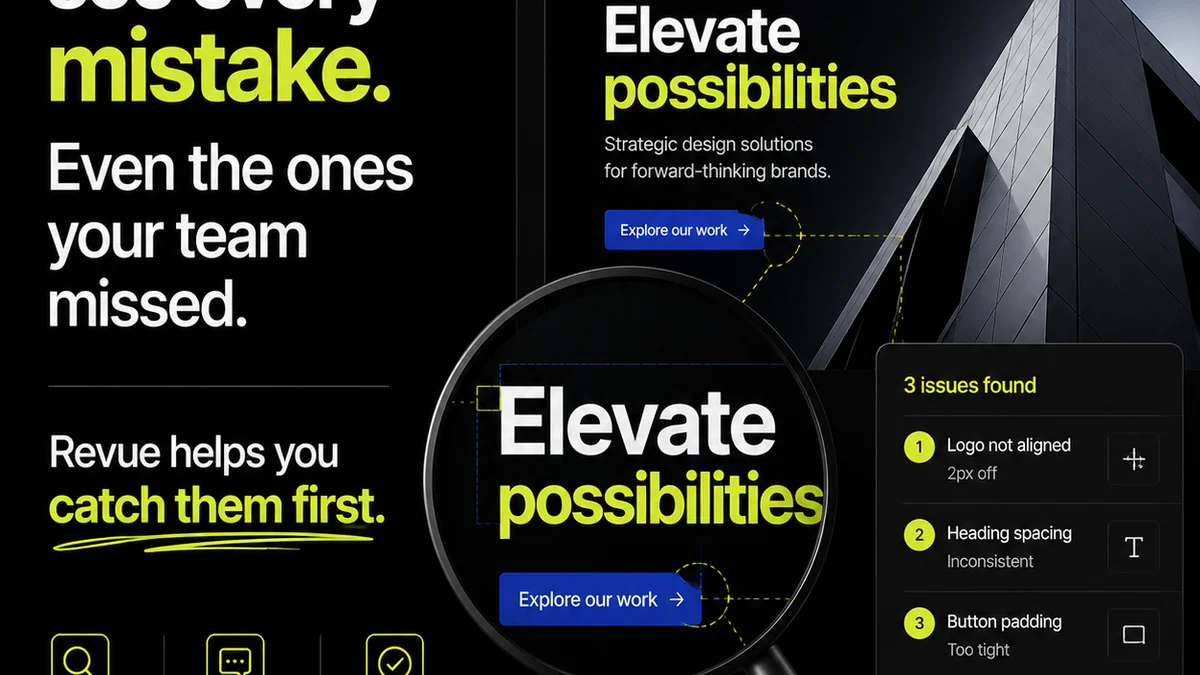
Revue provides the framework for this clarity. It centralizes feedback, making it clear what has been requested, what has been done, and what is still pending.
- Centralized Feedback: All client comments and stakeholder input live in one place. No more digging through emails or Slack threads to find that one crucial piece of feedback.
- Revision Tracking: See exactly which versions of a creative asset have been reviewed and approved. This creates an undeniable audit trail.
- Scope Visibility: By tracking feedback against specific project milestones or deliverables, it becomes easier to identify when requests are drifting beyond the original scope.
- Streamlined Approvals: Clear sign-offs at each stage prevent ambiguity and reduce the likelihood of clients revisiting decisions.
When feedback is organized and actionable, the concept of 'unlimited' becomes irrelevant. You're working within a defined, manageable process, ensuring both client satisfaction and agency profitability.
Final Thought
Is 'unlimited revisions' a client service benefit, or a ticking time bomb for your agency’s profitability? The answer lies not in the client’s perception, but in your operational discipline.
What processes do you have in place to define and manage scope, ensuring both client satisfaction and healthy profit margins?
Frequently asked questions
What is the core problem with 'unlimited revisions' for agencies?
The core problem is that 'unlimited revisions' often leads to uncontrolled scope creep. This means agencies end up doing significant amounts of unbilled work, which erodes profit margins, strains team resources, and can damage client relationships due to misaligned expectations.
How does 'unlimited revisions' impact team morale?
It can lead to team burnout and demoralization. When teams are constantly making tweaks without clear boundaries or compensation, it feels like the work is never truly finished, leading to frustration and decreased productivity.
What is the opportunity cost of unlimited revisions?
The opportunity cost is the lost revenue from other potential projects or business development activities. Every hour spent on unbilled revisions is an hour that could have been dedicated to profitable client work or acquiring new business.
How can agencies mitigate the risks associated with unlimited revisions?
Agencies can mitigate these risks by clearly defining project scope and the revision process in contracts, using a change order system for work outside the initial scope, and implementing tools like Revue to centralize feedback and track revisions transparently.