Everyone knows marketing campaigns need to look good. They need to reflect the brand. They need to be, well, consistent.
It sounds simple, right? Just hand over the brand guidelines and let the creative team run with it. Easy.
None of that is wrong. But it’s incomplete.
The hard truth? Visual consistency isn't just about having a pretty logo and a set of approved colors. It’s a complex operational challenge that impacts every stage of campaign development and deployment. It’s about ensuring that the *feeling* and *intent* of your brand are communicated flawlessly, every single time, across every single medium.
1. The Illusion of Control: Why Guidelines Aren't Enough
Brand guidelines are essential. They’re the foundation. But they are not the finished building.
Many teams operate under the assumption that a well-documented brand guide is the silver bullet for visual consistency. They create beautiful PDFs, full of rules about typography, color palettes, logo usage, and imagery style. Then they unleash their designers and marketers.
What happens next is often a slow drift from perfection.
Here’s why static guidelines often fail in dynamic campaign environments:
- Context Collapse: A guideline for a social media post is different from one for a billboard, which is different from an email banner. The same rule applied rigidly can look awkward or ineffective in a new context.
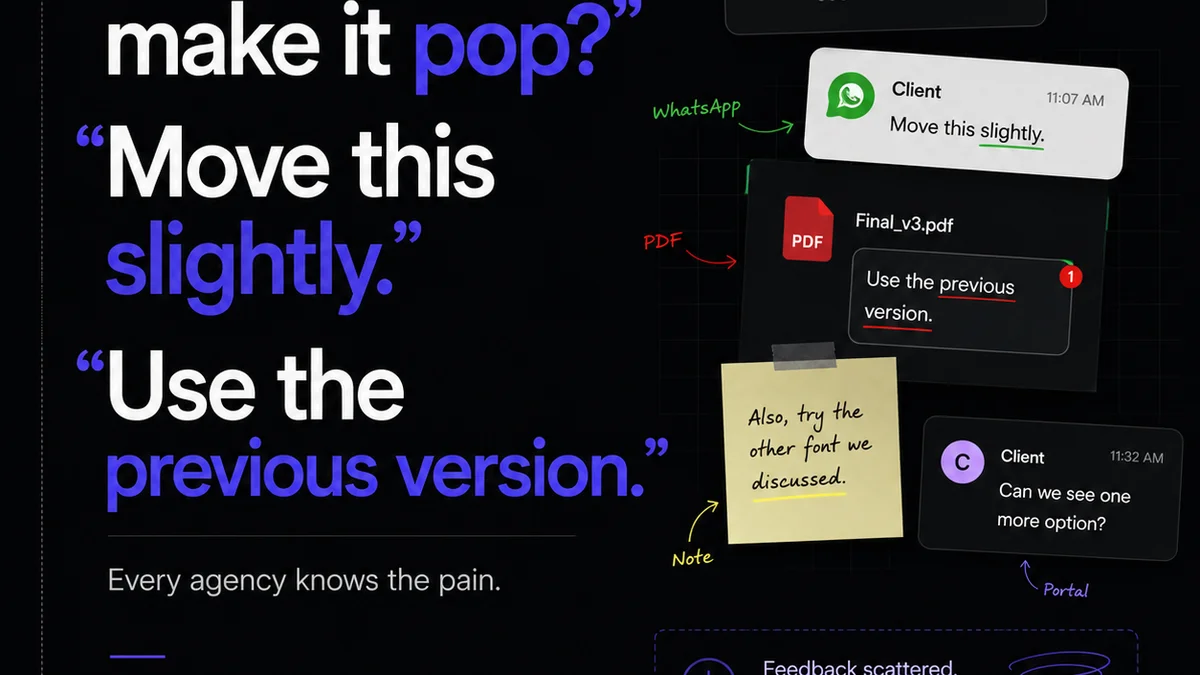
- Feedback Fragmentation: Different stakeholders review different assets at different times, often with conflicting feedback or interpretations of the guidelines.
- Asset Proliferation: Campaigns demand dozens, sometimes hundreds, of variations. Keeping track of every single asset, its approved version, and its intended use becomes a monumental task.
- Human Error: Even the best designers and copywriters can make mistakes, especially under tight deadlines or when juggling multiple projects.
- Tooling Gaps: Relying on disparate tools – email, Slack, spreadsheets, cloud storage – for feedback and asset management creates silos and makes oversight difficult.
The real challenge isn't defining consistency; it's *managing* it in the messy reality of creative production.
2. The Core Pillars of Campaign Consistency
Achieving true visual consistency requires a strategic approach that goes beyond the aesthetic.
It’s about building processes and systems that support the consistent application of brand principles.
a. Centralized Source of Truth
Every team member, freelancer, and agency partner needs access to the *single, current* version of brand assets and guidelines. No more hunting through old folders or asking what the latest logo file is.
This means:
- Master Asset Library: A single repository for all approved logos, fonts, color swatches, templates, and imagery.
- Living Guidelines: Brand guidelines that are easily accessible and updated, not buried in a forgotten folder.
- Clear Ownership: Defined roles and responsibilities for who manages and approves brand assets.
b. Contextual Application
Consistency isn't about applying the same visual element everywhere. It's about applying brand principles *appropriately* to each medium.
This involves:
- Platform-Specific Templates: Pre-designed templates for common channels (social media, email, web banners, presentations) that incorporate brand elements correctly.
- Responsive Design Thinking: Ensuring visuals adapt seamlessly across devices and screen sizes.
- Campaign-Specific Variations: Allowing for creative interpretation within defined boundaries for campaign themes, while maintaining brand integrity.
c. Streamlined Feedback Loops
Inconsistent feedback is a primary killer of visual harmony. When feedback is unclear, contradictory, or comes from too many unmanaged sources, the end result is often a muddled campaign.
Effective feedback management means:
- Single Point of Review: Funneling all feedback through a designated person or team.
- Structured Feedback: Using tools that allow for clear, actionable comments tied directly to specific assets.
- Version Control: Tracking revisions and ensuring everyone is working from the latest approved version.
d. Quality Assurance Gatekeeping
Before anything goes live, there needs to be a final check to ensure it meets the brand’s visual standards and campaign objectives.
This is where:
- Checklists: Standardized QA checklists for common campaign assets.
- Brand Audits: Periodic reviews of all campaign materials to catch inconsistencies.
- Automated Tools (where possible): Using software to flag potential issues with color, resolution, or logo placement.
3. The Cost of Inconsistency
Visual inconsistency isn't just an aesthetic problem. It has real, tangible business consequences.
When a campaign looks disjointed, it erodes trust. It suggests a lack of professionalism and attention to detail.
Consider the impact:
- Damaged Brand Perception: Customers may see your brand as sloppy, unreliable, or even untrustworthy.
- Reduced Campaign Effectiveness: Inconsistent messaging dilutes the impact of your marketing efforts, leading to lower engagement and conversion rates.
- Wasted Resources: Revisions due to inconsistency cost time and money, pulling resources away from more productive tasks.
- Internal Confusion: When brand visuals are all over the place, it creates confusion internally about what the brand truly stands for.
- Missed Opportunities: A campaign that doesn't feel cohesive might fail to capture audience attention or build meaningful connections.
The financial and reputational toll can be significant. It’s not just about looking good; it’s about performing well.
4. Where Revue Fits In
Managing visual consistency across complex marketing campaigns is where tools like Revue become indispensable.
Revue isn't just another cloud storage or project management tool. It's built for the specific workflow of creative teams and agencies handling client work.
Here’s how it tackles visual consistency head-on:
- Centralized Feedback: All stakeholder comments and approvals live in one place, attached directly to the visual asset. No more digging through email chains or Slack messages. Everyone sees the same feedback, in context.
- Version Control & Revision Tracking: Easily manage multiple versions of an asset. See exactly what changed between versions and who approved what. This prevents confusion and ensures you’re always working with the latest, approved iteration.
- Streamlined Approvals: Clearly track the status of each asset – from draft to revision to final approval. This visibility ensures that only on-brand, approved materials make it to launch.
- Quality Assurance Support: While not an automated checker, Revue’s structured review process helps teams implement their own QA steps more effectively. By having all assets and feedback consolidated, it’s easier to conduct final checks before deployment.
By bringing order to the chaos of feedback and revisions, Revue helps ensure that the final campaign output is not just visually appealing, but consistently on-brand.
Final Thought
Visual consistency in marketing campaigns is more than a design problem. It’s an operational discipline.
It requires robust processes, clear communication, and the right tools to manage the inherent complexity.
Are you treating visual consistency as a tactical design task, or as a strategic operational imperative?
Frequently asked questions
What is visual consistency in marketing?
Visual consistency in marketing refers to the practice of ensuring that all visual elements of a campaign—logos, colors, typography, imagery, and overall style—are uniform and align with the brand's identity across all touchpoints and platforms.
Why are brand guidelines not enough for visual consistency?
Brand guidelines provide a foundation, but they are often static and don't account for the dynamic needs of different marketing channels or the complexities of real-time feedback and revision processes. Operational execution is key.
How does feedback affect visual consistency?
Fragmented, contradictory, or unclear feedback from multiple sources can easily lead to visual inconsistencies. Centralizing feedback and ensuring clear communication is crucial for maintaining a cohesive look and feel.
What are the consequences of visual inconsistency?
Visual inconsistency can damage brand perception, reduce campaign effectiveness, waste resources on unnecessary revisions, and create internal confusion. It erodes trust and dilutes brand impact.
How can tools like Revue help with visual consistency?
Revue helps by centralizing feedback and approvals, providing clear version control and revision tracking, and streamlining the entire review process. This visibility ensures only approved, on-brand assets are deployed.