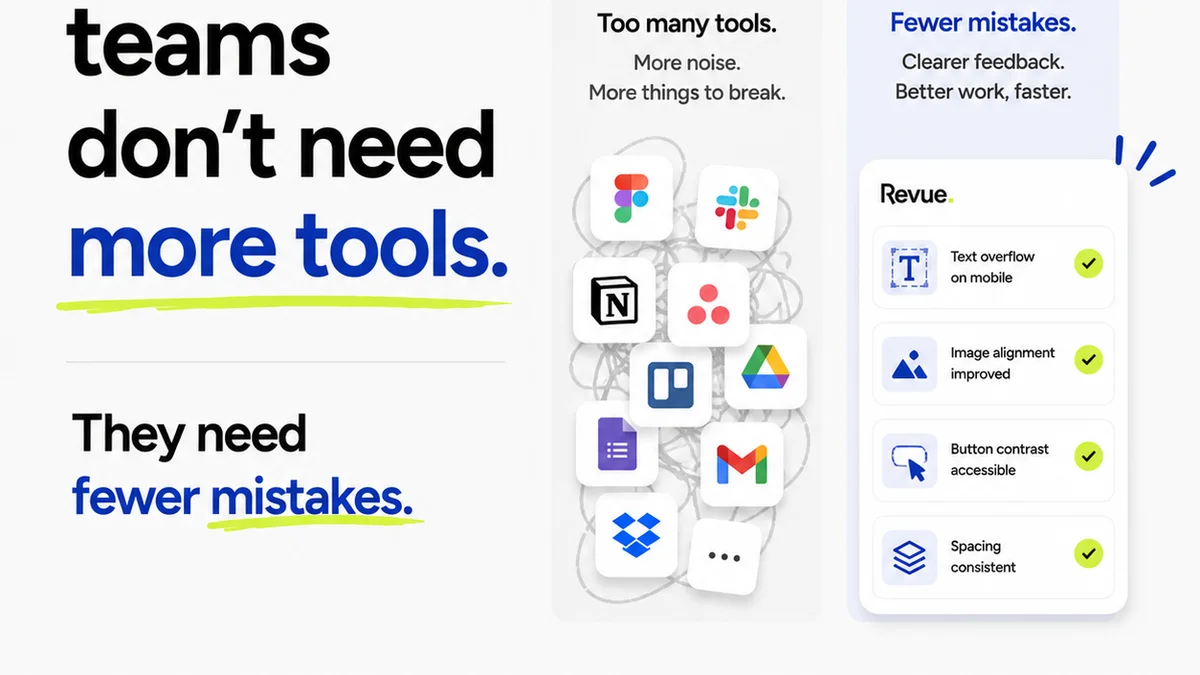
Everyone thinks design QA is about catching typos and making sure the logo is the right color. And sure, that’s part of it.
But that’s like saying a car’s engine is just about making noise. It misses the fundamental purpose.
The real purpose of design QA is to protect your agency’s reputation and ensure the work you deliver not only looks good but functions flawlessly and aligns with client goals. It’s the final gatekeeper before your work goes live, a critical step often underestimated.
1. The Deeper Truth: Design QA is Risk Mitigation
Your agency’s reputation is built on trust. Clients hire you for your expertise, your creativity, and your ability to deliver polished, professional results. A single overlooked error—a broken link, a misaligned element, incorrect copy—can erode that trust faster than you might think.
Design QA isn't just a checklist; it's a strategic process to mitigate these risks. It’s about ensuring the final output is error-free, on-brand, and meets all specified requirements.
Think of it as the difference between a client who raves about your work and one who quietly moves on to the next agency after a minor, but noticeable, slip-up.
The Cost of Skipping QA
- Lost client trust
- Reputational damage
- Costly rework
- Missed deadlines
- Reduced profitability
These aren't abstract concepts. They're real business impacts that can cripple an agency.
2. Beyond Aesthetics: The Multi-Faceted Nature of Design QA
Design QA goes far beyond visual perfection. It encompasses several critical dimensions:
Functional QA
Does everything work as intended?
- Are all links functional and pointing to the correct destinations?
- Are interactive elements (buttons, forms, animations) behaving as expected?
- Is the user flow logical and intuitive?
- Does the design adapt correctly across different screen sizes and devices (responsive design)?
Content QA
Is the information accurate and presented correctly?
- Are there any typos, grammatical errors, or punctuation mistakes?
- Is the copy consistent with brand voice and messaging?
- Is all placeholder text removed?
- Are all product names, dates, and figures accurate?
- Is the tone appropriate for the target audience?
Brand Consistency QA
Does the design adhere to brand guidelines?
- Is the correct color palette being used?
- Are typography styles applied consistently according to the style guide?
- Is the logo used correctly (size, spacing, variations)?
- Does the overall aesthetic align with the established brand identity?
Technical QA
Is the design technically sound and ready for development or deployment?
- Are image resolutions appropriate?
- Are file formats correct?
- Are specifications for spacing, alignment, and typography clearly defined and met?
- Does the design adhere to accessibility standards (e.g., WCAG guidelines)?
Usability and Accessibility QA
Can users easily interact with the design, and is it inclusive?
- Is the navigation clear and easy to understand?
- Are calls to action prominent?
- Is there sufficient color contrast for readability?
- Are interactive elements large enough to be tapped easily on mobile devices?
- Can users with disabilities navigate and understand the content?
Each of these areas requires a different lens and often different expertise to evaluate thoroughly.
3. Who Owns Design QA? (Hint: It’s Not Just the Intern)
There’s a common misconception that design QA is a junior role, or worse, an afterthought. This is a dangerous assumption.
Effective design QA requires a critical eye, a deep understanding of the project's goals, and the authority to halt a release if necessary. It's a responsibility that should be shared, with clear ownership defined.
Potential QA Roles and Responsibilities
- Creative Director: Oversees the overall brand integrity and strategic alignment.
- Project Manager: Ensures QA aligns with project scope, timeline, and budget.
- Senior Designer: Verifies visual consistency, adherence to style guides, and pixel-perfection.
- Copywriter/Editor: Handles content accuracy, grammar, and tone.
- QA Specialist (if available): Executes structured test plans, focusing on functionality and cross-browser/device compatibility.
- Client: The ultimate approver, but their feedback should be managed and validated during earlier QA stages.
The key is that QA is not a single person’s job, but a team effort with clear accountability.
4. Establishing a Robust Design QA Process
A haphazard approach to quality assurance leads to missed errors and a compromised final product. A structured process is essential.
Pre-QA Steps
- Clear Briefing: Ensure the project brief and client requirements are understood by everyone involved.
- Style Guide: Maintain and enforce a comprehensive brand style guide.
- Component Library: Use a design system or component library for consistency.
- Internal Reviews: Conduct peer reviews and internal critiques before formal QA begins.
During QA
- Develop a Checklist: Create a detailed checklist based on project requirements, brand guidelines, and common error types.
- Test Across Environments: Check the design on various browsers, devices, and operating systems.
- User Testing (if applicable): Conduct usability testing with target users.
- Accessibility Audit: Use tools and manual checks to ensure WCAG compliance.
- Functional Testing: Verify all interactive elements and links.
- Content Review: Proofread all copy meticulously.
Post-QA Steps
- Bug Tracking: Log all identified issues in a clear, actionable format.
- Revision and Retesting: Address flagged issues and retest to confirm fixes.
- Final Approval: Obtain formal sign-off from relevant stakeholders.
This structured approach transforms QA from a reactive task into a proactive safeguard.
5. Where Revue Fits In
Managing design feedback and approvals across multiple stakeholders can quickly become chaotic. This is where a centralized platform like Revue becomes invaluable for design QA.
Revue helps streamline the entire feedback and approval cycle, directly impacting the quality of your final deliverables.
- Centralized Feedback: All client comments and stakeholder input are gathered in one place, eliminating scattered email threads and missed messages. This ensures no feedback is lost and everyone is working from the same set of comments.
- Version Control and Revision History: Keep track of all design iterations. This clarity is essential for QA, as it allows you to easily compare versions and verify that requested revisions have been implemented correctly.
- Clear Approval Workflows: Define and track who needs to approve what and when. This visibility ensures that the design has gone through all necessary internal and external review stages before final sign-off.
- Streamlined Quality Checks: By having all feedback and versions in one platform, your QA team can more efficiently conduct their checks, referencing specific comments and design states to ensure everything is addressed.
Revue doesn't perform QA for you, but it provides the essential infrastructure to make your design QA process more organized, efficient, and less prone to errors.
6. Final Thought
Design QA is not a burden; it's an investment. It’s the difference between delivering work that merely meets a brief and delivering work that truly elevates a brand and drives client success.
Are you treating design QA as a strategic imperative, or just another box to tick?
Frequently asked questions
What is the primary goal of design QA?
The primary goal of design QA is to mitigate risk by ensuring that creative work is error-free, functions correctly, adheres to brand guidelines, meets client requirements, and is ready for delivery, thereby protecting the agency's reputation and ensuring client satisfaction.
Is design QA only about visual checks like typos and colors?
No, design QA is multi-faceted. It includes functional QA (testing links, buttons, user flow), content QA (proofreading copy), brand consistency QA (adhering to style guides), technical QA (file formats, resolutions), and usability/accessibility QA (ensuring ease of use and inclusivity).
Who should be responsible for design QA in an agency?
Design QA should be a shared responsibility with clear ownership. Roles like Creative Director, Project Manager, Senior Designer, and Copywriter all play a part. In some cases, a dedicated QA specialist may handle technical and functional testing.
How can a platform like Revue help with design QA?
Revue centralizes feedback, manages version control, and clarifies approval workflows. This organization reduces the chance of missed feedback or errors, making the QA process more efficient and effective by providing a single source of truth for all project iterations and stakeholder input.
What are the key steps in establishing a robust design QA process?
A robust process involves clear pre-QA steps (briefing, style guides), structured during-QA activities (checklists, cross-environment testing, functional and content reviews), and post-QA steps (bug tracking, retesting, final approval).