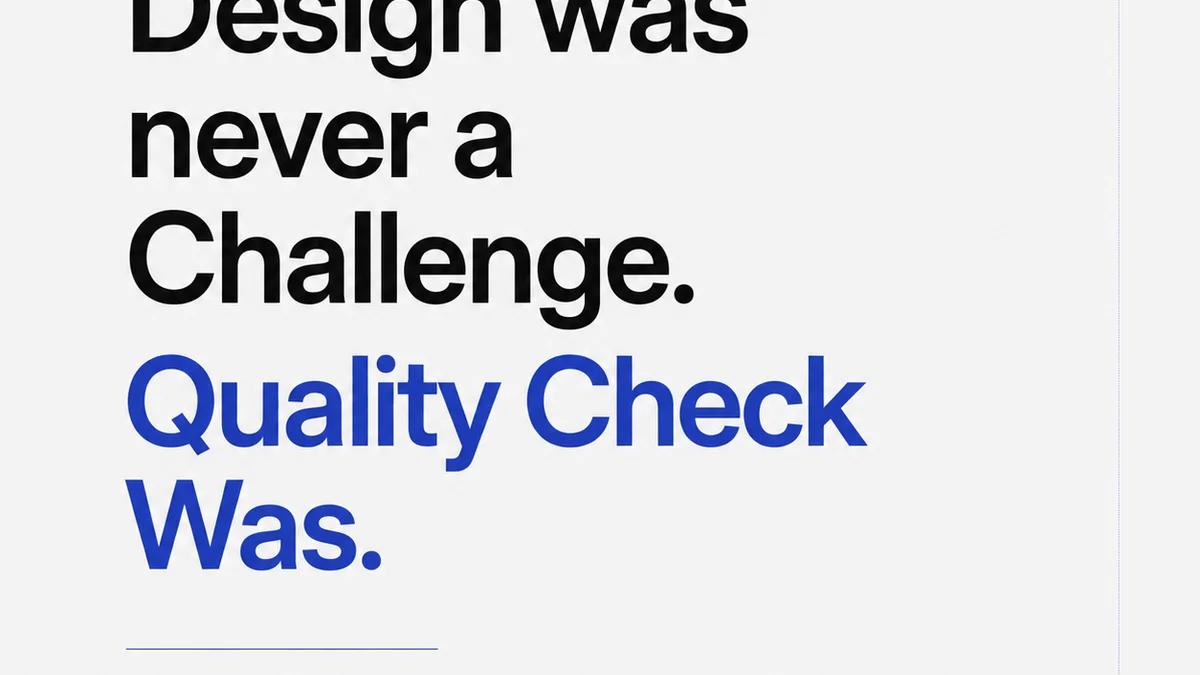
Everyone knows that good UI/UX is important. Clients ask for it. Designers strive for it. It’s the shiny object that makes a project look good.
None of that is wrong. But it’s incomplete.
The deeper truth for growing agencies is that UI/UX is far more than a design deliverable. It’s a fundamental driver of operational efficiency, client retention, and scalable growth. Get it wrong, and you’re building on shaky ground.
1. The Myth of the Design-Only Deliverable
Many agencies still treat UI/UX design as the final coat of paint on a project. It’s the thing you do after the strategy is locked, the content is written, and the development is mostly mapped out.
This perspective creates a cascade of problems:
- Designers are brought in too late, leading to rushed work and missed opportunities.
- Assumptions about user behavior and technical feasibility aren't challenged early enough.
- Client feedback cycles become reactive, often focusing on aesthetics rather than core functionality.
- Scope creep is inevitable as fundamental usability issues are discovered post-design.
The real impact? Projects overrun budgets, deadlines slip, and client relationships fray. That’s not growth. That’s just stress.
The Hard Truth: UI/UX is Integrated Strategy
UI/UX isn't a phase. It's a continuous thread woven through every stage of a project. It starts with understanding the user, then the business goals, then translating that into a functional, intuitive, and delightful experience.
This requires a different mindset:
- User research isn't optional; it's foundational.
- Cross-functional collaboration (design, strategy, development, client) is non-negotiable from day one.
- Iterative design and testing are built into the process, not tacked on at the end.
When UI/UX is integrated, it becomes a powerful tool for de-risking projects, aligning stakeholders, and ensuring the final product actually solves the problem it’s meant to solve.
2. The Financial Drain of Poor Usability
Let’s talk money. Agencies often focus on billable hours for design work. But poor UI/UX creates hidden costs that erode profitability.
Consider the downstream effects:
- Increased Development Rework: Developers spend more time fixing usability flaws that should have been caught in the design phase.
- Extended QA Cycles: Testing becomes a nightmare when the interface isn't intuitive, leading to more bugs and more time spent debugging.
- Client Confusion and Frustration: A confusing interface leads to more support requests, more training needs, and more client dissatisfaction. This translates to lost client lifetime value.
- Missed Conversion Opportunities: For client websites and apps, poor UX directly impacts conversion rates, sales, and lead generation. This is a hard metric clients feel.
These aren't minor inconveniences. They are significant financial leaks that directly impact your agency’s bottom line.
The ROI of Intuitive Design
Investing in robust UI/UX upfront isn't an expense; it's an investment with a clear return.
Think about it:
- Faster Development: Clear, well-documented UI/UX reduces ambiguity for developers.
- Smoother QA: Intuitive interfaces are easier to test and validate.
- Happier Clients: Users (and client stakeholders) understand and can use the product without friction.
- Better Business Outcomes: For clients, this means achieving their digital goals, which reflects positively on your agency.
This shift from cost center to profit driver is crucial for scaling.
3. The Client Retention Engine You Didn't Know You Had
Most agencies chase new business. It’s exciting, it’s growth. But the most sustainable growth comes from keeping the clients you already have.
What keeps clients coming back?
- Delivering projects that meet or exceed expectations.
- Making the process smooth and transparent.
- Demonstrating tangible business value.
Excellent UI/UX directly contributes to all three.
From Project to Partnership
When your agency consistently delivers digital products that are not only beautiful but also highly usable and effective, you become indispensable.
Clients start to see you not just as a vendor, but as a strategic partner who understands their users and their business objectives.
This leads to:
- Repeat Business: Clients who trust your expertise will come back for future projects.
- Referrals: Happy clients with successful products become your best advocates.
- Higher Project Value: Clients are willing to invest more in an agency that consistently delivers exceptional results and demonstrates ROI.
- Longer-Term Engagements: Moving from one-off projects to ongoing retainers becomes a natural progression.
This is the bedrock of sustainable agency growth. And it all starts with a deep commitment to user-centered design, not just as an aesthetic choice, but as a core operational principle.
4. Scaling Challenges: The Bottleneck of Inconsistent Processes
As agencies grow, processes that worked for a small team start to break. One of the most common bottlenecks? How feedback, revisions, and approvals are managed, especially around design and UX.
Without a system, you see:
- Endless email chains for feedback, making it impossible to track what’s been addressed.
- Version control nightmares, where everyone is working off the wrong iteration.
- Client stakeholders providing conflicting feedback, with no clear way to reconcile it.
- Difficulty in tracking the history of decisions and approvals, leading to disputes.
- A lack of clear visibility into revision status for both the team and the client.
This chaos isn't just inefficient; it actively hinders your ability to take on more work and deliver consistently high quality.
Where Revue Fits In
This is precisely why tools like Revue are essential for growing agencies. They address the operational friction points that kill productivity and client satisfaction.
Revue helps by:
- Centralizing Client Feedback: All comments, annotations, and discussions happen directly on the creative asset, in one place. No more scattered emails or messages.
- Streamlining Revisions and Approvals: Track every version, see who approved what and when. This creates accountability and a clear audit trail.
- Ensuring Quality Checks: By providing a structured environment for review, you can build in checkpoints to ensure UI/UX standards are met before final delivery.
- Improving Visibility: Both your internal team and your clients have a clear, real-time view of project status, reducing misunderstandings and proactive client management.
By bringing order to the chaos of feedback and approvals, Revue frees up your team to focus on what they do best: designing great experiences. It turns a potential growth bottleneck into a scalable process.
5. The Competitive Edge: Beyond the Pretty Picture
In a crowded market, agencies need more than just a slick portfolio. Clients are savvier. They’re looking for partners who understand their business, can solve complex problems, and deliver measurable results.
Agencies that master UI/UX demonstrate a deeper understanding of the digital landscape.
What Sets You Apart
When your agency prioritizes user-centered design, you signal that you:
- Understand the end-user’s needs and behaviors.
- Can translate business goals into effective digital solutions.
- Are focused on delivering tangible outcomes, not just deliverables.
- Are committed to a rigorous, quality-driven process.
This isn't just about making things look good. It’s about making things work effectively, efficiently, and profitably for both your clients and your agency.
It’s the difference between being a design shop and being a strategic digital partner.
Final Thought
Is your agency treating UI/UX as a beautiful deliverable, or as the operational engine that drives client success and sustainable growth? The answer defines your agency’s future.
Frequently asked questions
What is the biggest misconception about UI/UX in design agencies?
The biggest misconception is that UI/UX is just about aesthetics or the final polish. In reality, it's a foundational strategic element that should be integrated from the project's inception to ensure usability, achieve business goals, and drive client satisfaction.
How does poor UI/UX impact an agency's profitability?
Poor UI/UX leads to increased development rework, extended QA cycles, client frustration requiring more support, and missed conversion opportunities for clients. These hidden costs significantly erode an agency's profit margins.
Can investing in UI/UX improve client retention?
Absolutely. Agencies that consistently deliver highly usable and effective digital products build trust and become indispensable strategic partners. This leads to repeat business, referrals, and longer-term engagements.
How does a tool like Revue help agencies with UI/UX workflows?
Revue centralizes feedback, streamlines revisions and approvals, and provides clear visibility into project status. This operational efficiency ensures that UI/UX standards are met consistently and reduces friction in the delivery process.
What's the difference between a design shop and a strategic digital partner?
A design shop primarily focuses on creating visually appealing outputs. A strategic digital partner leverages UI/UX to solve business problems, understand user needs, deliver measurable results, and drive client success, positioning themselves as essential collaborators.