Everyone’s talking about workflow automation. It’s the magic bullet for agency efficiency, right?
You just plug in some software, hit go, and suddenly your team is churning out brilliant work with zero friction. Your profit margins soar. Your clients are ecstatic.
None of that is wrong. But it’s incomplete.
The deeper truth is that workflow automation isn't about speed. It's about clarity. It’s about eliminating the *noise* so your team can focus on the *signal*.
True automation frees up cognitive load, not just man-hours. It’s the difference between a well-oiled machine and a race car with a broken dashboard.
1. The Illusion of Efficiency
Many agencies dive into automation with a singular focus: speed. They want to shave minutes off task completion times.
And sure, that’s a worthy goal. But if you automate a broken process, you just get faster at making mistakes.
Think about it:
- Are you spending too much time chasing down feedback?
- Are revisions getting lost in email chains?
- Is your QA process an afterthought, or a frantic last-minute scramble?
- Are you onboarding new clients with a manual, repetitive process?
These aren't just time sinks. They're friction points that erode quality and client trust.
The real win with automation isn't shaving seconds; it's removing the repetitive, error-prone tasks that distract from strategic thinking and creative execution.
2. Identifying the Right Candidates for Automation
Not every task is a good candidate for automation. Some things require human judgment, empathy, and creativity.
The sweet spot for automation lies in:
Repetitive, Rule-Based Tasks
Anything that follows a predictable pattern and doesn't require nuanced decision-making.
- Sending standard client onboarding documents.
- Generating regular status reports based on project data.
- Notifying team members of upcoming deadlines or approvals.
- Basic data entry or file organization.
Information Gathering and Distribution
When information needs to flow from one place to another consistently.
- Collecting client assets based on a checklist.
- Distributing finalized assets to the correct stakeholders.
- Archiving project communications and files.
Workflow Gatekeeping
Ensuring steps are completed before moving to the next.
- Requiring approval sign-off before a deliverable is sent to the client.
- Checking for required fields in a brief before it can be initiated.
- Flagging projects that are approaching budget or timeline overruns.
If a task feels like a cog in a machine, it's probably a good candidate.
3. The Pitfalls of Poor Automation Strategy
Jumping into automation without a strategy is a recipe for disaster. You end up with more complexity, not less.
Beware of:
- Tool Sprawl: Acquiring dozens of single-purpose tools that don't integrate, creating more silos.
- Over-Engineering: Building complex automated workflows for simple tasks, leading to maintenance headaches.
- Ignoring the Human Element: Automating without considering how it impacts team morale, communication, or client experience.
- Lack of Training: Rolling out new automated processes without properly training your team, leading to confusion and resistance.
- Focusing on the Wrong Metrics: Chasing speed over accuracy, clarity, or strategic impact.
These mistakes don't just waste money; they actively harm your agency's ability to deliver great work.
4. Building a Scalable Automation Framework
A smart automation strategy starts with understanding your core agency operations.
Map Your Current Workflows
Before you automate, you need to know what you're automating. Document your key processes, from initial client brief to final delivery.
Where are the bottlenecks? Where does information get lost? Where do approvals get stuck?
Prioritize High-Impact Areas
Focus on automating tasks that cause the most pain or offer the biggest gains in clarity and efficiency.
This often means starting with:
- Client onboarding and communication
- Internal project management
- Feedback and approval cycles
- Quality assurance checks
Choose Integrated Solutions
Look for tools that can talk to each other. A fragmented tech stack creates more problems than it solves.
Ideally, you want a central hub that can manage core functions and integrate with other specialized tools.
Iterate and Refine
Automation isn't a set-it-and-forget-it endeavor. Regularly review your automated processes. Are they still serving their purpose? Can they be improved?
Gather feedback from your team. They’re the ones using the system every day.
Where Revue Fits In
Many agencies struggle with the chaos of client feedback and approvals. It’s a notorious bottleneck.
Emails get lost. Version control becomes a nightmare. Stakeholders miss crucial feedback.
Revue is built to bring order to this specific chaos. It’s not a catch-all automation tool, but a specialized solution for creative workflows.
By centralizing feedback, you eliminate the scattered communication.
With clear revision and approval tracking, you know exactly where a project stands. No more chasing down sign-offs.
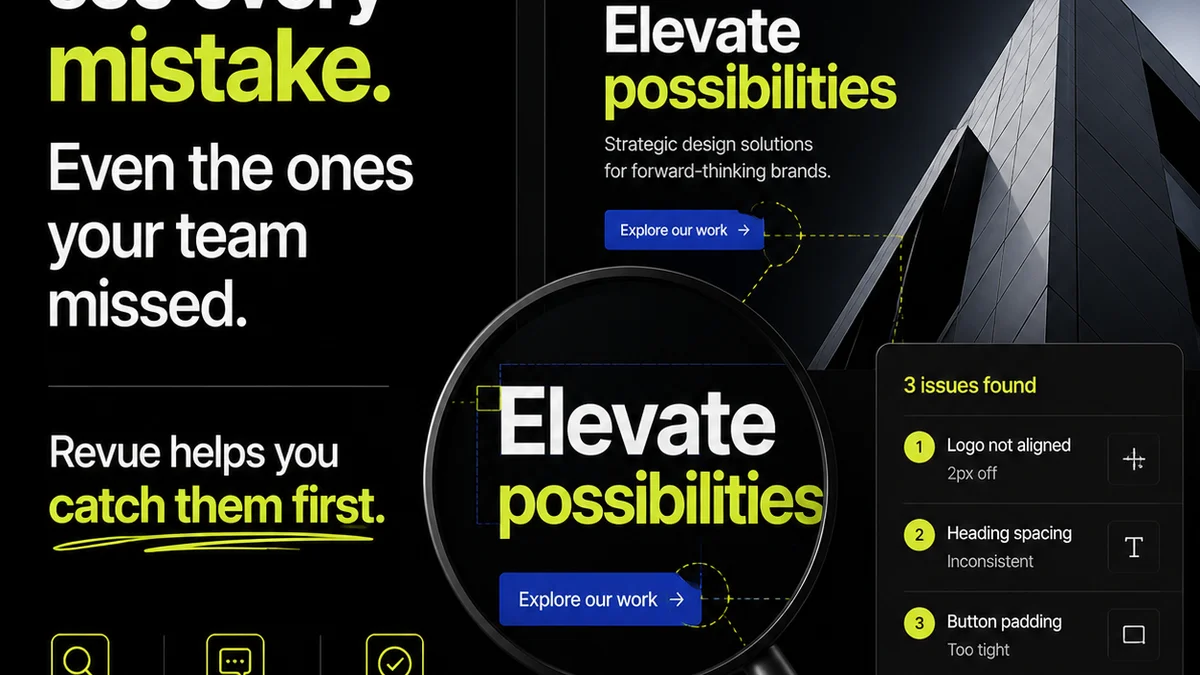
Built-in quality checks ensure you're not sending out work with obvious errors, saving you last-minute fixes and client frustration.
This isn't about replacing human interaction; it's about making that interaction more productive and less prone to error.
Final Thought
Automation promises efficiency, but its real power lies in creating clarity. It’s about removing the friction that hinders creativity and strategic thinking.
Are you automating for speed, or are you automating for focus?
Frequently asked questions
What is the biggest mistake agencies make with workflow automation?
The biggest mistake is focusing solely on speed without first optimizing the underlying process. Automating a flawed workflow just leads to faster mistakes and more complexity.
What types of tasks are best suited for automation in an agency?
Tasks that are repetitive, rule-based, involve consistent information gathering/distribution, or act as workflow gatekeepers are ideal. Think standard client comms, report generation, and approval routing.
How can I avoid tool sprawl when implementing automation?
Prioritize integrated solutions. Look for a central platform that can manage core functions and connect with other necessary tools, rather than adopting numerous single-purpose applications.
Does automation replace the need for human judgment in agencies?
No. Automation is best used for tasks that don't require nuanced decision-making, creativity, or empathy. It frees up human resources to focus on these higher-value activities.
How does Revue help with agency workflow automation?
Revue specifically automates and streamlines the client feedback, revision, and approval process, which are common bottlenecks. It centralizes communication and tracks progress, reducing errors and delays.