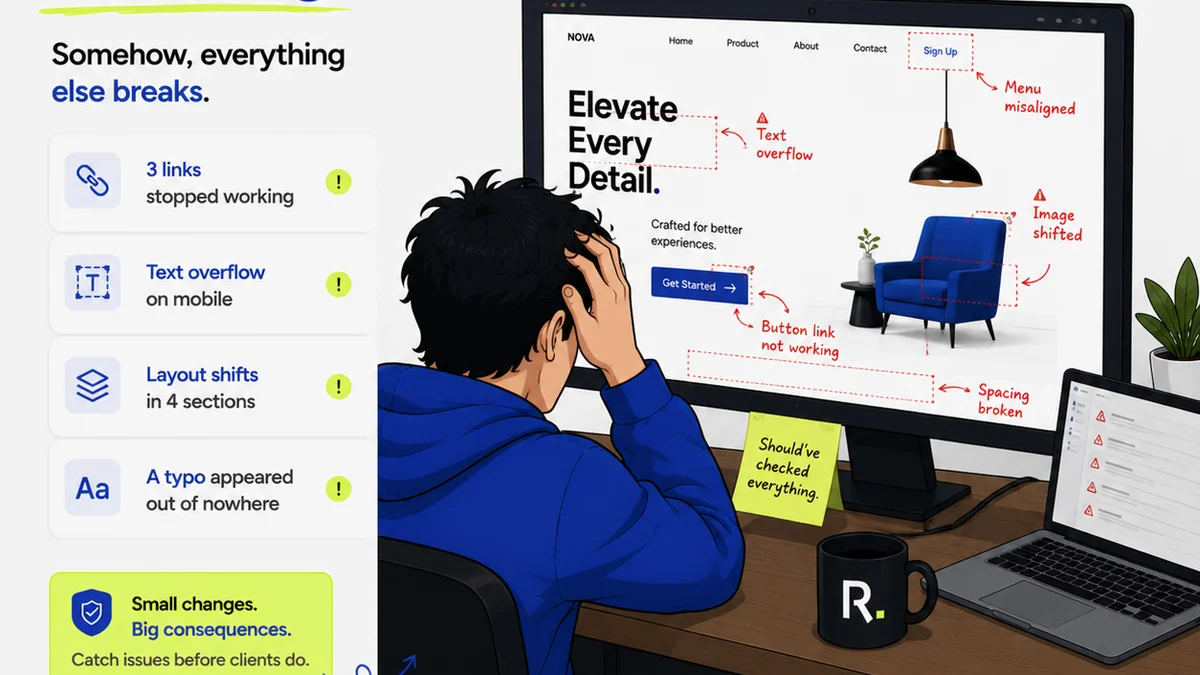
Everyone wants a zero-error creative delivery process. It sounds like the holy grail of agency operations. A smooth, predictable workflow where client feedback is crystal clear, revisions are managed perfectly, and the final output is always spot-on.
None of that is wrong. But it’s incomplete.
The real hard truth? You can't build a zero-error process by simply demanding perfection from your team or clients. You build it by designing a system that anticipates and intercepts errors. It’s about process, not just people.
1. The Myth of the 'Perfect Brief'
We all know the ideal. A client hands over a brief that’s detailed, unambiguous, and perfectly aligned with their business goals. It’s a beautiful dream.
In reality, briefs are often a starting point, not a final destination. They’re filled with assumptions, incomplete information, and sometimes, outright contradictions. Waiting for the perfect brief is waiting for a unicorn.
Why 'Perfect' Briefs Are Rare
- Clients are often not trained communicators.
- Their internal stakeholders may not be aligned.
- They might not know exactly what they want until they see options.
- Urgency often trumps thoroughness.
Relying solely on the initial brief to prevent errors is a recipe for disaster. It puts the onus on the client to be perfect, which they won't be. And it sets your team up for a game of telephone, trying to decipher unclear instructions.
The Real Solution: Iterative Clarity
Instead of waiting for perfection, build in mechanisms for continuous clarification. This starts *before* the creative work even begins.
Pre-briefing Workshops: Don't just receive a brief; discuss it. Schedule a call or a short workshop to walk through the brief with the client. Ask probing questions. Uncover assumptions. Use this time to clarify objectives, target audience, key messages, and any potential constraints.
Visualizing the Unseen: Sometimes, abstract ideas need a visual anchor. Ask clients for examples of work they like or dislike, and more importantly, *why*. This isn't about copying; it's about understanding their aesthetic and functional preferences.
Define Success Metrics Early: What does success look like for this project? Is it clicks, conversions, brand awareness, or something else? Agreeing on measurable outcomes upfront helps align everyone and provides a benchmark for evaluating creative work later.
2. Taming the Revision Beast
Revisions are a fact of life in creative work. The goal isn't to eliminate them entirely—that's impossible and often detrimental to the final product. The goal is to manage them effectively and prevent scope creep.
Most agencies struggle with revisions because they lack a structured feedback and approval loop. It becomes an endless back-and-forth, draining resources and morale.
Common Revision Pitfalls
- Vague feedback: “Make it pop more.”
- Conflicting feedback from different stakeholders.
- Feedback arriving late, derailing timelines.
- Uncontrolled scope creep disguised as
Frequently asked questions
What is a zero-error creative delivery process?
It's a system designed to anticipate, prevent, and manage errors throughout the creative project lifecycle, from brief to final delivery, rather than relying on last-minute fixes or hoping for perfection.
How can I get clearer feedback from clients?
Schedule dedicated feedback sessions, ask specific probing questions, request examples with explanations, and use visual annotation tools to pinpoint exact areas for revision.
What's the best way to manage scope creep during revisions?
Clearly define the scope of work and revision rounds in your contract. Implement a structured feedback process where all feedback is consolidated and reviewed against the original brief. If new requests fall outside the scope, address them as separate change orders.
How can technology help prevent errors in creative delivery?
Tools for centralized feedback, version control, clear audit trails, and automated quality checks can significantly reduce miscommunication and errors. They ensure everyone is working from the latest information and that feedback is tracked.