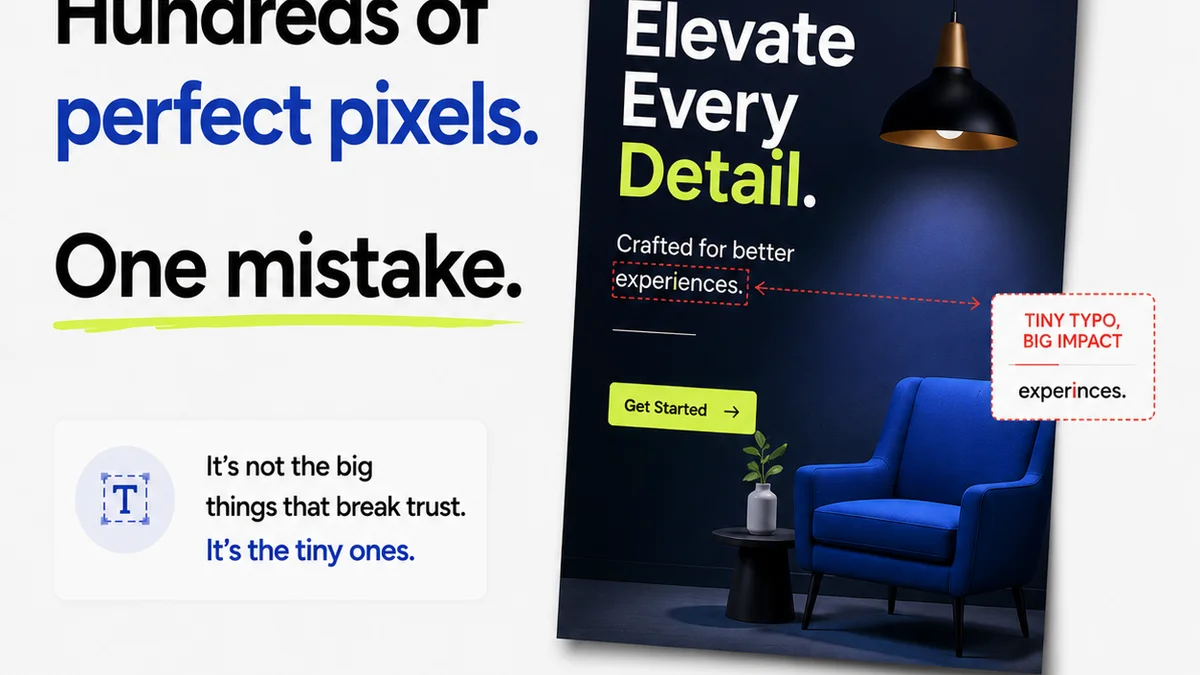
Everyone talks about minimalist design. Clean lines, lots of white space, sans-serif fonts. It’s the go-to aesthetic for modern brands.
And that’s not wrong. It *does* look good.
But if you think minimalism is just about making things look pretty, you’re missing the point. You’re missing the operational advantage.
The hard truth? True minimalism in UI and UX design is about ruthless efficiency. It’s about stripping away everything non-essential to make the user’s journey smoother, faster, and more intuitive.
It’s not just an aesthetic choice; it’s a strategic one that directly impacts usability and, by extension, your client’s bottom line.
1. The Power of Less: Reducing Cognitive Load
Our brains are constantly processing information. When a design is cluttered, busy, or confusing, it demands more mental effort from the user. This is cognitive load.
High cognitive load leads to frustration. Frustration leads to abandonment.
Minimalist design combats this directly.
By removing extraneous elements, it simplifies the interface. Users don’t have to work overtime to figure out what’s important or what to do next.
Focus on Core Actions
Every element on the screen should have a purpose. Does it guide the user? Does it provide essential information? If not, it’s likely a distraction.
Minimalism forces designers to prioritize.
This means focusing on the primary calls to action and the critical information the user needs to complete their task.
Whitespace as a Tool
Often mistaken for just
Frequently asked questions
What is cognitive load in UX design?
Cognitive load refers to the total amount of mental effort being used in the working memory. In UX, high cognitive load makes interfaces harder to understand and use, leading to user frustration.
How does whitespace improve UX?
Whitespace, or negative space, guides the user's eye, separates elements, improves readability, and reduces visual clutter, making the interface feel more organized and less overwhelming.
Is minimalism only about aesthetics?
No, while minimalism has a distinct aesthetic, its core strength in UX lies in its ability to reduce complexity, streamline workflows, and improve usability by focusing on essential elements.
How can I apply minimalist principles to my current design?
Start by auditing your existing design. Identify elements that don't directly serve a user goal or provide essential information. Remove them. Prioritize clear typography, ample whitespace, and intuitive navigation.