Everyone talks about giving and receiving feedback. It’s the lifeblood of creative work, right? Clients give feedback, designers revise, clients approve. Simple.
None of that is wrong. But it’s incomplete.
The hard truth is, most feedback processes are chaotic, inefficient, and actively detrimental to creative output. They’re built on assumptions, not operations.
We’re going to break down what *effective* creative feedback actually looks like. Not the fluffy ideal, but the operational reality.
1. The Assumption: Feedback is Just Words
The biggest mistake? Thinking feedback is just about the comments themselves. “Make the logo bigger.” “Change the color to blue.”
This is surface-level. It ignores the entire ecosystem surrounding those words.
The Hard Truth: Effective feedback is about context, clarity, and actionability. It’s a system, not a single utterance.
Context is King
Without context, feedback is just noise. What project are we talking about? What’s the objective? Who is the target audience? What’s the brand strategy?
A comment like “I don’t like it” is useless. A comment like “This headline doesn’t align with the Q3 campaign goal of increasing sign-ups by 15% because it focuses on brand awareness instead of direct response” is actionable.
Clarity and Specificity
Ambiguity kills creativity. Vague feedback forces designers to guess. Guessing leads to wasted revisions and frustration on both sides.
Instead of:
- “Make it pop.”
- “Can we try something more modern?”
- “This feels off.”
Aim for:
- “Increase the contrast between the CTA button and the background by 20% to improve visibility.”
- “Update the typeface to [Specific Font Name] and adjust the kerning to match the brand guidelines for a more contemporary feel.”
- “The current layout leads the eye away from the product image, which is the focal point. Let’s rebalance the visual hierarchy.”
Actionability is Non-Negotiable
Can the recipient actually *do* something with the feedback? Is it a clear instruction, a suggestion, or a philosophical musing?
If it’s a suggestion, frame it as such. If it’s a hard requirement, state it clearly.
2. The Assumption: The Reviewer Knows Best
We often assume the person giving feedback has all the necessary information and a clear understanding of the project goals. This is rarely true.
Stakeholders are busy. They have their own priorities. They might not be immersed in the creative process like the internal team.
The Hard Truth: The onus is on the *process* to ensure reviewers are informed and their feedback is aligned with project objectives.
Educate Your Reviewers
Don’t expect stakeholders to magically understand the brief. Remind them. Provide them with easy access to:
- The original brief and objectives.
- Brand guidelines.
- Target audience profiles.
- Previous project iterations and decisions.
This pre-emptive education saves massive amounts of time later.
Structured Review Cycles
Ad-hoc feedback is a recipe for disaster. Implement defined review stages.
Know who needs to see what, and when. Is this an internal check? A client check? A legal review? Each has different needs and requires different information.
Think:
- Concept review
- Draft review
- Pre-launch review
Each stage should have a clear purpose and set of expected outcomes.
Centralized Feedback Hubs
Email chains. Slack messages. Sticky notes. These are feedback black holes.
Information gets lost. Version control becomes a nightmare. It’s impossible to track who said what, when, and why.
A centralized system ensures all feedback lives in one place, linked to the specific asset being reviewed. This provides crucial context and a clear audit trail.
3. The Assumption: More Feedback is Better
The more eyes on the work, the better the outcome, right? Wrong.
Unmanaged feedback, especially from too many sources or conflicting sources, creates confusion and dilutes the creative vision.
The Hard Truth: Targeted, consolidated, and prioritized feedback is exponentially more valuable than a deluge of unfiltered opinions.
Identify Key Decision-Makers
Who actually has the authority to approve? Who *needs* to weigh in on this specific deliverable?
Not everyone needs to see everything. Too many cooks spoil the broth. Focus on the essential stakeholders.
Consolidate and Synthesize
Someone on the internal team needs to own the feedback. They need to collate comments from various sources, identify redundancies, and resolve contradictions.
This synthesis is critical. It transforms raw input into clear, actionable direction for the creative team.
This is where a tool that aggregates feedback becomes invaluable. It prevents tribal knowledge from being the only way to track decisions.
Prioritize Ruthlessly
Not all feedback is created equal. Some comments are critical to the core objective. Others are stylistic preferences.
The internal team, guided by the brief, must be empowered to prioritize. This requires clear communication with stakeholders about what’s essential versus what’s optional.
4. The Assumption: Revisions are Linear
The classic iterative design loop: feedback -> revise -> feedback -> revise. It sounds straightforward.
But often, it’s anything but. Revisions can introduce new problems, miss the mark entirely, or create scope creep.
The Hard Truth: Effective revision processes are managed, measured, and built on understanding the *impact* of changes.
Track Revisions Systematically
How many rounds of revisions are acceptable? What’s the cost of each round? These need to be defined.
More importantly, *what* was revised? And *why*? This documentation is vital for learning and for accountability.
Without a clear record, you can’t tell if you’re making progress or just spinning wheels.
Understand the Ripple Effect
Changing one element can affect others. A seemingly small tweak to typography might throw off the entire layout’s balance or accessibility.
The review process needs to account for this. Subsequent reviews should check not just the requested change, but its impact on the whole.
Approval is Not Just Agreement
Formal approval signifies that the work meets the agreed-upon objectives and is ready for the next stage (or launch). It’s not just the client saying “Looks good.”
There needs to be a clear mechanism for sign-off. This prevents endless, informal “okay, one more thing” conversations that derail projects.
Where Revue Fits In
This is where creative operations tools like Revue become essential. They move feedback from a messy, assumption-driven process to a structured, transparent, and efficient workflow.
Centralized Feedback: All comments, annotations, and discussions live on the asset itself. No more hunting through emails or Slack.
Revision Visibility: Track every version, every change, and the feedback that prompted it. Understand the evolution of the creative work.
Clear Approvals: Streamline the sign-off process. Know exactly when and by whom an asset was approved, ensuring accountability and forward momentum.
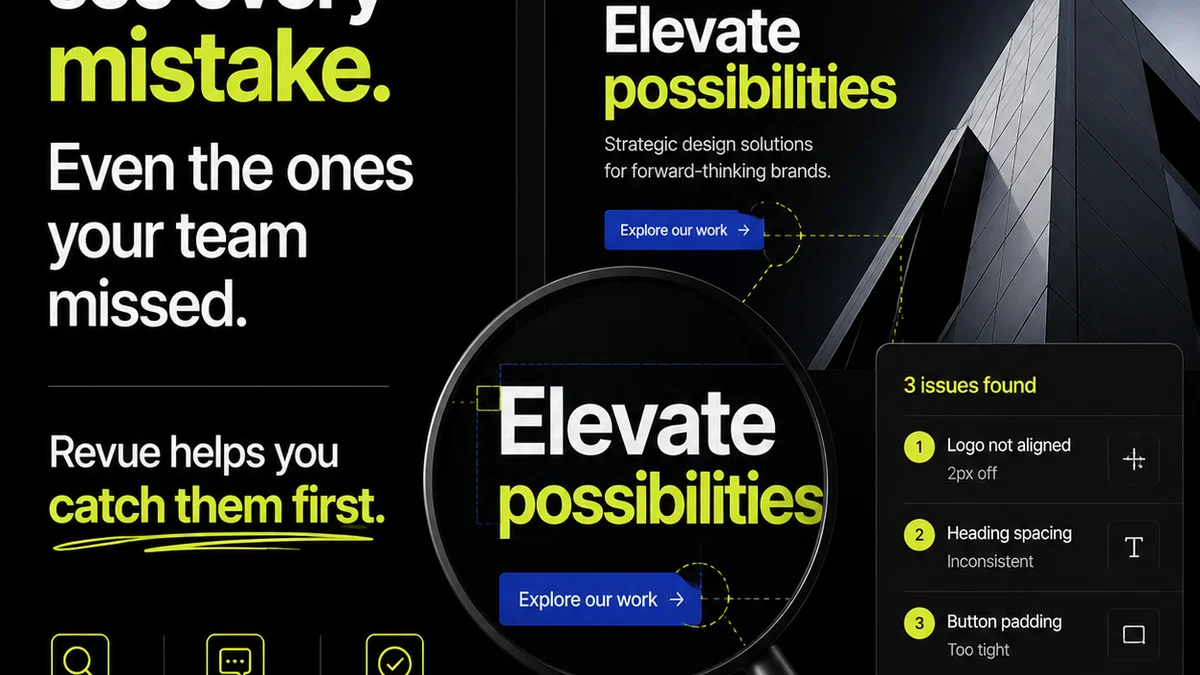
Quality Checks: Ensure consistency and adherence to brand guidelines throughout the revision process, catching issues before they become major problems.
Revue helps operationalize feedback, turning a potential bottleneck into a well-oiled machine.
Final Thought
Is your feedback process a source of creative friction or creative acceleration? The difference lies not in the quality of your creatives, but in the robustness of your operations.
How are you systemizing feedback in your agency?
Frequently asked questions
What's the biggest mistake agencies make with creative feedback?
Treating feedback as just comments, rather than a system involving context, clarity, and actionability. This leads to vague instructions, wasted revisions, and frustration.
How can I make feedback more actionable?
Ensure feedback is specific, tied to project objectives, and clearly states what needs to be done. Avoid subjective statements like 'make it pop' and instead provide concrete instructions.
What's the role of a centralized feedback tool?
Centralized tools like Revue aggregate all feedback on a specific asset, providing context, version history, and clear approval trails. This eliminates confusion from scattered communication channels like email or Slack.
How do I manage multiple stakeholders giving feedback?
Identify key decision-makers, educate them on project goals, and consolidate feedback to synthesize conflicting opinions. Prioritize feedback based on its impact on project objectives.
Why is tracking revisions important?
Tracking revisions systematically helps understand the impact of changes, prevents scope creep, and provides an audit trail for accountability. It ensures that revisions are purposeful and contribute to the final goal.