Everyone talks about agency culture, killer creative, and client relationships. That’s all crucial. But it’s not the whole story. In fact, it’s barely half of it.
The real engine of a high-performing agency isn't just the brilliance of its people. It's the robustness of its systems.
Without solid operational scaffolding, even the most talented teams will eventually falter under the weight of inefficiency, missed deadlines, and client frustration. The difference between agencies that scale and those that spin their wheels? It’s the systems they build and rigorously adhere to.
1. Clarity in Project Definition and Scoping
This is where many agencies trip up. They assume a client brief is enough. It’s not.
High-performing agencies understand that a project’s success is baked in during the scoping phase. This isn't about being difficult; it's about being precise. It’s about de-risking the project for both parties.
The Scope Creep Killer
Scope creep is the silent killer of agency profitability and team morale. It happens when the project’s boundaries blur, and extra work is absorbed without a corresponding adjustment in budget or timeline.
- Detailed SOWs (Statements of Work) that leave no room for interpretation.
- Clear deliverables listed out, with quantities and specifics.
- Defined client review cycles and feedback windows.
- Explicitly stated what is *out* of scope.
- Protocols for handling change requests and their associated costs.
This isn't about rigid bureaucracy. It's about setting expectations so everyone knows the rules of engagement.
2. Streamlined Client Feedback and Approvals
Client feedback is the lifeblood of creative work. But it’s often a chaotic mess.
Agencies that excel don't just tolerate feedback; they manage it with surgical precision. They have systems to ensure feedback is clear, consolidated, and actionable. This prevents endless back-and-forth and protects creative integrity.
From Chaos to Clarity
Imagine a world where client feedback isn't scattered across a dozen email chains, Slack messages, and informal calls. Where every stakeholder’s input is logged, visible, and trackable.
- Centralized platforms for all creative assets and feedback.
- Defined roles for client approvers.
- Structured feedback loops with clear deadlines.
- Version control that makes it obvious which iteration is current.
- A process for summarizing and confirming feedback before action.
This system turns a potential minefield into a smooth, predictable process. It saves time, reduces errors, and keeps clients happier.
3. Proactive Resource Planning and Allocation
Talent is your agency’s most valuable asset. But talent sitting idle or overworked is a drain on resources.
High-performing agencies don't just react to project needs; they anticipate them. They have sophisticated resource planning systems to ensure the right people are on the right projects at the right time.
The Utilization Balancing Act
Under-utilization means lost revenue. Over-utilization leads to burnout and decreased quality. The sweet spot is where everyone is challenged but not overwhelmed.
- Real-time visibility into team capacity and availability.
- Forecasting project needs based on sales pipeline.
- Skills-based allocation to match talent to project requirements.
- Buffer time for unexpected issues and professional development.
- Regular check-ins on workload and team well-being.
This isn't just about filling seats. It's about strategic deployment of your most critical asset: your people.
4. Standardized Workflow Automation
Repetitive tasks are productivity killers. They consume valuable creative energy and introduce human error.
Agencies that perform at the highest level leverage workflow automation to handle the grunt work. This frees up their teams to focus on high-value strategic and creative tasks.
Automate the Mundane, Elevate the Creative
Think about all the manual steps in your typical project lifecycle. Onboarding a new client. Setting up a new project. Sending out standard status updates. Assigning tasks. These can all be streamlined.
- Automated project setup based on templates.
- Automated task assignments and notifications.
- Automated client reporting.
- Integration between different tools to pass data seamlessly.
- Automated quality assurance checks where possible.
Workflow automation isn't about replacing people with machines. It's about augmenting human capability and ensuring consistency.
5. Robust Financial Management and Tracking
Creativity doesn't pay the bills. Profitability does.
Many agencies, especially as they grow, struggle with financial clarity. They don't have tight systems for tracking project profitability, managing expenses, and forecasting revenue. This is a direct path to financial instability.
Know Your Numbers, Own Your Growth
High-performing agencies treat financial tracking not as an afterthought, but as a core operational discipline. They have clear visibility into where every dollar is going and coming from.
- Accurate time tracking linked to projects and clients.
- Real-time project budget vs. actuals reporting.
- Clear invoicing and accounts receivable processes.
- Regular financial reviews to identify trends and opportunities.
- Budgeting for overhead, software, and professional development.
This financial discipline underpins everything else. It’s the fuel that allows for investment in talent, technology, and growth.
Where Revue Fits In
Managing creative projects is uniquely challenging. The work is subjective, iterative, and requires constant collaboration. This is precisely where a tool like Revue becomes indispensable for high-performing agencies.
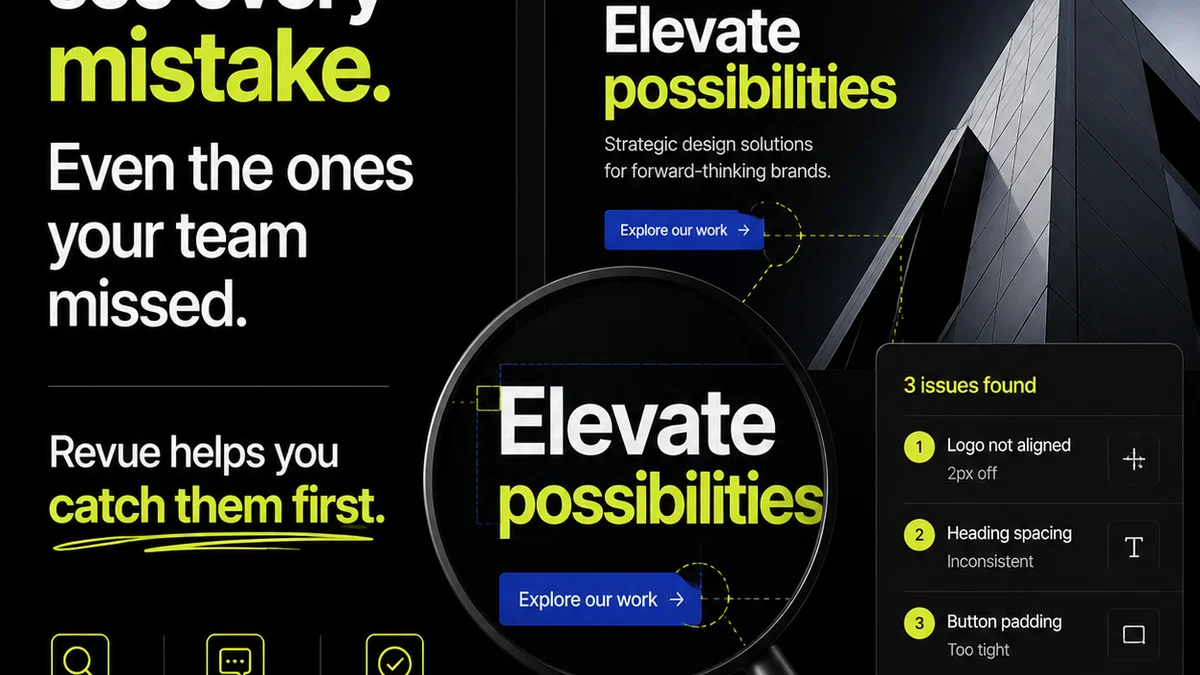
Revue acts as the central nervous system for client feedback and creative approvals. It consolidates communication, streamlines revisions, and provides clear audit trails. This eliminates the ambiguity and inefficiency that plague so many agency workflows.
By centralizing feedback directly on creative assets, Revue ensures that everyone is working from the same, most current version. It provides the visibility needed to manage revision rounds effectively, track approvals, and conduct crucial quality checks before final delivery. This directly supports the systems of clarity and streamlined communication that define operational excellence.
Final Thought
Talent will always be your agency's greatest asset. But without the right systems, that talent will be hampered, frustrated, and ultimately, less effective. Are your agency's systems enabling your team's brilliance, or are they holding it back?
Frequently asked questions
What is the biggest mistake agencies make with project scoping?
The biggest mistake is treating the client brief as the final word. High-performing agencies create detailed Statements of Work (SOWs) that explicitly define deliverables, timelines, client responsibilities, and what is out of scope. This prevents scope creep and sets clear expectations.
How can agencies manage client feedback more effectively?
Effective feedback management involves centralizing all communication and assets. Using a platform that allows for direct annotation on creative proofs, version control, and clear approval workflows eliminates scattered emails and ensures everyone is on the same page, reducing revision cycles.
Why is resource planning crucial for agency scalability?
Resource planning ensures you have the right people available for projects without over or under-utilizing them. This visibility allows agencies to accurately forecast capacity, take on more work strategically, prevent burnout, and maintain high-quality output as they scale.
What are the benefits of workflow automation for creative agencies?
Workflow automation reduces time spent on repetitive, administrative tasks. This frees up creative teams to focus on higher-value work, ensures consistency in processes, minimizes human error, and improves overall project efficiency and delivery speed.